

This course explores the psychological roots of radical belief systems, cults, extreme religions, and conspiracy theories. Participants will learn how these belief systems emerge when spirituality becomes disconnected from its unconscious roots. As a Jungian psychology course, it examines the relationship between the ego and the unconscious, focusing on how unhealthy inner dynamics can lead to extremism.
The concept of *Dark Religion* describes fanatical beliefs that cause personal and societal conflicts, from spiritual possession to political extremism. Through engaging discussions and psychological analysis, the course reveals how unconscious forces shape radical beliefs and influence cultural dynamics. The course also explores how to navigate and handle the challenges of turbulent times marked by ideological extremism and rapid changes.
Participants will gain insights into the psychological mechanisms behind manipulation, social control, and ideological fixation. Part of the workshop will be practice of active imagination and group discussion.
Learning Objectives
This course is intended to help participants:
Required Reading
Suggested Reading
Instructor
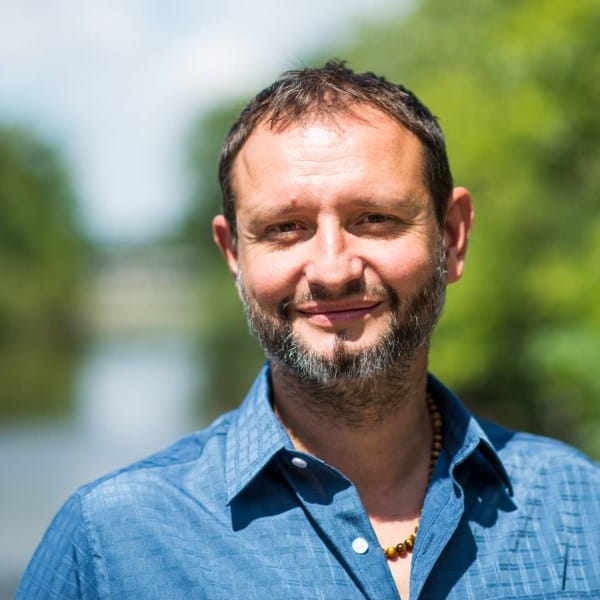
Vlado Šolc is a psychotherapist and Jungian Analyst practicing in Glendale, WI. He received training from the C.G. Jung Institute of Chicago and Charles University in Prague. Vlado is an active member of IAAP, CSJA, SIAP, and the Aurora Medical Group. He focuses on psycho-spiritual crises (loss of life’s meaning and direction), mind-body connection (psychosomatic issues), immigration & cultural issues, and women’s empowerment (emancipation). His specialties also include the treatment of addictions, individual and marital psychotherapy with adults, and youth populations. Vlado lives in constant awe of the miracle of existence. He has presented in North America, Asia, and Europe and is the author of numerous articles and depth psychology-oriented books: Psyche, Matrix, Reality; The Father Archetype; In the Name of God – Fanaticism from the Perspective of Depth Psychology; Dark Religion; Individuation and Democracy in the Time of Conspiracy Theories.