Blog

Dingir.cz | Review of Dark Religion: Fundamentalism from The Perspective of Jungian Psychology

This review originally appeared in Czech at dingir.cz.

Vladislav Šolc, George J. Didier, Dark Religion: The Psychology of Denying and Discovering Reality, Prague: Malvern, 2025, 398 pages.

I opened Vladislav Šolc and George Didier’s Dark Religion expecting a scholarly Jungian study of fundamentalism and was pleasantly surprised by how much space it gives to many of the questions I ask myself at my own therapeutic desk—for example, where does healthy faith end and possession by one’s own image of God begin, and where do the concepts of psychotherapeutic work end and a genuine spiritual crisis begin?

Central Concepts: Theocalypsis and Theonemesis

The authors, both Jungian analysts, distinguish between religion, understood as a living relationship to the numinous that can never be fully grasped, and creed, a confession of faith that can so easily preserve this relationship in the form of dogmas, rituals, and institutions. According to the authors, religion becomes “dark” when creed becomes severed from its living source in the unconscious and begins to serve a defensive purpose—concealing what a person does not wish to see about themselves and about reality.

(more…)
Jung in the World is Moving

In the dead of COVID, I started interviewing people about Jung in collaboration with the C. G. Jung Institute of Chicago. And so, the podcast Jung in the World was born. No one, including me, expected two million downloads would follow. Six years and a couple of epiphanies later, it’s time for the Jung in the World podcast to individuate.

We’re moving to a new home: The Institute for Psyche and Culture.

I trained at the C.G. Jung Institute of Chicago through 2016. But my interest was never clinical; it was cultural.

Right now, I’m watching a civilizational disruption of selfhood unprecedented since the printing press. A conversation that puts depth psychology at the center of that vortex is what the Institute for Psyche and Culture was built for, and mysteriously, it’s what the podcast has been working toward all along.

“Everything psychic is pregnant with the future,” wrote Jung. A rising generation, exhausted by the performance of self, and hungry for depth is waiting.  We aim to meet the moment with conversations that advance inner life in the age of the algorithm. Jung’s not going anywhere. He’s been dead since 1961, and his work far exceeds what passes for insight on our phones.  

What’s changing is the address. In October, the podcast moves to a new feed. Season 6 starts soon, and it’s an ambitious lineup–video and audio. Come find us there. And come curious.  

For more background, check out this video:

(more…)

The Jungian Drift Podcast | Odysseus under Calypso’s Spell: The Seductive Power of Conspiracies with Vlado Solc (Audio)

Thanks to Claire Kohne, MS, LPCC and Robert Carriger, MS, LMFT, for interviewing Chicago Society of Jungian Analysts member Vlado Solc on their podcast, The Jungian Drift. From the episode description:

*Content Warning: Episode contains discussion of an age-old conspiratorial belief that a secret society is carrying out ritualized child abuse in order to extract a fabled life giving elixir.*

At the 2025 International Association of Analytical Psychology conference in Zurich, Robert Carriger and Claire Kohne got the opportunity to talk to conference presenter Jungian analyst Vlado Šolc about his application of Jungian theory to the understanding of conspiracies and cults. Dr. Šolc draws from Greek mythology and the legend of Odysseus’ seven-year captivity on the island of Ogygia under the spell of the nymph Calypso to explain the phenomena of dark religion and cults. In mythology Calypso is the personification of concealment – or covering – from which the Greek word apokálypsis – apocalypse – is derived which means “uncovering” or “revelation.” Recorded on August 28, 2025.

Dingir.cz | Conspiracism as a Private Religion: A Jungian View of the Longing for Hidden Truth – Interview with Vlado Šolc

This interview with Vladislav Šolc by Jitka Schlichtsová was originally published in Czech at dingir.cz.

How does conspiracism appear from a Jungian perspective?

Psychologically speaking, conspiracy theories are, in essence, theories about hidden connections between reality and fantasy. The desire to discover reality and explore the deeper meaning of existence is instinctive. Mythology and ritual behavior testify to humanity’s ancient effort to grasp the mystery of life and use that knowledge to navigate reality more effectively through the expansion of consciousness. Similarly, religion responds to the human longing for salvation and the revelation of eternal truth—a desire, one might say, to crack the ultimate code of existence. Conspiracy theories are driven by the same instinct.

From a Jungian perspective, conspiracy theories may be understood as private—or what I have elsewhere called dark religious—systems through which the ego attempts to come to terms with the overwhelming impact of numinosity. Numinous experience arises from an encounter with the paradox of the holy, what Rudolf Otto termed the mysterium tremendum et fascinans: an experience that simultaneously evokes fascination and awe. The less conscious the ego is of these opposing emotional forces, the more likely it is to become possessed by them. The key is to minimize the phenomenon of splitting so that the ego may proceed further in the quest for the integration of the Self.

Conspiracy theories may thus be regarded as partially protective and partially healing constructs through which a person is able to experience relief from existential anxiety while simultaneously achieving a provisional grasp of reality. They provide the conspiracist with a feeling of personal power and control over reality. By “revealing” evil and its causes, they alleviate so-called negative feelings and temporarily restore a sense of meaning, orientation, and certainty.

(more…)

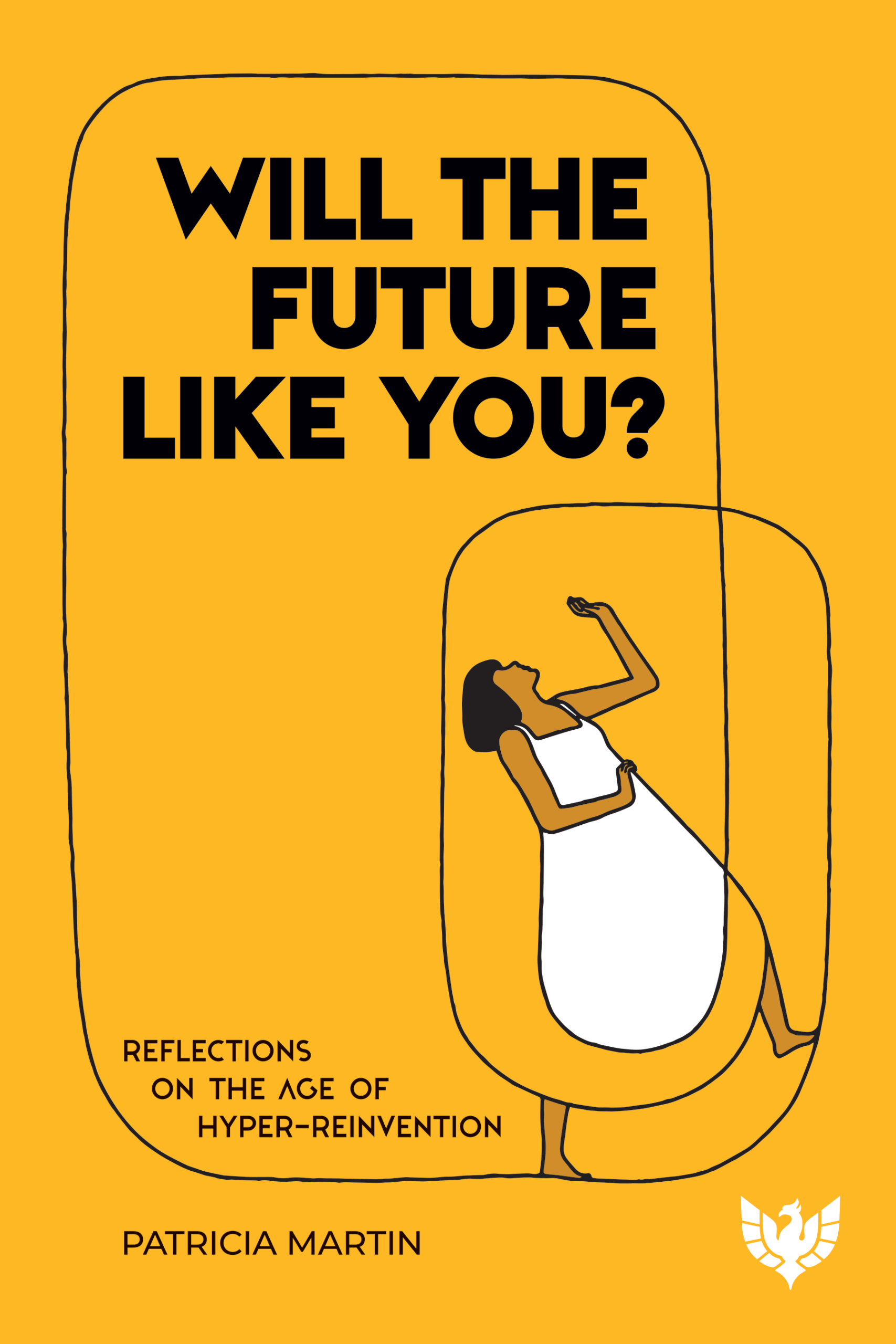
Book Release | Will the Future Like You: Reflections on the Age of Hyper-reinvention by Patricia Martin

What if the harms of living an increasingly digital life go beyond undercutting our attention spans or blunting our social skills? What if it cuts deeper, to the core of who we are and who we know ourselves to be?

Patricia Martin, author, researcher, and host of the Jung in the World podcast, explores the challenges that tech and the internet impose on the human psyche. In Will the Future Like You? Reflections on the Age of Hyper-Reinvention, she argues that 24/7 online connectivity reshapes not only our sense of self, but erodes our very ability to form our identities.

Weaving together memoir, depth psychology, cultural criticism, and reportage, Martin guides readers through the hidden processes that form identity — and reveals how digital life is quietly dismantling them. At once a rigorous inquiry and a deeply human one, Will the Future Like You? asks what it means to hold onto a coherent self in an era designed to keep us endlessly reinventing. Releases March 5, 2026; Karnac Books UK. Available for pre-order on Amazon.

“Courageous, urgent, and deeply necessary.” 

–James Hollis, Jungian analyst, author of Swamplands of the Soul and Living with Borrowed Dust, and 22 other books.

About the author:

Patricia Martin writes about the intersection of culture, psychology, and technology. A graduate of the JSP and a professional affiliate at the C. G. Jung Institute of Chicago, where she hosts the popular podcast Jung in the World. She spent the last decade researching digital culture’s impact on the psyche. The author of four books, her work has been featured in the New York Times, Harvard Business Review, Huffington Post and Psyche Magazine. Learn more: www.patricia-martin.com

Daniel T. Bourne Show | Three Psychodynamic Approaches to Psychotherapy: Erik Mansager, Kenneth James, and Nancy McWilliams (Video/Audio)

Chicago Society of Jungian Analysts member Ken James appeared on the Daniel T. Bourne Show to discuss Jungian Analysis. Watch the video below or listen on Apple Podcasts or Spotify.

From the episode description:

Three Psychodynamic Approaches to Psychotherapy What does psychodynamic therapy actually look like in the room? Inspired by the APA’s Three Approaches to Psychotherapy, this video offers a public-facing demonstration of three psychodynamic traditions in action:

• Adlerian Depth Psychotherapy
• Jungian Analysis
• Psychoanalysis

Rather than explaining these approaches in theory, this video shows how each therapist listens, responds, and works with meaning, relationship, and inner life as it unfolds in real time. This project was created with accessibility in mind. Too often, psychodynamic therapy and psychoanalysis are hidden behind paywalls, dense language, or misconceptions about being outdated or inaccessible. My goal is to make these approaches visible, understandable, and freely available to students, clinicians, and anyone curious about depth-oriented therapy. In a field where this kind of material is often locked behind expensive trainings or subscriptions, it’s genuinely exciting to be able to offer nearly five hours of high quality content completely free. Psychodynamic therapy has shaped the foundations of psychotherapy as we know it. This video is a small effort to give it its rightful due, while showing that it remains alive, relational, and deeply human. Whether you’re new to therapy, considering training, or simply curious about how different therapists think and work, I hope this offers a clear window into psychodynamic practice.

Note: Information contained in this video is for educational purposes only and is not intended as a substitute for treatment or consultation with a mental health professional or business consultant.

Vlado Solc | Mysterium Musicus: Techno, Trance, Rhythm, and the Return of Ancient Rituals

“In every chaos there is a cosmos; in every disorder there is a secret order.” 
(C.G. Jung)

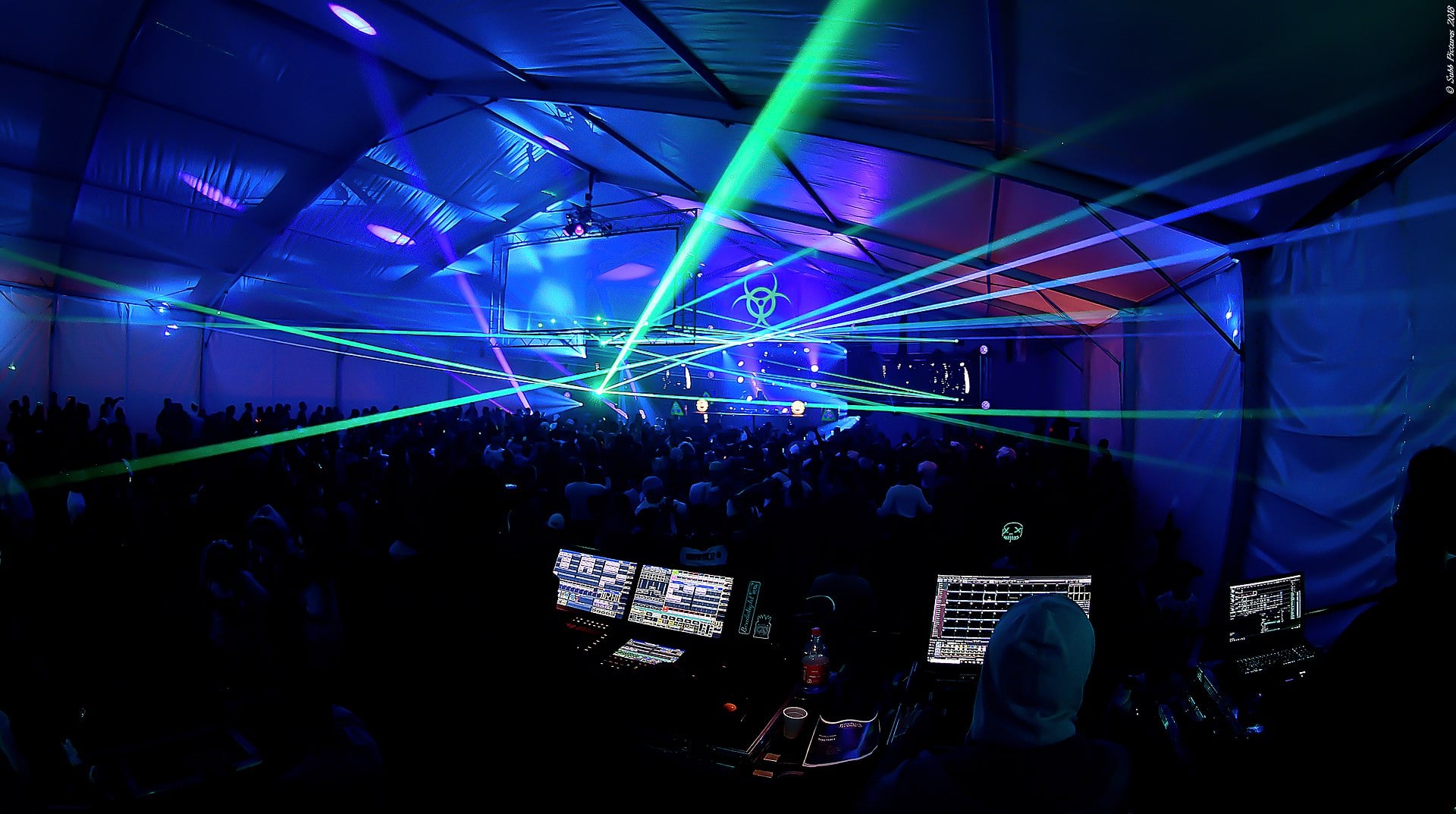
The unceasing interest in techno scene naturally raises the question of what it is about this “technoculture,” as it likes to call itself, that is so attractive and fascinates young people practically all over the world.² The name techno—i.e., Electronic Dance Music (EDM)³—already indicates that it is the result of the modern computerization of music. This music emerged in the second half of the 1980s in the United States, particularly in Detroit, Michigan, and Chicago. The original sound of techno developed from synthesized music shaped by strong African American influences, including Chicago house, funk, electro, and electric jazz. These elements blended with rhythms reminiscent of African tribal drumming, as well as futuristic and science-fiction motifs reflecting the social imagination and lived realities of late-twentieth-century America.

(more…)

The Explorer Poet Podcast | Unconscious Beliefs and Dark Religions with Vladislav Šolc (Audio)

Chicago Society of Jungian Analysts member Vlado Solc appeared on the Explorer Poet Podcast. From the episode description:

In this conversation with Vladislav Šolc, we explore the intersection of Jungian psychology and religion, discussing personal journeys through faith, the concept of dark religion, the importance of self-knowledge, how unconscious beliefs shape our understanding of reality, the role of symbolism in religion, the psychological implications of conspiracies, the quest for consciousness, confronting our inner darkness to achieve personal growth.

Vlado Solc | Healing the Nation in a Time of Narcissistic Split 

This interview by Zuzana Vitková with Vlado Šolc originally appeared in dennikn.sk.

Do American psychologists or psychiatrists currently comment on Trump’s behavior in the public sphere?

Yes, quite often. Beyond Steven Buser’s book Real and Present Danger, American psychologists and psychiatrists have addressed Trump’s behavior in several other works. For example, psychologist Dan P. McAdams offers a detailed psychological portrait in The Strange Case of Donald J. Trump: A Psychological Reckoning. Another example is Dangerous Charisma: The Political Psychology of Donald Trump, which combines psychoanalytic perspectives with political psychology to explore what drives Trump’s behavior and his appeal. These books are part of a broader body of psychological commentary that regularly appears in both academic and public discourse.

In recent weeks, Donald Trump has repeatedly expressed his desire for annexing Greenland, established a “Peace Council” to which he invited Vladimir Putin and several other totalitarian countries, and accepted a framed Nobel Peace Prize from its current laureate. As a Jungian Analyst, what is your reaction when you observe the statements and actions of the American president?

Psychologists and Jungians who study Trump have long pointed out that he exhibits pronounced narcissistic traits. In such a personality structure, the central life aim is the gratification of one’s own needs, and experience, relationships, and reality itself are organized around propping the ego.  Because he has reached this kind of “inflated position” as president of the United States, he is constantly confirming to himself what he can get away with and what his power allows him to do. And the more he tests it, the more distorted his sense of self becomes. The attempt to annex Greenland is, in my view, just another example of the enactment of the grandiose fantasy.

(more…)

Filter Posts

  • About Jung Chicago Radio & Blog

    Jung Chicago Radio is home to a variety of podcasts that range from archival seminar recordings (Institute Archives), to interviews (Jung in the World) to discussion on film (Healing Cinema), fairy tales (Jungian Ever After), and our programs.

    Our Blog shares essays, articles, video, audio, and other resources by members of the Chicago Society of Jungian Analysts and other groups that support the education and development of our community.

    The views and opinions expressed in the podcasts and blog posts are those of the respected speakers or authors and do not necessarily represent the views of the C. G. Jung Institute of Chicago.

    Login

    This search engine will search our public programs, the Jung Chicago Radio and Blog, and our store.

    To search only the store, visit our Store page.

    If you’re looking for a Jungian Analyst, use our Find an Analyst search engine or browse the Chicago Society of Jungian Analysts page.