This post originally appeared on The Healing Psyche. It is posted here in both English and Spanish.
The People of the Anaconda (La Gente de la Anaconda), who live along the Pirá Paraná River in the Amazon, recount that the “songs of birds” gave rise to the flutes used in the initiation rites of young men in Indigenous communities. They also tell of the ancestral anaconda, who transformed into a human being and became embodied in the sacred trumpets and flutes employed during these initiation ceremonies in the Amazon jungle (Hugh-Jones, 1979; Orjuela, 1983).
Anaconda Tribe of the Vaupes/Wade Davis (Credit: Dan Billingham;The City Paper Bogota; June 9, 2013)(more…)
This review originally appeared in Czech at dingir.cz.
Vladislav Šolc, George J. Didier, Dark Religion: The Psychology of Denying and Discovering Reality, Prague: Malvern, 2025, 398 pages.
I opened Vladislav Šolc and George Didier’s Dark Religion expecting a scholarly Jungian study of fundamentalism and was pleasantly surprised by how much space it gives to many of the questions I ask myself at my own therapeutic desk—for example, where does healthy faith end and possession by one’s own image of God begin, and where do the concepts of psychotherapeutic work end and a genuine spiritual crisis begin?
Central Concepts: Theocalypsis and Theonemesis
The authors, both Jungian analysts, distinguish between religion, understood as a living relationship to the numinous that can never be fully grasped, and creed, a confession of faith that can so easily preserve this relationship in the form of dogmas, rituals, and institutions. According to the authors, religion becomes “dark” when creed becomes severed from its living source in the unconscious and begins to serve a defensive purpose—concealing what a person does not wish to see about themselves and about reality.
When churchyards yawn, and hell itself breathes out
Contagion to this world: now could I drink hot blood.”
(Shakespeare, Hamlet, ca. 1600)
On the thirty-first of October, countries as distant as Mexico, Brazil, Scotland, Australia, New Zealand, Puerto Rico, Canada, and, above all, the United States, celebrate one of the strangest and most popular pagan holidays: Halloween. Over the past two decades, this festival has also taken root in the Czech Republic, Slovakia, and other Eastern European countries, where it overlaps with the Christian commemoration of All Souls’ Day.
Its origins, however, reach back more than two millennia to the ancient Celtic custom known as Samhain, once celebrated in northern France, England, and Ireland. In various forms, this archetypal motif appears in religions and myths across the world. The theme that Halloween brings to consciousness holds deep psychological significance, as it addresses a core insight for curating the well-being of humankind.
Samhain: The End of Summer
The Celts called the festival Samhain. The old Irish and Gaelic word samfuin means “the end of summer” or “the setting of the sun.” The festival marked the conclusion of the harvest and the beginning of the Celtic New Year. The Gallic calendar divided the year into two halves—the dark and the light—each beginning with the months Samonios and Giamonios, respectively. Samhain thus opened the dark half of the year, a time when the sun withdrew and the fires of transformation were kindled. The New Year’s celebration lasted three days—Trinoux Samoni—a triple feast that symbolically contained the movement from life toward death and back again.
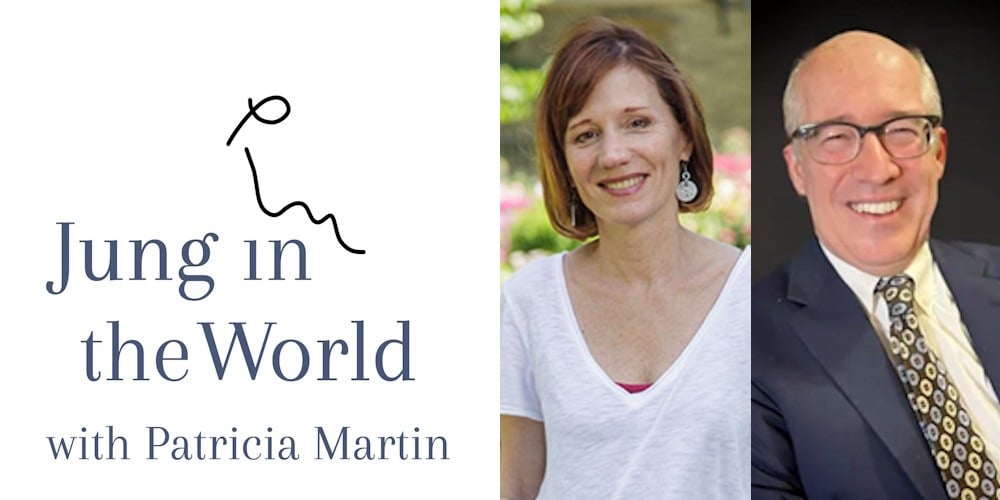
Jungian Psychoanalysts Laura Tuley and John White discuss Jungian Analysis in a World on Fire: At the Nexus of Individual and Collective Trauma, a volume of essays, all authored by practicing Jungian psychoanalysts, of which they were the editors. It examines and illuminates ways of working with individual analytic and therapeutic clients in the context of powerful and current collective forces, in the United States and beyond.
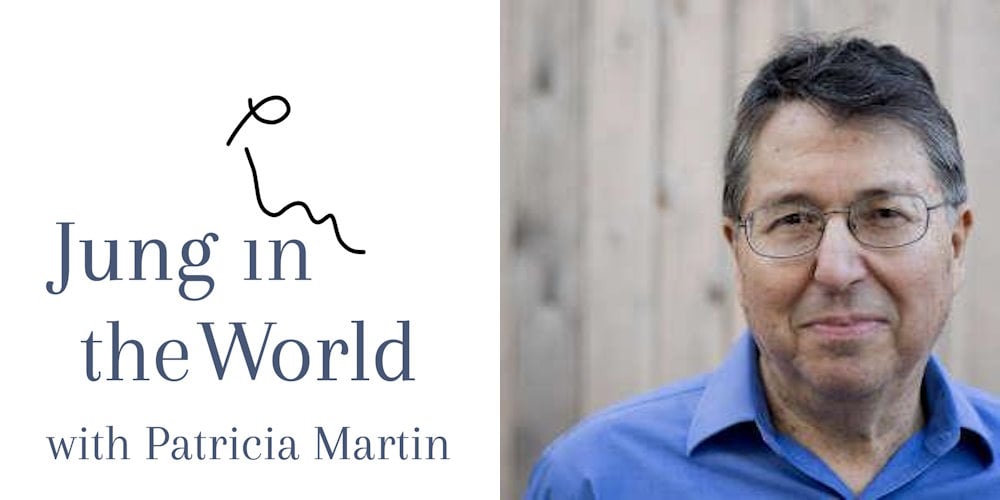
Renowned mythologist and McArthur genius Fellow Lewis Hyde joins Patricia Martin in a revelatory conversation about the trickster archetype embodied in mythology.
Bestselling author Jean Twenge reveals the effects of technology on the collective, based on her research on generational differences. Twenge’s interview with Patricia Martin answers the question, “Is the digital age breaking us down or building us up?”.
“In the Dark Night of the Soul, Bright Flows the River of God” (Juan de La Cruz)
Human beings have been seeking to periodically experience the profound love towards the Divine as well as the intense beauty and ecstasy that comes with it. This union was sought by the poet, Juan de Yepes y Alvarez (better known as Juan de La Cruz – John of the Cross), and this article will focus primarily on understanding some sentences from a mystic poem that he wrote as well as amplifying them with the wisdom of the Kogi Indians.
On a side note, I make the contention that a similar experience is reached by the individual, at some point, at the farthest end of the process of individuation and wholeness, during a Jungian Analysis that is methodologically conducted in the manner delineated by Jung, which was closely followed by his early collaborators (Von Franz, Hannah, Harding, Edinger, etc).
University of Chicago Professor and online game designer Patrick Jagoda, PhD talks with Patricia Martin about ways that online games and new media apply Jungian theory to create emotional bonds with users.
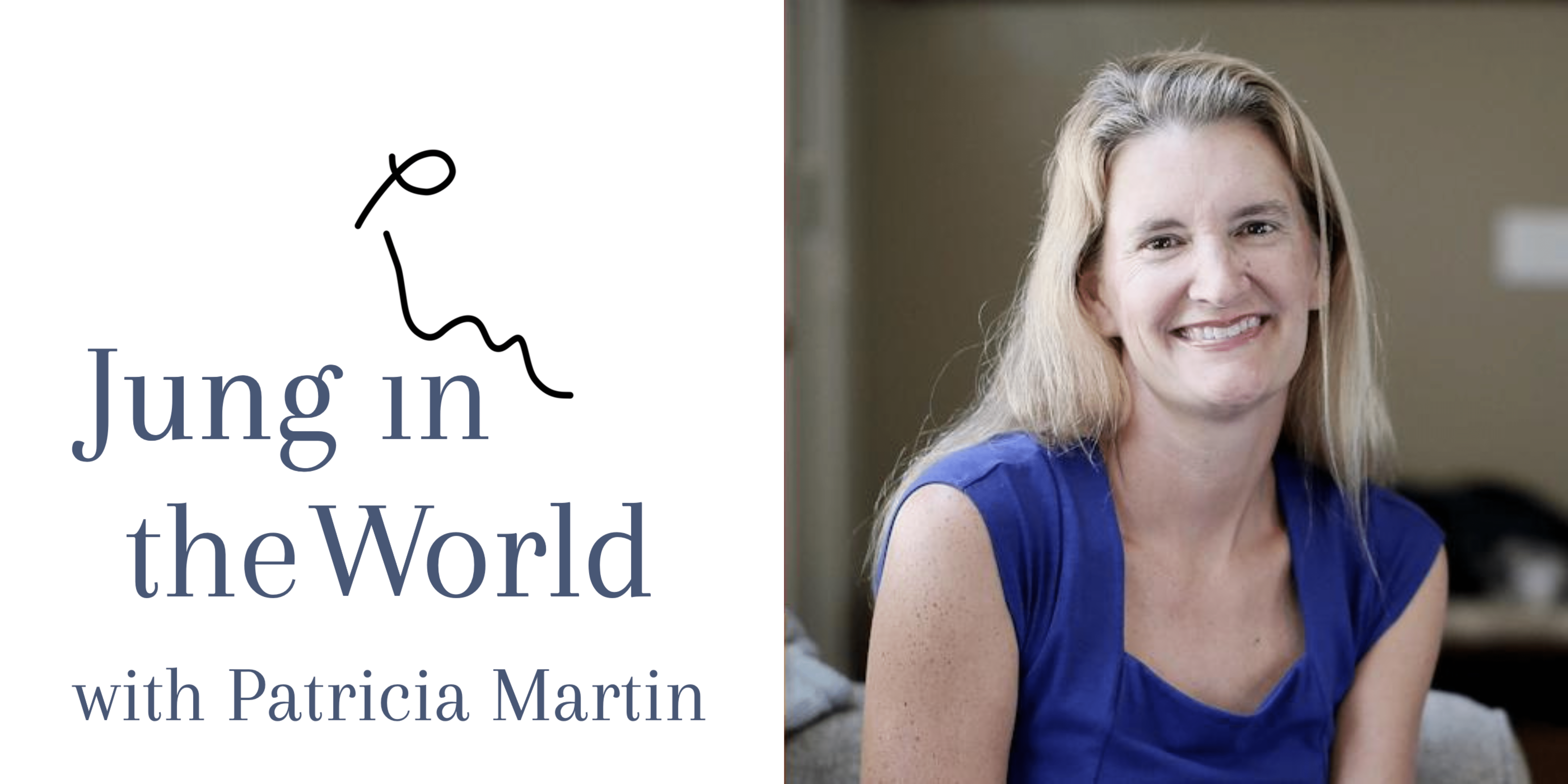
Elizabeth Eowyn Nelson, PhD joins Patricia Martin for a lively conversation about the value of Jungian thought in our tech-centric times. Nelson is on the faculty at Pacifica Graduate Institute, where she is a scholar on dreams, technology, and cultural studies. In this episode, she brings a wealth of insight to our contemporary moment, exploring what it means to pursue personal growth in a digital culture.
In this episode, Patricia Martin interviews Laura Vecchiolla, clinical psychologist and graduate of the Jungian Psychotherapy Program at the C. G. Jung Institute of Chicago. Their discussion touches on:
Many believe we are in the Anthropocene Era, an era marked by the planet-wide influence of our species. The field of ecopsychology emerged in the early 1990s as a belated response from the psychological community to address the cascading effects of human-created environmental damage. Jungian ecopsychology offers one of the best frameworks for analyzing our dysfunctional relationship with the environment—and with each other—through an archetypal analysis of the layers of the collective unconscious. Jung was deeply connected with his native Swiss soil that was reflected in the ecological aspects of his conceptual system and his interest in alchemy as his main symbol system. Ecology begins with our relationship with “the little people” in our dreams and dreams can be used to help us connect deeply to the land using Hillman’s concept of Aphrodite as the Soul of the World. In 1940 Jung foretold a paradigm shift that he labeled a “new age” and “Aquarian Age”. The new paradigm will be based on ecological concepts and reflected in the economic system being developed by the sustainable economists. We must think in these terms as a species if there is any hope of averting a planetary nightmare.
During our Holiday Giving Drive we are presenting a series of interviews called Jung in the World. In this episode, Patricia Martin interviews Roula-Maria Dib, creative writer and literary scholar, who views Carl Jung as a modernist and has written about the power of the modernist moment in history to give rise to the discipline of psychology. Her book, Jungian Metaphor in Modernist Literature, creates a new context for understanding Carl Jung’s work and his most important theories: the context of the collective in which he lived. In this discussion, they touch on:
Our Blog shares essays, articles, video, audio, and other resources by members of the Chicago Society of Jungian Analysts and other groups that support the education and development of our community.
The views and opinions expressed in the podcasts and blog posts are those of the respected speakers or authors and do not necessarily represent the views of the C. G. Jung Institute of Chicago.