Society & Culture

Dingir.cz | Review of Dark Religion: Fundamentalism from The Perspective of Jungian Psychology

This review originally appeared in Czech at dingir.cz.

Vladislav Šolc, George J. Didier, Dark Religion: The Psychology of Denying and Discovering Reality, Prague: Malvern, 2025, 398 pages.

I opened Vladislav Šolc and George Didier’s Dark Religion expecting a scholarly Jungian study of fundamentalism and was pleasantly surprised by how much space it gives to many of the questions I ask myself at my own therapeutic desk—for example, where does healthy faith end and possession by one’s own image of God begin, and where do the concepts of psychotherapeutic work end and a genuine spiritual crisis begin?

Central Concepts: Theocalypsis and Theonemesis

The authors, both Jungian analysts, distinguish between religion, understood as a living relationship to the numinous that can never be fully grasped, and creed, a confession of faith that can so easily preserve this relationship in the form of dogmas, rituals, and institutions. According to the authors, religion becomes “dark” when creed becomes severed from its living source in the unconscious and begins to serve a defensive purpose—concealing what a person does not wish to see about themselves and about reality.

(more…)
Jungian Ever After | Odysseus: Sacrifice & Hospitality


We continue our coverage of The Odyssey with a focus on proper sacrifice and hospitality rules. As we cannot read the entire epic, there’s no main story reading for this episode. However, towards the very end of the episode, Raisa reads a summary of Odysseus’s reunion with Penelope from ⁠Claudio Patrini’s, “Odyssey: Symbols and Meaning.”⁠

(more…)

Jung in the World | Synchronicity at the Deathbed: Jung and Meaning at the End of Life with Daniel Ross


Carl Jung called it “an acausal connecting principle” — but for Dan Ross, a Jungian analyst working in hospice care, synchronicity isn’t just theoretical. In this episode, Dan reveals what thirty years of end-of-life work taught him about Jung’s most misappropriated theory, its roots in Jung’s relationship with physicist Wolfgang Pauli, and why studying synchronicity seems to produce more of it. This episode is rich with poignant examples blended that will leave you thinking differently about how synchronicity works in your own life.

(more…)

Dingir.cz | Conspiracism as a Private Religion: A Jungian View of the Longing for Hidden Truth – Interview with Vlado Šolc

This interview with Vladislav Šolc by Jitka Schlichtsová was originally published in Czech at dingir.cz.

How does conspiracism appear from a Jungian perspective?

Psychologically speaking, conspiracy theories are, in essence, theories about hidden connections between reality and fantasy. The desire to discover reality and explore the deeper meaning of existence is instinctive. Mythology and ritual behavior testify to humanity’s ancient effort to grasp the mystery of life and use that knowledge to navigate reality more effectively through the expansion of consciousness. Similarly, religion responds to the human longing for salvation and the revelation of eternal truth—a desire, one might say, to crack the ultimate code of existence. Conspiracy theories are driven by the same instinct.

From a Jungian perspective, conspiracy theories may be understood as private—or what I have elsewhere called dark religious—systems through which the ego attempts to come to terms with the overwhelming impact of numinosity. Numinous experience arises from an encounter with the paradox of the holy, what Rudolf Otto termed the mysterium tremendum et fascinans: an experience that simultaneously evokes fascination and awe. The less conscious the ego is of these opposing emotional forces, the more likely it is to become possessed by them. The key is to minimize the phenomenon of splitting so that the ego may proceed further in the quest for the integration of the Self.

Conspiracy theories may thus be regarded as partially protective and partially healing constructs through which a person is able to experience relief from existential anxiety while simultaneously achieving a provisional grasp of reality. They provide the conspiracist with a feeling of personal power and control over reality. By “revealing” evil and its causes, they alleviate so-called negative feelings and temporarily restore a sense of meaning, orientation, and certainty.

(more…)

Jung in the World | Judith Herman, M.D. on Trauma and What Remains


Judith Herman is widely known as a defining voice in trauma psychiatry for more than fifty years. Her work bridges the personal and the political, framing trauma as not only an individual experience, but a public health and human rights issue. In this interview with host Patricia Martin, Judith Herman tells the story of how her work evolved, what remains to be done for CPTSD victims, and what all of us can do to create conditions survivors need to heal.

(more…)
Photo of Bill Hayes

Jung in the World | Individuation at 75: Oliver Sacks’s Journey to Wholeness with Bill Hayes


Individuation isn’t about becoming better. It’s about becoming whole. At 75, neurologist Oliver Sacks finally integrated the parts of himself he’d kept hidden—his sexuality, his need for love, his domestic life (who knew he kept a library of Jung’s work). Bill Hayes talks intimately about Sacks’s late-life transformation which exemplifies Jung’s crucial insight: growth isn’t about fixing what’s broken. It’s about integrating what you’ve exiled.

(more…)

Vlado Solc | Healing the Nation in a Time of Narcissistic Split 

This interview by Zuzana Vitková with Vlado Šolc originally appeared in dennikn.sk.

Do American psychologists or psychiatrists currently comment on Trump’s behavior in the public sphere?

Yes, quite often. Beyond Steven Buser’s book Real and Present Danger, American psychologists and psychiatrists have addressed Trump’s behavior in several other works. For example, psychologist Dan P. McAdams offers a detailed psychological portrait in The Strange Case of Donald J. Trump: A Psychological Reckoning. Another example is Dangerous Charisma: The Political Psychology of Donald Trump, which combines psychoanalytic perspectives with political psychology to explore what drives Trump’s behavior and his appeal. These books are part of a broader body of psychological commentary that regularly appears in both academic and public discourse.

In recent weeks, Donald Trump has repeatedly expressed his desire for annexing Greenland, established a “Peace Council” to which he invited Vladimir Putin and several other totalitarian countries, and accepted a framed Nobel Peace Prize from its current laureate. As a Jungian Analyst, what is your reaction when you observe the statements and actions of the American president?

Psychologists and Jungians who study Trump have long pointed out that he exhibits pronounced narcissistic traits. In such a personality structure, the central life aim is the gratification of one’s own needs, and experience, relationships, and reality itself are organized around propping the ego.  Because he has reached this kind of “inflated position” as president of the United States, he is constantly confirming to himself what he can get away with and what his power allows him to do. And the more he tests it, the more distorted his sense of self becomes. The attempt to annex Greenland is, in my view, just another example of the enactment of the grandiose fantasy.

(more…)

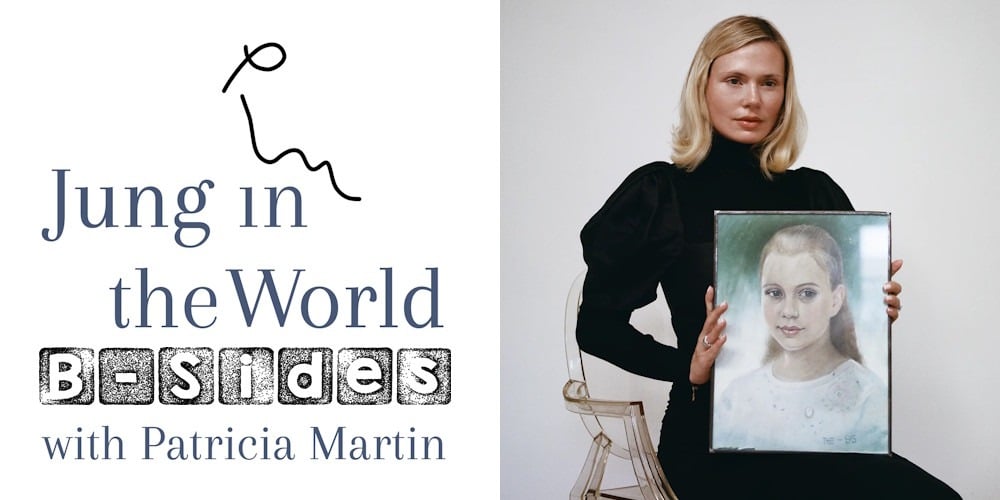
Jung in the World B-Sides | Living as Someone Else: The Hidden Cost of Online Personas with Hilde Lynn Helphenstein (Part 2)

This episode is part of a new series, Jung in the World B-Sides, where we go off-road to explore the rugged psychological terrain of our current culture.

This episode is part 2 of our interview with Hilde Lynn Helphenstein. Part 1

“Know thyself”—from Socrates to Shakespeare, this wisdom echoed across centuries. But the digital age is turning it inside out. As online influencers rise to fame, persona is overtaking the self. The obsession with self-representation has eclipsed the drive to be true to oneself.

What does it mean to live your life as someone else? In this two-part interview, host Patricia Martin talks with the infamous Jerry Gogosian—real name Hilde Helphenstein—about the hidden psychological costs of her seven-year experiment living as her persona and how she clawed her identity back.

Watch the video of this interview:

(more…)

Vlado Solc | The Witching Time of the Soul: A Jungian Reflection on Halloween and Death

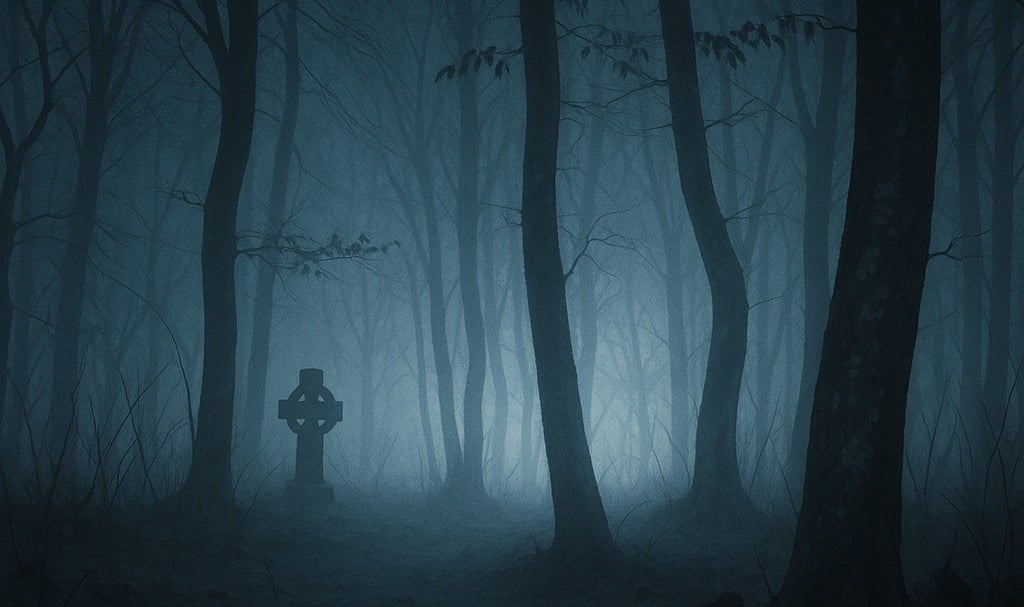
AI Image of a dark forest and a gravestone

“‘Tis now the very witching time of night,

When churchyards yawn, and hell itself breathes out

Contagion to this world: now could I drink hot blood.”

(Shakespeare, Hamlet, ca. 1600)

On the thirty-first of October, countries as distant as Mexico, Brazil, Scotland, Australia, New Zealand, Puerto Rico, Canada, and, above all, the United States, celebrate one of the strangest and most popular pagan holidays: Halloween. Over the past two decades, this festival has also taken root in the Czech Republic, Slovakia, and other Eastern European countries, where it overlaps with the Christian commemoration of All Souls’ Day.

Its origins, however, reach back more than two millennia to the ancient Celtic custom known as Samhain, once celebrated in northern France, England, and Ireland. In various forms, this archetypal motif appears in religions and myths across the world. The theme that Halloween brings to consciousness holds deep psychological significance, as it addresses a core insight for curating the well-being of humankind.

Samhain: The End of Summer

The Celts called the festival Samhain. The old Irish and Gaelic word samfuin means “the end of summer” or “the setting of the sun.” The festival marked the conclusion of the harvest and the beginning of the Celtic New Year. The Gallic calendar divided the year into two halves—the dark and the light—each beginning with the months Samonios and Giamonios, respectively. Samhain thus opened the dark half of the year, a time when the sun withdrew and the fires of transformation were kindled. The New Year’s celebration lasted three days—Trinoux Samoni—a triple feast that symbolically contained the movement from life toward death and back again.

(more…)

Jung in the World B-Sides | Living as Someone Else: The Hidden Cost of Online Personas with Hilde Lynn Helphenstein (Part 1)

This episode is part of a new series, Jung in the World B-Sides, where we go off-road to explore the rugged psychological terrain of our current culture.

Part 2 is now up. Listen to Part 2

“Know thyself”—from Socrates to Shakespeare, this wisdom echoed across centuries. But the digital age is turning it inside out. As online influencers rise to fame, persona is overtaking the self. The obsession with self-representation has eclipsed the drive to be true to oneself.

What does it mean to live your life as someone else? In this two-part interview, host Patricia Martin talks with the infamous Jerry Gogosian—real name Hilde Helphenstein—about the hidden psychological costs of her seven-year experiment living as her persona and how she clawed her identity back.

Watch the video of this interview:

(more…)

Jungian Ever After | Orpheus and Euridice – Creativity


We begin our coverage of Orpheus and Euridice. This episode is primarily focused on the archetypal power of creativity as demonstrated in Edith Hamilton’s telling of the story. We will read Ovid’s version and dig into other elements of the story in the following episode.

(more…)

Filter Posts

  • About Jung Chicago Radio & Blog

    Jung Chicago Radio is home to a variety of podcasts that range from archival seminar recordings (Institute Archives), to interviews (Jung in the World) to discussion on film (Healing Cinema), fairy tales (Jungian Ever After), and our programs.

    Our Blog shares essays, articles, video, audio, and other resources by members of the Chicago Society of Jungian Analysts and other groups that support the education and development of our community.

    The views and opinions expressed in the podcasts and blog posts are those of the respected speakers or authors and do not necessarily represent the views of the C. G. Jung Institute of Chicago.

    Login

    This search engine will search our public programs, the Jung Chicago Radio and Blog, and our store.

    To search only the store, visit our Store page.

    If you’re looking for a Jungian Analyst, use our Find an Analyst search engine or browse the Chicago Society of Jungian Analysts page.