This post originally appeared on The Healing Psyche. It is posted here in both English and Spanish.
The People of the Anaconda (La Gente de la Anaconda), who live along the Pirá Paraná River in the Amazon, recount that the “songs of birds” gave rise to the flutes used in the initiation rites of young men in Indigenous communities. They also tell of the ancestral anaconda, who transformed into a human being and became embodied in the sacred trumpets and flutes employed during these initiation ceremonies in the Amazon jungle (Hugh-Jones, 1979; Orjuela, 1983).
Anaconda Tribe of the Vaupes/Wade Davis (Credit: Dan Billingham;The City Paper Bogota; June 9, 2013)(more…)
When churchyards yawn, and hell itself breathes out
Contagion to this world: now could I drink hot blood.”
(Shakespeare, Hamlet, ca. 1600)
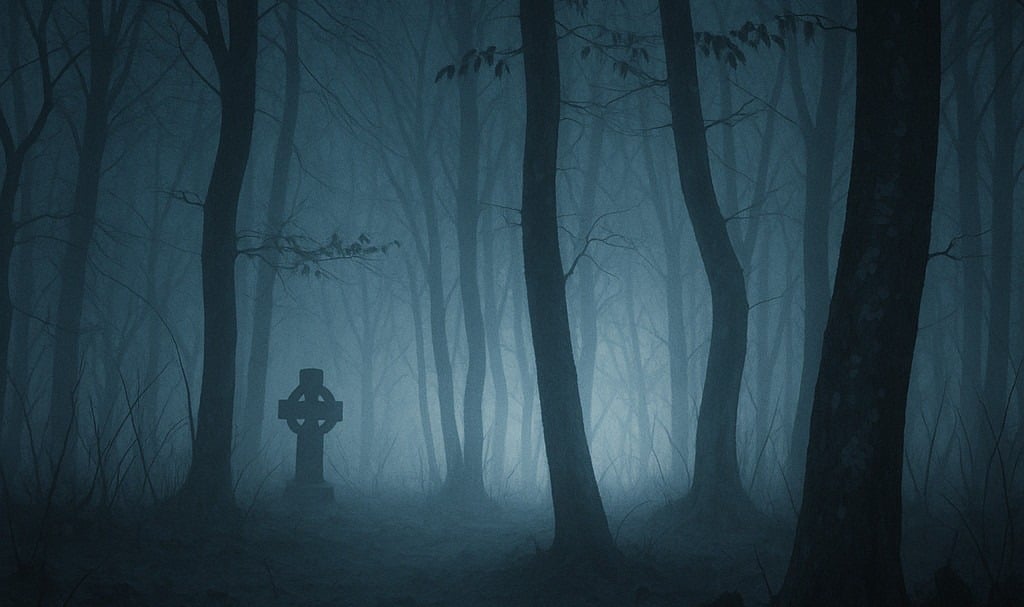
On the thirty-first of October, countries as distant as Mexico, Brazil, Scotland, Australia, New Zealand, Puerto Rico, Canada, and, above all, the United States, celebrate one of the strangest and most popular pagan holidays: Halloween. Over the past two decades, this festival has also taken root in the Czech Republic, Slovakia, and other Eastern European countries, where it overlaps with the Christian commemoration of All Souls’ Day.
Its origins, however, reach back more than two millennia to the ancient Celtic custom known as Samhain, once celebrated in northern France, England, and Ireland. In various forms, this archetypal motif appears in religions and myths across the world. The theme that Halloween brings to consciousness holds deep psychological significance, as it addresses a core insight for curating the well-being of humankind.
Samhain: The End of Summer
The Celts called the festival Samhain. The old Irish and Gaelic word samfuin means “the end of summer” or “the setting of the sun.” The festival marked the conclusion of the harvest and the beginning of the Celtic New Year. The Gallic calendar divided the year into two halves—the dark and the light—each beginning with the months Samonios and Giamonios, respectively. Samhain thus opened the dark half of the year, a time when the sun withdrew and the fires of transformation were kindled. The New Year’s celebration lasted three days—Trinoux Samoni—a triple feast that symbolically contained the movement from life toward death and back again.
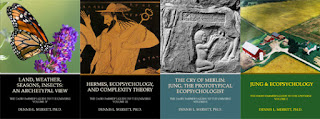
Many believe we are in the Anthropocene Era, an era marked by the planet-wide influence of our species. The field of ecopsychology emerged in the early 1990s as a belated response from the psychological community to address the cascading effects of human-created environmental damage. Jungian ecopsychology offers one of the best frameworks for analyzing our dysfunctional relationship with the environment—and with each other—through an archetypal analysis of the layers of the collective unconscious. Jung was deeply connected with his native Swiss soil that was reflected in the ecological aspects of his conceptual system and his interest in alchemy as his main symbol system. Ecology begins with our relationship with “the little people” in our dreams and dreams can be used to help us connect deeply to the land using Hillman’s concept of Aphrodite as the Soul of the World. In 1940 Jung foretold a paradigm shift that he labeled a “new age” and “Aquarian Age”. The new paradigm will be based on ecological concepts and reflected in the economic system being developed by the sustainable economists. We must think in these terms as a species if there is any hope of averting a planetary nightmare.
This workshop links Jung’s alchemical studies and his examination of the archetype of sacrifice to more recent research into the nature and dynamics of grandiose energies in the human psyche. In this program Robert Moore discusses how the decline of ritual containment of these energies in indigenous and traditional cultures has led to an epidemic of increased anxiety, addiction, and violent acting out.
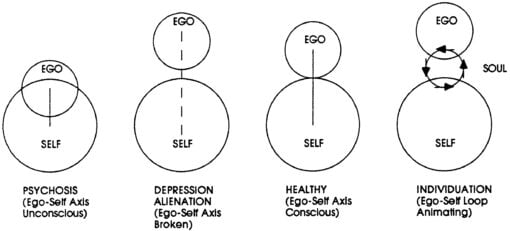
First, Moore introduces the role of the archetype of sacrifice and related techniques of ritual practice in human strategies of coping with the pressures of archetypal energies. Second, he links the failure of these traditional means to our current epidemic of narcissistic acting out. Third, he summarizes the ways in which recent research supports Jung and Edinger on the necessity of the achievement of an ego-Self axis – a conscious and willed sacrificial attitude in the individuation process. Finally, Moore outlines the clinical implications: the ways in which we must be much more specific in our understanding of the structure and dynamics of the ego-Self axis in relation to the analytical task. He discusses the implications of this understanding of sacrifice for our conceptualization of a truly Jungian understanding of a psychoanalytic “cure” – the task of optimizing the analysand’s conscious regulation of archetypal energies. In short, Dr. Moore argues that Jungian Analysis should return to its roots in a manner which draws upon the best in recent interdisciplinary research to build upon Jung’s foundational discoveries.
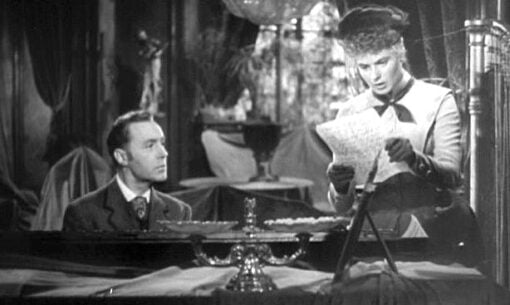
This episode is the first in a new series called Healing Cinema. Judith Cooper, PsyD, and Daniel Ross, PMHNP, members of the Chicago Society of Jungian Analysts, discuss films from an Jungian point of view. These informal discussions will be released in parallel with our other episodes (lectures from our archives and interviews by Patricia Martin) and will not be on any particular schedule.
In this episode, Judith and Dan discuss the 1944 film Gaslight (Wikipedia). They mention the fairy tale “Fitcher’s Bird”, so if you want to learn more about that, you can read about it on Wikipedia. They also touch on the following:
Alchemy
Animus/Anima
Beebe, John
Blackbeard fairytale
Hillman, James
Imposter Syndrome
Initiation
Kalsched, Donald
Numinous
Puella
Senex
Splendor Solis
Telos
Transcendent Function
Trauma
Trickster
Judith Cooper, PsyD is a clinical psychologist and diplomate Jungian Analyst in private practice in Chicago. She is a graduate and member of the C. G. Jung Institute of Chicago. She was adjunct faculty at the Illinois School of Professional Psychology (1999-2000), teaching projective testing. She was clinical supervisor (1991-2002) and director of training (1998-2002) of an APA-accredited psychology internship program at a community mental health center in northwest Indiana. She has taught in the Analyst Training Program and lectured on the anima/animus, and the clinical use of film.
Daniel Ross, RN, PMHNP, MSN, MBA has been a nurse for 40 years and in hospice for over 30. As a Psychiatric Mental Health Nurse Practitioner and Jungian Analyst, he brings a medical, psychiatric, and analytical perspective to the field of end-of-life care. He first completed the two-year Clinical Training Program (now the JPP/JSP) at the C.G. Jung Institute of Chicago then went on to complete the Analyst Training Program. He is in private practice in the northwest suburbs working with adults seeking psychotherapy and continues to see hospice and palliative care patients at the end of life. He is Co-Director of the Jungian Psychotherapy Program and Jungian Studies Program at the C. G. Jung Institute of Chicago.
Thank you to everyone who has shared a little about themselves. If you’d like us to know who you are, click this link, and I’ll read your submission on the podcast!
Thank you to our 2020 donors who gave at the Contributing Member level and above: Barbara Annan, Usha and Ashok Bedi, Jackie Cabe Bryan, Eric Cooper and Judith Cooper, Kevin Davis, George J. Didier, Mary Dougherty, James Fidelibus, John Korolewski, Marty Manning, Dyane Sherwood, Deborah P. Stutsman, Debra Tobin, Alexander Wayne and Lynne Copp, Gerald Weiner, Karen West and James Taylor, and Ellen Young. If you would like to support this podcast, click here to join our community of supporters.
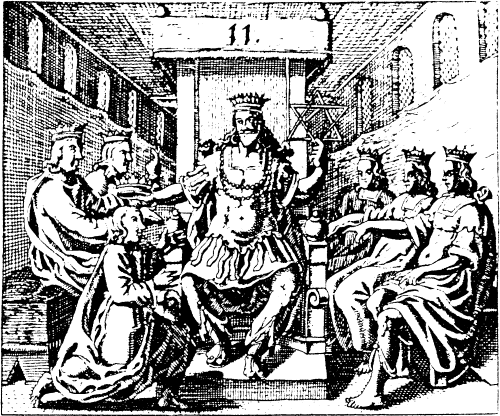
Of the four male archetypes described by Robert Moore—King, Warrior, Magician and Lover—the King is the central archetype in the mature masculine psyche. Without dis-identification from this archetype—and without a dynamic connection to it—a man will be immobilized by grandiosity, lost in depression, and bereft of a sense of meaning, just order, and connection with the creative springs of the psyche. The course is divided into the following four topics:
• The Sacred King in Myth, Folklore and Religion • The Role of the King in Masculine Selfhood • Psychopathology and the King • Healing the King: Resources from Analysis, Ritual and Human Spirituality
It was recorded in 1989.
Robert Moore, PhD was Distinguished Service Professor of Psychology, Psychoanalysis and Spirituality in the Graduate Center of the Chicago Theological Seminary where he was the Founding Director of the new Institute for Advanced Studies in Spirituality and Wellness. An internationally recognized psychoanalyst and consultant in private practice in Chicago, he served as a Training Analyst at the C.G. Jung Institute of Chicago and was Director of Research for the Institute for Integrative Psychoanalysis and Psychotherapy and the Chicago Center for Integrative Psychotherapy. Author and editor of numerous books in psychology and spirituality, he lectured internationally on his formulation of a neo-Jungian psychoanalysis and integrative psychotherapy. His publications include THE ARCHETYPE OF INITIATION: Sacred Space, Ritual Process and Personal Transformation; THE MAGICIAN AND THE ANALYST: The Archetype of the Magus in Occult Spirituality and Jungian Psychology; and FACING THE DRAGON: Confronting Personal and Spiritual Grandiosity.
Thank you to everyone who has shared a little about themselves. If you’d like us to know who you are, click this link, and I’ll read your submission on the podcast! No need to share any identifying information. This information will not be used for any other purpose.
We’re currently running our annual Summer Sale! Get 20% off everything in our online store through July 14. Use the coupon code SUMMER on the CART PAGE before proceeding to checkout.
Thank you to our 2020 donors who gave at the Contributing Member level and above: Barbara Annan, Usha and Ashok Bedi, Jackie Cabe Bryan, Eric Cooper and Judith Cooper, Kevin Davis, George J. Didier, Mary Dougherty, James Fidelibus, John Korolewski, Marty Manning, Dyane Sherwood, Deborah P. Stutsman, Debra Tobin, Alexander Wayne and Lynne Copp, Gerald Weiner, Karen West and James Taylor, and Ellen Young. If you would like to support this podcast, click here to join our community of supporters.
Dennis Merritt, member of the Chicago Society of Jungian Analysts, is interviewed on the Image for Hire podcast. It was released on October 30, 2018. From the description:
The Skrauss discusses synchronicity and the I-Ching with Dennis A. Merrit. Listen up, Cavedweller. Take a plunge into the divinatory system that cracks into the Tao, the binary code of the Universe.
Names dropped and subjects mentioned: Synchronicity is a Dimension How Much Is the I-Ching (Unanswered) Compendium of Chinese Wisdom It Came From 1050 BCE Leibnitz How to Question the I-Ching Carol Anthony’s 3RD Edition Guide to the I-Ching Time is Not Just Quantity; It Is Quality Gausian Curve The Rainmaker Story “Black Elk Speaks” Wolfgang Pauli Hexagram 42 “Increase” The Confucian School Hexagram 23 “Splitting Apart” Hexagram 24 “The Turning Point” Yellow is the Color of the Medium Donald Trump is a Trickster Cover Story of the January 1976 edition of Scientific America
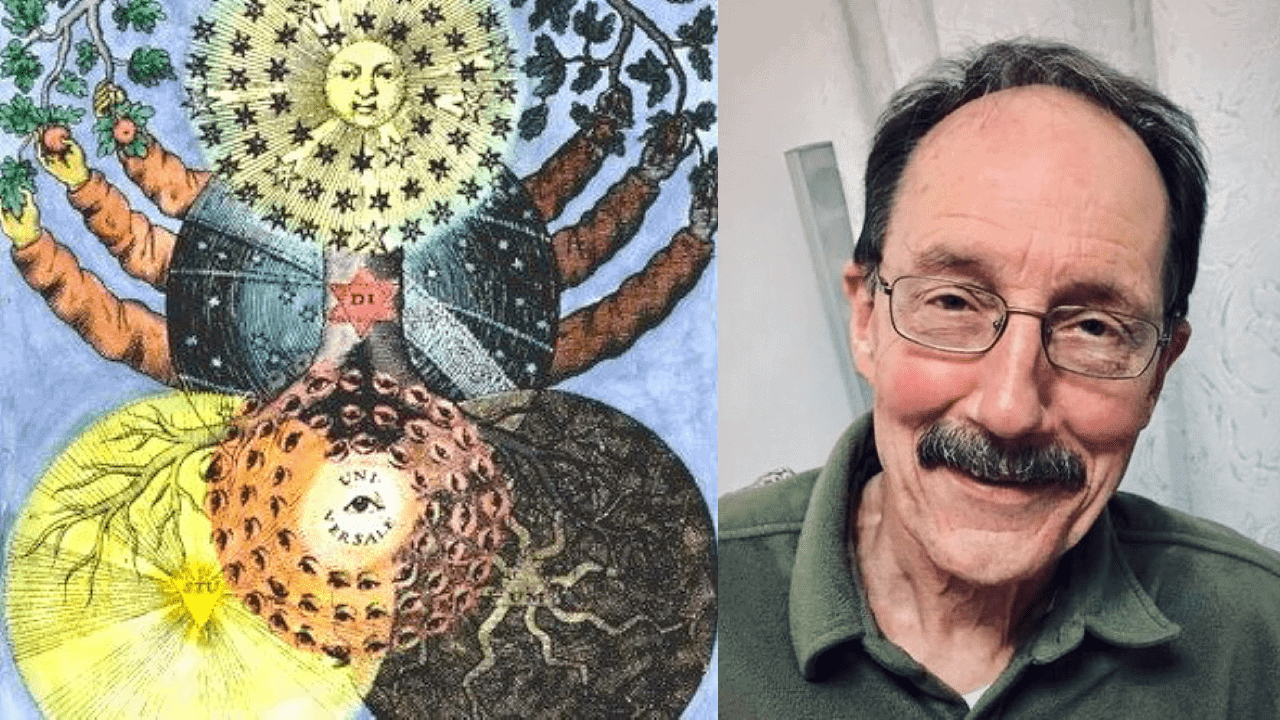
Dennis L. Merritt, PhD, is a Jungian psychoanalyst and ecopsychologist in private practice in Madison and Milwaukee, Wisconsin. Dr. Merritt is a diplomate of the C.G. Jung Institute, Zurich and also holds the following degrees: M.A. Humanistic Psychology-Clinical, Sonoma State University, California, Ph.D. Insect Pathology, University of California-Berkeley, M.S. and B.S. Entomology, University of Wisconsin-Madison. Over twenty-five years of participation in Lakota Sioux ceremonies have strongly influenced his worldview.
In the history of humankind, there have always been seeming psychotic features accompanying authentic religious experience, and there have often been apparent religious images and/or identifications associated with psychotic disorders. In our transitioning and liminal culture, what Jung has called the “transcendent function” acts like a balancing pole for those of us who feel “called” to walk the tightrope between madness and religious ecstasy.
This course examines the work of C.G. Jung and others to help develop imaginal strainers to sift the sounds of the many voices which call to us. It explores our perceptions of the presence of the divine in madness and the madness in the divine.
Topics in this program include:
• Varieties of Religious Experience • Varieties of Psychotic Experience • Higher Powers and Deeper Powers: The Transcendent/Immanent Axis • Feeding the Ego-Self Loop
Note: I am away from home through May 2021 so my microphone quality will be less optimal during this time. Thanks for your understanding!
Thomas Patrick Lavin, PhD is a Zürich-trained Jungian analyst who holds a PhD in clinical psychology and a PhD in theology. He was formerly chief clinical psychologist for the U.S. Army in Europe and is a founding member of the CG Jung Institute of Chicago. He is in private practice in Wilmette, Illinois, and consults internationally on typology, spirituality and addictions.
Thank you to our 2020 donors who gave at the Contributing Member level and above: Barbara Annan, Usha and Ashok Bedi, Jackie Cabe Bryan, Eric Cooper and Judith Cooper, Kevin Davis, George J. Didier, James Fidelibus, John Korolewski, Marty Manning, Dyane Sherwood, Deborah P. Stutsman, Debra Tobin, Alexander Wayne and Lynne Copp, Gerald Weiner, Karen West and James Taylor, and Ellen Young. If you would like to support this podcast, click here to join our community of supporters.
Jungian analyst and author Jean Shinoda Bolen leads a workshop for women “who seek to nurture their own creative and spiritual yearnings and find ways of expressing, articulating, and valuing what grows out of their inner life and the life they have lived so far. In the company of other women who know that suffering and joy and life are linked, personas drop away and soul comes forth.” Bolen weaves stories of psyche and goddess that have the power to touch themes and sacred places in the soul, and she leads listeners through a guided meditation, allowing the opportunity for personal symbols and myths to emerge. This tape set is also intended to serve as a model for women interested in forming their own spiritual groups. It was recorded in 1994.
This seminar examines the ways in which the archetypes of the collective unconscious guide, form, and vitalize our daily existence. We can perceive this archetypal influence subjectively in consciousness and objectively in art and literature. As Jung wrote: “The impact of an archetype, whether it takes the form of an immediate experience or is expressed through the spoken word, stirs us because it summons up a voice that is stronger than our own”. In this seminar works of art from pre-historic times up to the present are examined to see how they both express for us and evoke in us the fundamental archetypes of the human experience.
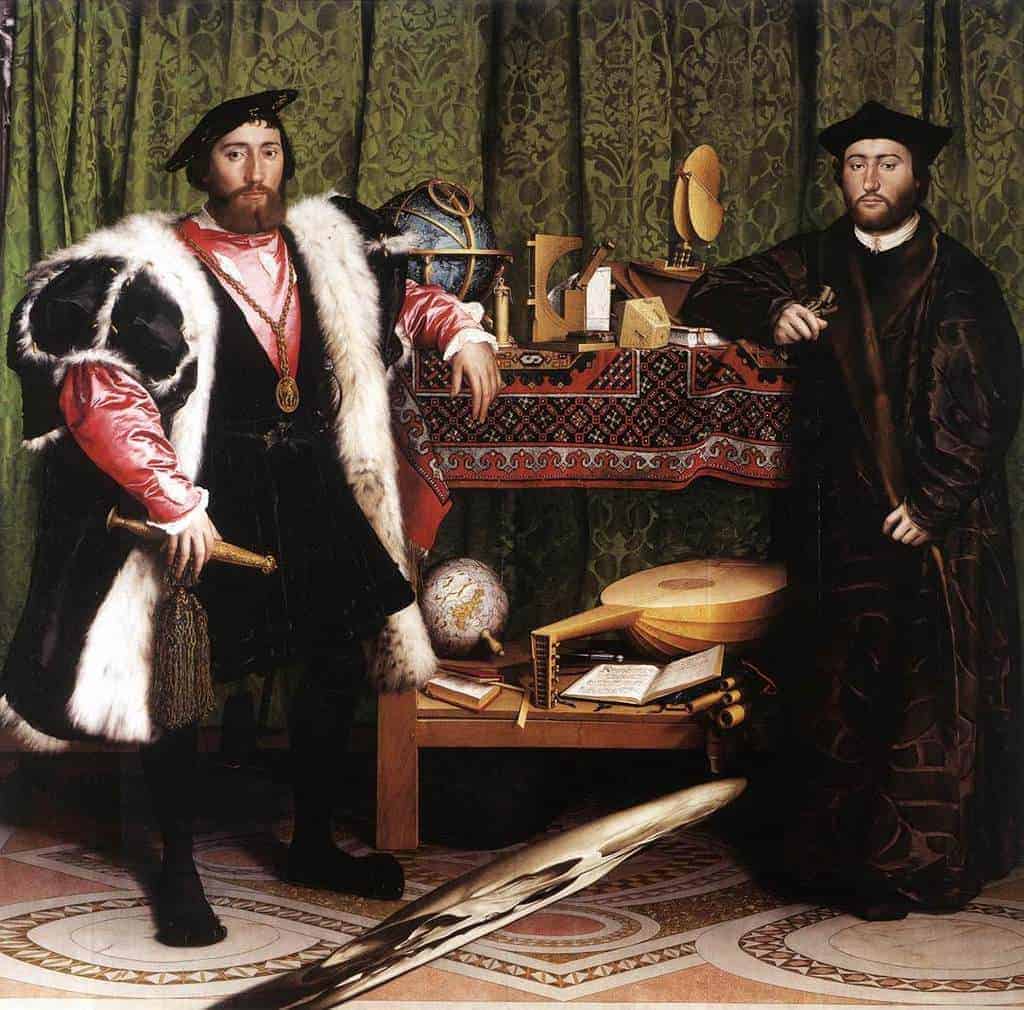
NOTE: We do not have the images that were used in this seminar, though we know one of them is Hans Holbein’s painting The Ambassadors (below).
Using as a focal point Jung’s private notes from his 1939–1940 lectures on the Spiritual Exercises of Ignatius of Loyola, Dr. Thomas Patrick Lavin discusses the role of imaginal work in the quest for spiritual and psychological growth. The Spiritual Exercises is viewed as an initiation rite in which a Christian form of active imagination is presented. It was recorded in 1988.
The series is divided into the follow four topics:
Seeing Jung and Ignatius in Their Historical Contexts
Active Imagination and the Ignatian Methods of Prayer
The Anima Christi and the Fundamentum
Ignatius the Psychologist and Jung the Theologian
Thomas Patrick Lavin, PhD is a Zürich-trained Jungian analyst who holds a PhD in clinical psychology and a PhD in theology. He was formerly chief clinical psychologist for the U.S. Army in Europe and is a founding member of the CG Jung Institute of Chicago. He is in private practice in Wilmette, Illinois, and consults internationally on typology, spirituality and addictions.
Our Blog shares essays, articles, video, audio, and other resources by members of the Chicago Society of Jungian Analysts and other groups that support the education and development of our community.
The views and opinions expressed in the podcasts and blog posts are those of the respected speakers or authors and do not necessarily represent the views of the C. G. Jung Institute of Chicago.