Vlado Solc | Ball Games from a Depth-Psychological Viewpoint
Register for Vlado Solc’s upcoming webinar, Individuation in a Divided World: Deception, Lies, and the Quest for Wholeness
In the game, earthly reality becomes fleeting, a moment thrown behind the shoulder and folded into the past. The mind loosens its habitual boundaries and prepares to accept the unimaginable, stepping into a realm governed by different laws. Here it is relieved of the weights that bind it to ordinary life and becomes, if only for a while, free, unbridled, and touched by the divine (Hugo Rahner).
Unrestrained passions, crowd-madness, and the ecstatic swings between euphoria and wrath appear most vividly in the collective dramas of politics, war, and competitive sport. They also surface in religious gatherings and musical concerts, where the psychic temperature rises and the emotional field becomes charged. The danger always lies in the splitting of affect—whether the crowd collapses into the dualistic moral categories of us and them, heroes and enemies. Once this bifurcation takes hold, the group is seized by archetypal forces that can overwhelm individual consciousness.
Ball games have long been one of the principal cultural vessels for these strong energies. For millennia they have offered humanity a symbolic container in which the primordial struggle between life and death, order and chaos, light and shadow, may be enacted. One might therefore ask whether the ball game and religion share a deeper kinship. Do they both serve, in their own ways, the development and enlargement of consciousness? And is this still true today?
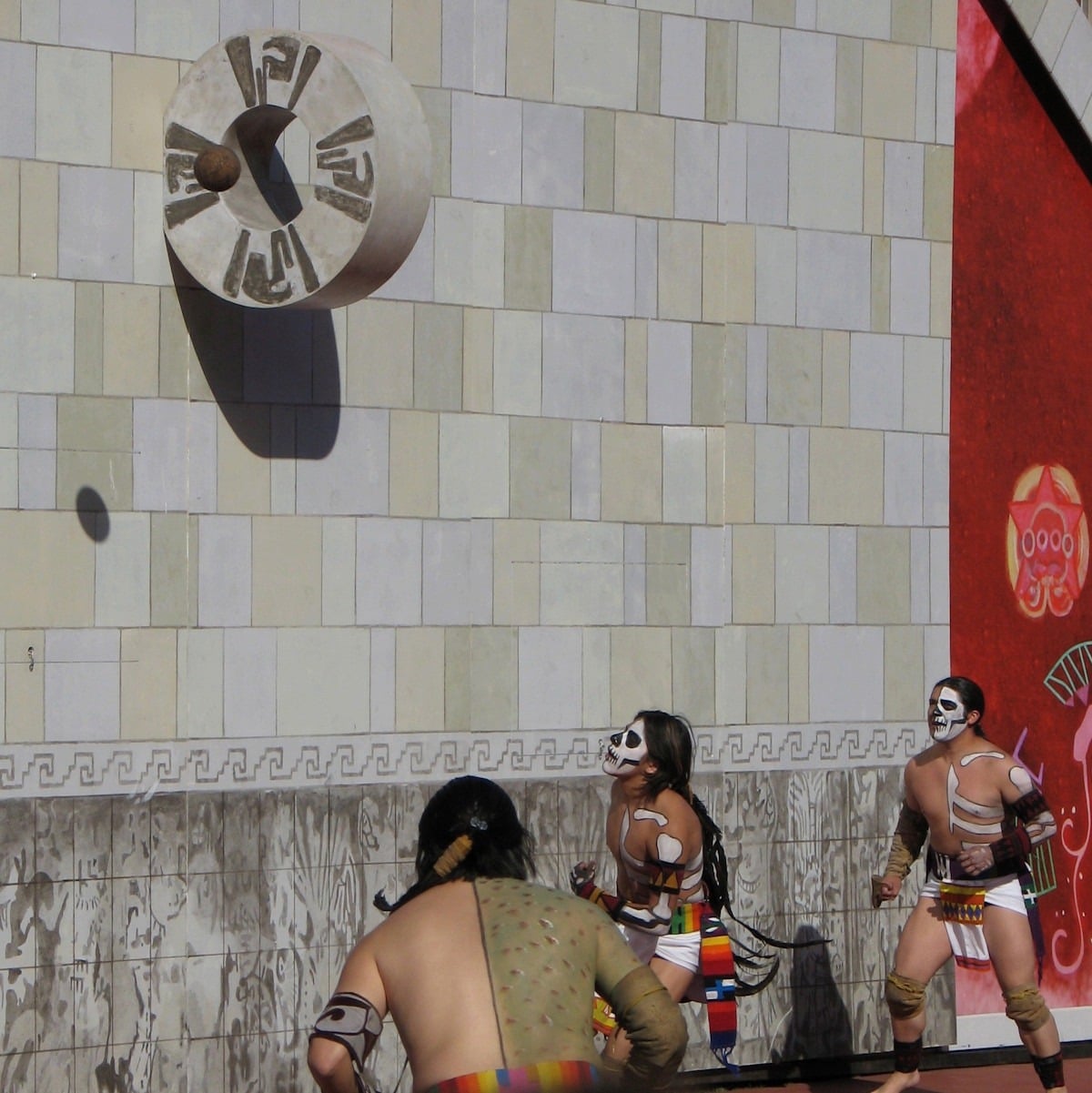
The oldest archaeological evidence of ball games comes from Central America and reaches back more than 3,000 years. Yet the Maya likely played the game known as pitz as early as four and a half millennia ago (Ekholm, 1991). Similar traditions appear in Egypt and Mesopotamia only later. But these ancient ball games were not sports in the contemporary sense. Although crowds filled specially constructed arenas, the games were primarily sacred rituals. Their purpose was to initiate participants into the mysteries of the cosmos, to appease the deities, and to stimulate the fertility of the earth.
(more…)