
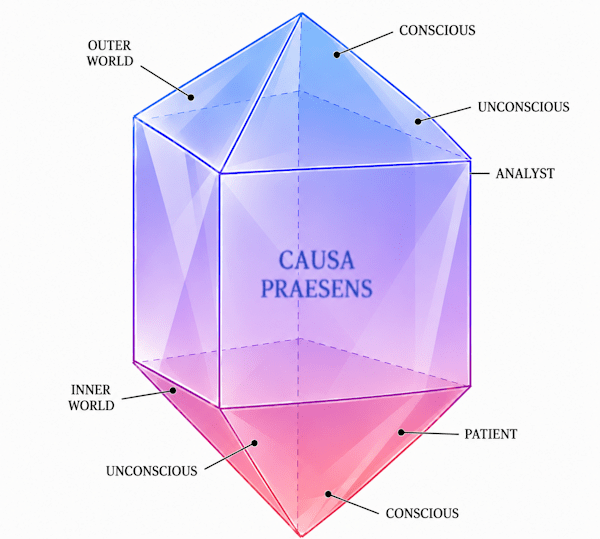
This three-hour workshop offers an introduction to core Jungian concepts related to complexes, symbols, and the structure of the psyche as they are encountered in Jungian analysis and psychotherapy. Participants will explore how complexes develop and express themselves through emotional reactions, relational patterns, defenses, symptoms, dreams, and symbolic material. The workshop will also introduce foundational Jungian approaches to understanding and engaging symbolic material within the analytic process, including amplification, reflective inquiry, and elements of active imagination.
Learning objectives
As a result of attending this course, participants will be able to:
Define complexes, symbols, and archetypal dynamics within the framework of Jungian psychology.
Recognize how complexes manifest clinically through affective reactions, defenses, symptoms, and interpersonal patterns.
Describe basic Jungian methods for approaching symbolic material in psychotherapy.
Differentiate symbolic understanding from concretistic or purely literal interpretations in clinical work.
After the course participants will:
Understand foundational Jungian concepts related to complexes, symbols, and archetypal dynamics.
Recognize how complexes manifest in psychotherapy through affect, defenses, symptoms, relational patterns, and symbolic material.
Be familiar with basic Jungian approaches to engaging symbolic material within the therapeutic process.
Be better able to differentiate symbolic meaning from literal or concretistic interpretations in clinical work.
Required reading
Goodheart, W. B. (1980). The theory of analytic interaction. In J. A. Sanford (Ed.), Clinical approaches to Jungian analysis (pp. 3–20). Inner City Books. (will be sent with ticket confirmation email)
Recommended reading
Jacobi, J. (1959). Complex, archetype, symbol in the psychology of C. G. Jung. Princeton University Press.
Instructor
 Vladislav (Vlado) Šolc is a professional psychotherapist and diplomate Jungian analyst practicing in Milwaukee, Wisconsin, and Chicago, Illinois. He received his training at the C. G. Jung Institute of Chicago and Charles University. He is an active member of the Chicago Society of Jungian Analysts and the C. G. Jung Institute of Chicago, where he serves as co-director of the JPP and JSP programs.
Vlado lives in constant awe of the miracle of existence. His clinical focus includes psycho-spiritual crises such as loss of meaning and direction in life, mind–body connection and psychosomatic issues, immigration and cultural identity, and women’s empowerment.
He is the author of numerous peer-reviewed articles and books: Psyche, Matrix, Reality; The Father Archetype; In the Name of God—Fanaticism from the Perspective of Depth Psychology; Dark Religion: Fundamentalism from the Perspective of Jungian Psychology (with George Didier, 2018); Democracy and Individuation in the Age of Conspiracy Theories; Mirage of Truth: Psychology of Illusion and Self-Deception in Radical Beliefs (Malvern, 2024); and Temná Religia (UA edition, Exist, 2025).