
Home › Public Programs › Live Courses & Events › The Soul of Prague: In the Footsteps of Alchemy, Legends, and Analytical Psychology
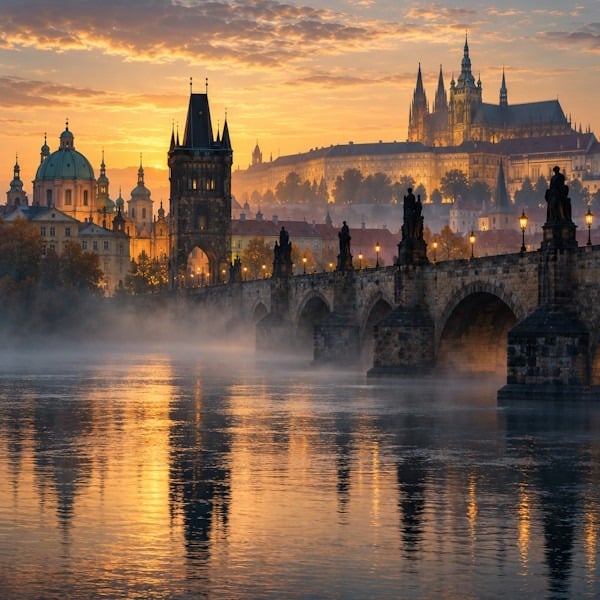
Educational Trip to the Czech Republic (Prague, Kutná Hora, and Příbor)
June 12-21, 2027
15 CEs Available
This trip is co-sponsored by the C. G. Jung Institute of Chicago and the AMOS Teaching Agency. After the event, the link to purchase CEs ($25 fee) will be sent to registrants.
Presentations and experiential workshops, professionally guided cultural excursions, organizer-led walks, a documentary screening, shared meals, reflection, and discussion.
Fee covers: Nine nights at the Hotel Carlo IV with daily breakfast; presentations and workshops: 15 CEU’s through the C. G. Jung Institute of Chicago; 10 days public transportation pass; transportation to Kutná Hora and Příbor; opera admission; entry to the alchemy museum, selected Jewish Museum sites, the Old Jewish Cemetery, and Sigmund Freud’s Birth House; the welcome dinner, Vltava River dinner cruise, and closing gala dinner with selected beverages.
The faculty includes Jungian analysts, psychologists, psychotherapists, researchers, writers, and educators:
Learning Objectives
As a result of attending this course, participants will be able to:
After the course, participants will:
Required Reading
Recommended Reading
This search engine will search our public programs, the Jung Chicago Radio and Blog, and our store.
To search only the store, visit our Store page.
If you’re looking for a Jungian Analyst, use our Find an Analyst search engine or browse the Chicago Society of Jungian Analysts page.
This program will be recorded and distributed by the C. G. Jung Institute of Chicago for educational and historical purposes. By registering for this program, you consent to appear as an audience member on a recording that will be distributed by the C. G. Jung Institute of Chicago. Without expectation of compensation or other remuneration, now or in the future, you give your consent to the C. G. Jung Institute of Chicago, its affiliates, and agents to use your image and likeness and/or any interview statements from you in its publications, advertising, or other media activities (including the Internet).