Essays

Dingir.cz | Review of Dark Religion: Fundamentalism from The Perspective of Jungian Psychology

This review originally appeared in Czech at dingir.cz.

Vladislav Šolc, George J. Didier, Dark Religion: The Psychology of Denying and Discovering Reality, Prague: Malvern, 2025, 398 pages.

I opened Vladislav Šolc and George Didier’s Dark Religion expecting a scholarly Jungian study of fundamentalism and was pleasantly surprised by how much space it gives to many of the questions I ask myself at my own therapeutic desk—for example, where does healthy faith end and possession by one’s own image of God begin, and where do the concepts of psychotherapeutic work end and a genuine spiritual crisis begin?

Central Concepts: Theocalypsis and Theonemesis

The authors, both Jungian analysts, distinguish between religion, understood as a living relationship to the numinous that can never be fully grasped, and creed, a confession of faith that can so easily preserve this relationship in the form of dogmas, rituals, and institutions. According to the authors, religion becomes “dark” when creed becomes severed from its living source in the unconscious and begins to serve a defensive purpose—concealing what a person does not wish to see about themselves and about reality.

(more…)

Patricia Martin | What Happens When Your Online Persona Takes Over

The Experiment: The B-sides Will Explore New Territory in Jungian Thought

Sometimes the best discoveries come from saying “yes” to an experiment.

Five years ago, during the COVID shutdown, I took a leap: launching a podcast with the C. G. Jung Institute of Chicago. After devoting two years immersed in Jung’s work as a student in the Institute’s Jungian Studies Program, and subsequently leading a Collected Works reading group, I’d joined the Institute’s public program committee just as we faced an urgent question—how do we stay connected when we can’t gather in person?

A podcast felt right. And I was itching to explore new directions during the torpor of the shutdown. What started as an experiment has grown into something beyond what I imagined—a global audience and conversations with leading voices in psychology who generously share their insights with our listeners.

When Restlessness Becomes a Compass

This summer, I felt a familiar stirring again. I’ve learned to trust these moments. They’re rarely about boredom—they’re usually invitations to evolve, to stretch into something new.

That’s how the “B-sides” series was born. Think of it as going off-road on the path to individuation—intimate conversations about what it actually feels like to navigate digital life, wrestle with uncertainty, and maintain the connection to our inner realm.

The Hidden Cost of Online Influence

For our first episode, I sat down with Hilde Helphenstein, an artist and art world critic whose own experiment as an online influencer spiraled into something she never saw coming.

Hilde created Jerry Gagosian—an online persona supposedly related to Larry Gagosian, the legendary NY gallery owner and kingmaker of the contemporary art world. Her feeds drew thousands of followers. At prestigious live events, such as Art Basel and the Whitney Biennial, people approached her as “Jerry” and she’d correct them, explaining Jerry was just an online identity.

People waved that away. The persona stuck.

What began as a cheeky experiment became her identity in the world. And as Hilde surrendered to living as someone else, emotional consequences followed—ultimately reaching a breaking point that forced her to make a choice: keep performing or reclaim her true self.

A Case Study for Our Persona-driven Age

Hilde’s conversation is unflinching. She walks us through her undoing with remarkable honesty delivering a poignant portrait of influencer culture from the inside, and a cautionary tale for an era when who we are online is not necessarily who we actually are.

You may recall the classic New Yorker cartoon. A dog sits at the computer with the caption: “On the internet, nobody knows you’re a dog.” It used to be funny. Hilde’s story shows us why it’s no laughing matter anymore—and what it cost her to claw her way back to herself.

Listen In

The conversation is in two parts—a before-and-after portrait of one woman’s struggle with digital identity, followed by her journey back to herself.

The collective is living through a metamorphosis few consented to. The question isn’t whether our digital personas will change us—they already have. The pressing question is whether we’ll become conscious of the consequences in time to choose what we’re becoming, or whether we’ll arrive at ourselves as strangers.

(more…)

Murray Stein | Individuation

The theme of individuation sounds through Jung’s writings, like a leitmotiv, from the time of his break with Freud and psychoanalysis onward without pause to his death. All things considered, it is perhaps his major psychological idea, a sort of backbone for the rest of the corpus. 
     Introducing the term in his esoteric, anonymously published little book Septem Sermones ad Mortuos (Seven Sermons to the Dead) in 1915, Jung deepened and expanded the idea in the much revised work, also begun in the same period, Two Essays in Analytical Psychology (Coll. Wks., Vol. 7) and in the summary work of the early period, Psychological Types (Coll. Wks., Vol. 6). Later he added further substance to the notion in his studies of archetypes and especially in his researches on alchemy. He detailed individuation clinically in his seminars (Dream Analysis, The Visions Seminar, and Nietzsche’s Zarathustra) as well as in several case studies. It also played an important role in his many writings on religion and culture. 
     Individuation was taken up as a central theme by nearly all of Jung’s important students. Major contributions were made to the theory by Fordham, who studied individuation in children, and by Neumann, who saw individuation as unfolding in three major stages, each containing several sub-phases. Hillman, a Jungian deconstructionist, has vigorously attacked the notion of psychological development in general and individuation in particular, holding a view that such ideas are nothing but fantasies used to construct modern psychological myths. More recently, Jacoby has added refinement and differentiation to the theory of individuation by introducing data from modern infant research. Samuels has introduced the feature of political consciousness and involvement. The debate goes on. 
     In the following pages, I present a distillation and synthesis of the Jungian tradition on the central theme of individuation, situating this particular discussion in the clinical setting of psychotherapy and showing how the working Jungian psychotherapist may use this developmental idea in practice. 

(more…)

Freddie Taborda | Jungian Analysis for the Living and for the Dead: Lessons from the Jaguar-Man in a Tomb

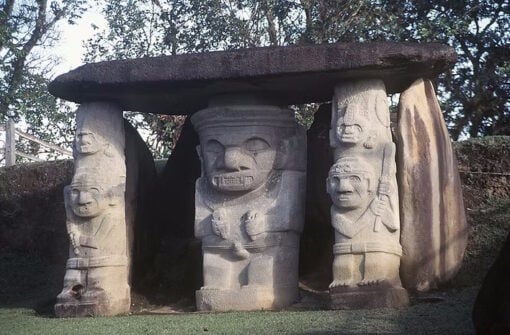
In a previous article that I wrote (“What The Death May Teach The Living About the Individuation Process”), I stated the hypothesis that archetypal images, carved on stone statues by an aboriginal group and located on a necropolis, could provide psychological guidance for the journey of life, death, and rebirth, specifically for the journey of the afterlife. It seems that each person and his/her spirit may have to go through the journey of living, dying, and rebirth. Therefore, the individual spirit of a human being may go through three phases; a) the living (“incarnated spirit”); b) the Death (“spirit”), and c) the Rebirth (“reincarnated spirit”) (Credit for the Image: UNESCO-Sacred Sites-Martin Gray).

You may be skeptical and question the relevance of talking about death and the afterlife when we are still alive and want to fulfill our individuation process. That is a reasonable point of view. However, I would like to invite the reader to consider the following two issues: 1) that there are certain archetypal images, while we are alive, that appear in dreams, visions, paintings, sculptures, etc that will be, also, essential and relevant, after we die, during the journey to the afterlife. If we could determine what similar archetypal images are crucially relevant for both, the cycle of living and for the afterlife, then, each of us will have not only a much larger “vision and mission” about life and death but, also, less karma that would decrease the necessity to reincarnate. Those archetypally relevant (images), if related consciously during living, would contribute, first, towards enlightment, second towards decreasing the individual karma that forces reincarnation and, third, following Jung’s thought about the afterlife, the spirit of a person who has died and who did not fulfilled, on earth, the Destiny (the archetypal endowments) that was given to him/her, will be forced, after death, to continue atempting to relate and integrate those archetypal images that were not realized during the living phase. Unfortunately, and according to Jung, the ‘dead’ or the ‘spirits of the dead’ will not be able to integrate the archetypal messages because the opposite -being humanly alive- is not available to them for consciousness to be realized. This article will attempt to further discuss these ideas within the context of the statue of the Jaguar-Man that is located at the entrance of a tomb in a necropolis in San Agustin, Colombia.

     The journey is not just about life; it is also about death, the afterlife, and possibly about the beyond (i.e., Rebirth). Therefore, the sculpture to be discussed in this article may provide important archetypal information for the living during the phase of living and dying; 2) that the dead, or the world of the spirits, as it is known in indigenous cultures, may provide valuable existential and psychological information to the living.

  Jungian analysis has focused its efforts on the phase of living; however, Jung’s thoughts on the subtle body and the Philosopher’s Stone may enlarge the scope of Jungian analysis that includes, also, the phase of death, and rebirth. Therefore, rather than exclusively focusing and emphasizing the process of individuation during the phase of “living” life, Jungian analysis, with its emphasis on the collective unconscious and God Within, could broaden and facilitate the analytical process for the individual to go not only through the phase of life (the individuation process) but, also, to prepare AND continue for and during the phases of death, the afterlife, and the beyond, which may include resurrection, rebirth, and reincarnation.

(more…)

Patricia Martin | Book Review: The Psychological Effects of Immigrating by Robert Tyminski

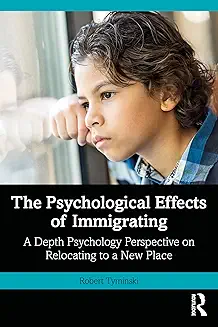
Robert Tyminski’s book, The Psychological Effects of Immigrating, is an exceptionally useful read in these turbulent times. As thoughtful people grapple with the bewildering array of policies from the White House aimed at immigrants, there is a collective anguish over how to respond. The cruel hypocrisy is that our national identity has been forged by immigrant stories. Still, sympathetic citizens also feel the tug of conscience when recent waves of immigrants aren’t easily absorbed into the economic fabric of our towns and cities as in previous generations.

At the core of Tyminski’s book is a focus on the mental health issues that arise for immigrants. A practicing Jungian analyst, Tyminski deftly weaves stories from his casework with myth and history to create an emotional landscape for the immigrant experience.

Join Robert Tyminski on March 8 at our Community Day 2025: Awakening Mythic Wisdom for Individual and Community Renewal

The basis of empathy is context. If we cannot see the human struggle of immigrants, it’s largely because it’s being drowned out by survival memes—it’s us against them. More constructive solutions elude us. This is where Tyminski’s work shines. His writing creates poignant profiles of immigrants working hard to fit in and the psychological costs for failing to do so: isolation, erasure, inadequacy, idealization of a past life, and feelings of doom and dread.

(more…)

Freddie Taborda | The Continuum Between Aluna and its Spirits, Jungian Analysis, and God

“God does not call those who are worthy, but those whom He will.” Therese of Lisieux

The interface between indigenous spiritual life and Christian Mysticism may prove to be a fruitful ground towards addressing some worldwide challenges such as psychological alienation and climate change.

For example, Indigenous Sacred Geography -the idea that Nature is sacred and that Geography is the map that describes where the sacred spirits dwell- could help us see the divine aspect of Nature, in order to address the rampant destruction of the Earth. Also, the Jungian view of the Self -the center and totality of the individual- ,understood as the Divine within, could provide an epistemological and an experiential framework in which a fragment of God dwells in the human heart. There is a Divine Without and a Divine Within -two aspects of God located in Nature and, also, located in us. A continuum of Divinity.

(more…)

Freddie Taborda | Aluna, the Collective Unconscious & God

ENGLISH/SPANISH

“In the Dark Night of the Soul, Bright Flows the River of God” (Juan de La Cruz)

Human beings have been seeking to periodically experience the profound love towards the Divine as well as the intense beauty and ecstasy that comes with it. This union was sought by the poet, Juan de Yepes y Alvarez (better known as Juan de La Cruz – John of the Cross), and this article will focus primarily on understanding some sentences from a mystic poem that he wrote as well as amplifying them with the wisdom of the Kogi Indians.

On a side note, I make the contention that a similar experience is reached by the individual, at some point, at the farthest end of the process of individuation and wholeness, during a Jungian Analysis that is methodologically conducted in the manner delineated by Jung, which was closely followed by his early collaborators (Von Franz, Hannah, Harding, Edinger, etc).

(more…)

Freddie Taborda | Our Panting Soul Cleaves to God…

It is rather deflating and narcissistically painful for the so-called adult human ego to humbly accept that there is a colossal spirit that nourishes, guides and determines his/her life.

The mystical writer, Francis De Sales wrote the following:

“There, as the famished babe cleaves to its mother’s breast as though it would fain absorb it, so our panting soul cleaves to God as though to be forever absorbed in Him, and He in us!”

The industrialized fascination with visibility and the scientific discrimination against the soul has led the human ego to erase, from consciousness, the idea that there is a soul. The human ego has appointed itself as the primary and exclusive factor in the psychology of the individual.

Furthermore, God does not exist for a large segment of the population and, therefore, the experiential and practical idea that there is a God image in us that determines our lives, as Jung brilliantly demonstrated through the experience of Jungian analysis, has little acceptance and relevance in industrialized and technological societies.

(more…)

Freddie Taborda | “JAMAYA PU’LAPUIN?”: A Brief Archetypal Teaching from Wayuu Aborigines to Jungian Psychology

“Jamaya Pu’lapuin?” (“How was your dream?”) are the first words with which the Wayuu greet each other daily. In contrast, when people from industrialized societies meet, they may say, “Hi”, “Hola”, “How are you?.” The greeting of ‘How are you?’ does not exist in the Wayuu language. An initial comparison of the greetings between these two groups of people may reveal the following: the Wayuu emphasize the primacy of the aa’in (soul) in life, which gets manifested in dreams, as well as the individual caring for the soul in another person’s life. Given the daily forgetfulness of the existence and subjective experience of the unconscious in the industrialized people, the word “You” in their greetings may be referring to the “Ego” and, less so to the integrated whole of the conscious and the unconscious. From a Jungian perspective, the Wayuu seem to be, initially, more interested in unconscious processes than “civilized people” are.

Therefore, Jungian analysts could learn, from the Wayuu aborigens, that the first question to be asked, when an analysand comes for the first time and to subsequent sessions to analysis, is “How was your dream?” (“Jamaya Pu’lapuin”). This is congruent with Jung’s writings and clinical practice where the centrality of dreams, as revealing the wisdom of the Self, was fundamental. There are exceptions, of course.

The Wayuu (“The People of the Sun, Sand, and Wind”) are an indigenous tribe that live in the desert of La Guajira Peninsula, which borders Colombia and Venezuela. They live in small settlements called “Rancherias,” which consists of five or six houses made of branches, corrals, and mud houses. Because their societal structure is matrilineal, each Rancheria is composed of people belonging to the same matrilineal clan. Some of these clans are, for example, the Aspushana (“Sour with Something”), the Epieyu (“Where Sleepiness is Felt”), the Jayaliyuu (“Eyes without Head”), etc. Furthermore, Wayuu children primarily bear their mother’s last name (and not the father’s), and each clan is identified with a symbolic drawing (“Kanaas”) that usually has a geometric shape that alludes to an animal, a plant, or a geographical place.

Therefore, the importance of images in Wayuu’s cosmology is comparable to the primacy of images in Analytical Psychology.

According to Paz (2017), Lapu refers to a deity that, through dreams, conveys messages to people. Dreams help the Wayuu to prognosticate many of outer events, such as death, health, adversities, etc. The Wayuu seek signals in dreams on how an adverse event can be prevented. At night, the aa’in (soul) of a Wayuu wanders, and such travel is aptly described in dreams. In recent decades, and within the field of Analytical Psychology, there is a greater tendency to see dreams as a comment, primarily, of the “analytical field” and, less so, of the intrapsychic life of the individual. The Wayuu perspective that dreams are helpful comments or warnings about outer events, such as a marriage, taking a trip, buying a house, taking a new job, moving to another city, etc, is becoming, unfortunately, less relevant to Analytical Psychologists because of the idea that “subjective interpretations” of dreams are emphasized more than “objective interpretations.” A close reading of Wayuu’s cosmology may help Analytical Psychology to have a more balanced view and hold the tension of the opposites of viewing dreams subjectively and objectively. Therefore, next time we want to relocate to another city, change jobs, have more children and, (why not?) getting together with a friend, etc., let us consult a dream about it, like the Wayuu do.

(more…)

Vladislav Šolc | Three Ways of Why

“I no longer seek the cause of a neurosis in the past, but in the present. I ask, what is the necessary task which the patient will not accomplish?”

Jung, CW 4, par. 570

Precise questioning is conditio sine qua non of successful analysis. When asking questions, the analyst not only asks the client, but also poses questions to his or her own self. While communicating with the client, the analyst “looks” inside, and there, asks questions and “listens” for answers. The analyst not only actively searches in his memory, where he/she seeks understanding, but also observes feelings, images and ideas that passively arise from unconsciousness. The analyst’s psyche mirrors and at the same time complements missing links of the complex life situation of analysand and also his/hers own. The analyst not only helps the patient to find a new, “broader” meaning of his problem, but also enters the field in which both could undertake transformation.

The analysis is a creative team-work. In a way it is a maieutic, Socratic method of dialogue with the difference that the objective of analysis is to ask questions in such a way so they contribute to the revelation of a fuller life story, i.e. self-knowledge. The aim is not to achieve some kind of logical truth, but rather a new attitude; the greater degree of freedom that includes the acceptance of painful also-truths. The so-called behavioral therapies basically focus on the patient’s conscious intentions and analyze whether these intentions are in conflict with the demands of the given reality. In Jungian analysis there is a third variable that enters the healing process, and that is unconscious. The unconscious has its own intelligence: it can have its own will, its own intentions and secrets, or even an “opinions,” which could often be at odds with the opinions of the ego. It is the “Other” that we also dialogue with during the process of analysis.

Conscious and unconscious

Let’s ponder for a moment on the paradoxical relationship between conscious and unconscious. Conscious, just like the unconscious, has no “substance” that we can quantify, measure or localize per se. We can only know about it via our own conscious medium and thus through its own subject.  The very fact that the psyche can never be objectified – even though it can be perceived that way during the states of extended consciousness – by definition makes it an unconquerable mystery.

Vladislav (Vlado) Šolc (pronounced “Schultz”) is a professional psychotherapist and Jungian analyst practicing in Milwaukee, Wisconsin. Vlado received training from the C. G. Jung Institute of Chicago and Charles University in Prague. He is the author of five depth-psychology-oriented books: Psyche, Matrix, Reality; The Father Archetype; In the Name of God—Fanaticism from the Perspective of Depth Psychology; Dark Religion: Fundamentalism from the Perspective of Jungian Psychology and most recently Democracy and Individuation in the Times of Conspiracy Theories. 

Links: Vlado Solc’s Website | Vlado Solc’s Lectures Available on the C. G. Jung Institute of Chicago Website

Murray Stein | Midway on our life’s journey…: On Psychological Transformation at Midlife (Essay)

The midlife period in most advanced countries worldwide today the average life expectancy for males extends to their mid- to late seventies and for women to their early to mid-eighties. Of course, this varies from place to place and depends very much on socio-economic factors that fluctuate broadly with world historical events such as revolutions, wars, economic depressions, and so forth. But on the whole and in average circumstances, the midway point of life for both sexes falls in the period between thirty-five and forty-five years of age. Why is this noteworthy, especially for psychotherapists?

Often midlife is a profoundly transformational period in personal identity for both women and men. Sometimes this takes the form of the famous “crisis,” but often it is not something quite so dramatic. I have come to think of it instead as a potential second birth of adult identity, the first having taken place between late adolescence and the thirtieth year. And birth is sometimes traumatic, and so one speaks of it as a “crisis” with justification. But even if not a fullblown crisis, it may signal a subtle transition in a person’s sense of self and identity.

About the timing of this transformation process, one cannot be quite so precisely mathematical. Some people seem to experience this on the early end of the midlife period, and many others on the other end and in their late forties. The timing is quite variable and depends on a number of factors coalescing that bring it to a point. What happened earlier in the person’s line of development out of childhood through adolescence and into adulthood is of importance in this. Generally speaking, the storms of life catch people by surprise, and the midlife tumult is no exception even if people are somewhat prepared to expect something big nowadays due to the extensive press coverage the midlife crisis has received in the decades of the late twentieth century.

It is also the case that some people do not undergo a midlife transformation at any time, any more than that everyone achieves a solid and meaningful adult identity. This is not a given. Some people show serious developmental arrest in early childhood attitudes or in adolescence, for example, and for such people there is no midlife transformation to speak of, but rather a continuous and prolonged identity as a partially adult person with striking childish or adolescent features remaining in place to the end of their lives. For these people, aging is real only in a physical sense but not psychologically, and even at the physical level it can staved off quite well and for a lengthy period of time given enough money for cosmetic surgery and other forms of anti-aging treatment. For people who make the transitions from childhood into adulthood successfully and more or less fully, however, aging is a psychological as well as a physical process. Psychologically, as one gets older one also becomes more complex and – dare we say it? – more mature and perhaps even attains to a level of wisdom in later years. Most importantly, one achieves a defined identity that extends beyond the early one of late adolescence and early adulthood. This later form of adult identity I call the personality’s “imago.” It takes form as the result of one or more transformations in and around the midlife period.

The Two Halves of Life – Achievement of Conventionality, Development of Individuality

The midlife phase of the lifelong psychological developmental process, which in Jungian circles we refer to as individuation, marks the turning point from the first half of life into the second. The lifespan as a whole can be divided into two more or less equal (in duration) parts, a first and a second half. This is an important image to keep in mind when considering the meaning of the midlife transition. Each half of life has its own proper projects, tasks, and challenges, and they are different. The tasks of the first half have to do with growing up physically and mentally and with attaining the social stature of an adult member of one’s community, willing and able to take responsibility for the tasks of adulthood – working, raising a family, paying taxes, preparing to take care of one’s aging parents and able to care for one’s growing children, and so forth. From the psychological perspective, this calls for personal (i.e., ego) development out of a primal state of attachment to mother and parentlike caretakers and and for growing out of a sense of dependency on them in order to gain a felt degree of independence, autonomous functioning, and the ability to contribute to others rather than only to absorb and consume. This has profound moral as well as psychological features.

(more…)

Amy Champeau | “Naming” in Tiferet Journal

“We continue to speak, if only in whispers, to something inside us that
wants to be named.”

Dorianne Laux, “Dark Chants,” Only as the Day is Long.

My name is Chaika Runya bat Yitzchak v’ Channa Gittl. This is my ‘Hebrew’ name, my sacred name, my Yiddish name, my hidden name, my underground name, the name that binds me to family lineage and tradition and to my people, going all the way back to the beginning of time. This is the name I am called in Jewish ritual, when I have an aliyah to give a blessing over the Torah or when I am invited to the pulpit to read the Torah, or when I am a witness to someone immersing herself in the sacred baths in order to convert to Judaism.

I am named for two great aunts who were murdered in the Holocaust.

Most mornings of my life, since I was younger than six years old, I’ve woken in terror, heart beating fast, body sweating. In an effort to calm myself I’d listen to music or focus on my breathing before opening my eyes to start the day. Each morning the fear would dissolve as I moved into the day’s activities, only to return the next.

One morning, not long ago I decided to turn toward the fear and terror rather than away, to be curious about it, to explore it, to get to know it. I curled up in the fetal position in bed, tuning in to the sensations I experienced physically. I became aware of a feeling like electric jolts pounding and jumping in my chest and arms. I asked the sensations, “What is the message held in my body?”

What I heard them say was this: “Life is not safe.”

My mother tells me my aunts, Chaika and Runya, the younger sisters of my mother’s father, were shot, killed and buried in a mass grave in then Austria-Hungary during the Holocaust. In my mind’s eye, here is how I imagine them: They are two young women, maybe in their 20s; their light brown hair hangs in braids down their backs, each wears a dark wool dress, a cream-colored pinafore, woolen knee-high socks and sturdy shoes. They stand with their family and friends and fellow-townspeople, all of whom have been herded out of their homes, their beds, and lined up at the town’s edge, in rows, ahead of them the deep pit into which their lifeless bodies will be tossed, one on top of another, like sacks of potatoes, to be covered with dirt, and erased.

I imagine dogs barking wildly and the loud yelling of male voices in a language my aunts and their friends and family don’t understand. They do understand what will happen to them. I imagine the rifle shots as faceless men mechanically shoot them from behind, one by one, and I imagine the unbearable, unimaginable terror of waiting as your turn comes, hearing the screams, hearing the heavy plop as each body falls into the pit, witnessing your loved ones’ deaths, knowing your inescapable fate, waiting to feel pain, feeling the bullet entering your chest from the back, breathing your last breath, collapsing and tumbling, finally, into the pit. In their names, their stories, their lives, their deaths take residence within the confines of my body, mind and soul, carried within me like a blessing, or like a parasite.

(more…)

Filter Posts

  • About Jung Chicago Radio & Blog

    Jung Chicago Radio is home to a variety of podcasts that range from archival seminar recordings (Institute Archives), to interviews (Jung in the World) to discussion on film (Healing Cinema), fairy tales (Jungian Ever After), and our programs.

    Our Blog shares essays, articles, video, audio, and other resources by members of the Chicago Society of Jungian Analysts and other groups that support the education and development of our community.

    The views and opinions expressed in the podcasts and blog posts are those of the respected speakers or authors and do not necessarily represent the views of the C. G. Jung Institute of Chicago.

    Login

    This search engine will search our public programs, the Jung Chicago Radio and Blog, and our store.

    To search only the store, visit our Store page.

    If you’re looking for a Jungian Analyst, use our Find an Analyst search engine or browse the Chicago Society of Jungian Analysts page.