Dennis Merritt, member of the Chicago Society of Jungian Analysts, is interviewed on the Image for Hire podcast. It was released on October 30, 2018. From the description:
The Skrauss discusses synchronicity and the I-Ching with Dennis A. Merrit. Listen up, Cavedweller. Take a plunge into the divinatory system that cracks into the Tao, the binary code of the Universe.
Names dropped and subjects mentioned: Synchronicity is a Dimension How Much Is the I-Ching (Unanswered) Compendium of Chinese Wisdom It Came From 1050 BCE Leibnitz How to Question the I-Ching Carol Anthony’s 3RD Edition Guide to the I-Ching Time is Not Just Quantity; It Is Quality Gausian Curve The Rainmaker Story “Black Elk Speaks” Wolfgang Pauli Hexagram 42 “Increase” The Confucian School Hexagram 23 “Splitting Apart” Hexagram 24 “The Turning Point” Yellow is the Color of the Medium Donald Trump is a Trickster Cover Story of the January 1976 edition of Scientific America
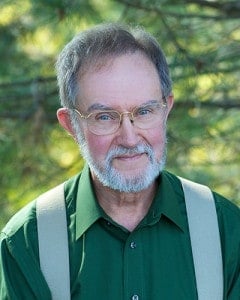
Dennis L. Merritt, PhD, is a Jungian psychoanalyst and ecopsychologist in private practice in Madison and Milwaukee, Wisconsin. Dr. Merritt is a diplomate of the C.G. Jung Institute, Zurich and also holds the following degrees: M.A. Humanistic Psychology-Clinical, Sonoma State University, California, Ph.D. Insect Pathology, University of California-Berkeley, M.S. and B.S. Entomology, University of Wisconsin-Madison. Over twenty-five years of participation in Lakota Sioux ceremonies have strongly influenced his worldview.
Thank you to Dr. Dana C. White and Dr. Will Linn for sharing the recording of this online salon with Jungian Analyst Jean Shinoda Bolen. It was recorded in August, 2020.
Patricia Martin is a cultural analyst, consultant, and the author of three books on cultural trends. As a consultant, Martin has worked on teams at Discovery Communications, Dannon, Microsoft, Ms. Foundation for Women, Oracle, Unisys, The Art Institute of Chicago, and the New York Philharmonic, to name a few. Her work has been featured in the New York Times, Harvard Business Review, USA Today, and Advertising Age. A blogger since 2002, Martin was a regular contributor to Huffington Post during its start-up years. She earned a B.A. in English and sociology from Michigan State University and an M.A. in Irish literature and culture from the University College Dublin. Later, she built a foundation for her cultural analysis by studying Jungian theory and depth psychology at the C. G. Jung Institute of Chicago, where she is currently a Professional Affiliate and member of the program committee. In 2017, she harnessed artificial intelligence to uncover the effects of the internet on our sense of self. A book on her findings entitled Will the Future Like You? is due out later in 2021. Martin speaks worldwide about cultural changes that are shaping the future and the impact of the digital culture on the collective. A native of Detroit, Martin works in Chicago and lives in an ancient forest near the shores of Lake Michigan with her husband and countless deer.
Thank you to everyone who shared a little bit about themselves since the last episode. If you’d like us to know who you are, click this link, and I’ll read your submission on the podcast! No need to share any identifying information. This information will not be used for any other purpose.
Thank you to our 2020 donors who gave at the Contributing Member level and above: Barbara Annan, Usha and Ashok Bedi, Jackie Cabe Bryan, Eric Cooper and Judith Cooper, Kevin Davis, George J. Didier, James Fidelibus, John Korolewski, Marty Manning, Dyane Sherwood, Deborah P. Stutsman, Debra Tobin, Alexander Wayne and Lynne Copp, Gerald Weiner, Karen West and James Taylor, and Ellen Young. If you would like to support this podcast, click here to join our community of supporters.
This episode I want to try something new. We see statistics that show how many people listen to this podcast, but that doesn’t show us who our listeners are. I’m curious about who listens to this podcast and I think some of you might be interested in what kind of community of listeners you’re a part of. I want to know where you are on your journey, how you found this podcast, and what you are looking for in life. If you’d like to share a little bit of that with us, click this link, and I’ll read your submission on the podcast! No need to share any identifying information. This information will not be used for any other purpose.
In this episode, Patricia Martins interviews Jungian Analyst Dan Ross, RN, PMHNP, about conscious individuation throughout life stages and why it makes for a better death.
Daniel Ross, RN, PMHNP, MSN, MBA has been a nurse for 40 years. He has worked extensively as Director of Clinical Services in the field of home health care and hospice. As a Psychiatric Mental Health Nurse Practitioner, he brings both a medical and psychiatric experience to his work. He currently works part time in the field of Palliative Care and Hospice as a Nurse Practitioner, visiting patients in their home or nursing facility helping them in their transition to hospice. He is also a Jungian Analyst in private practice in downtown Chicago.
Patricia Martin is a noted cultural analyst, author, and consultant. She has published three books on cultural trends. As a consultant, Patricia has helped some of the world’s most respected organizations interpret social signals that have the power to shape the collective. She’s worked with teams at Discovery Communications, Dannon, Microsoft, Unisys, The Art Institute of Chicago, and the New York Philharmonic. Her work has been featured in the New York Times, Harvard Business Review, USA Today, and Advertising Age. She holds an M. A. in literature and cultural studies at the University College, Dublin (honors) and a B.A. in English from Michigan State University. In 2018, she completed the Jungian Studies Program at the C. G. Jung Institute of Chicago, where she is a Professional Affiliate. A scholar in residence at the Chicago Public Library, Patricia has devoted nearly a decade to studying the digital culture and its impact on individuation. She lectures around the world on topics related to the psyche and the digital age, the future of the collective, and the changing nature of individuation, all concepts discussed in her forthcoming book: Will the Future Like You?
Thank you to our 2020 donors who gave at the Contributing Member level and above: Barbara Annan, Usha and Ashok Bedi, Jackie Cabe Bryan, Eric Cooper and Judith Cooper, Kevin Davis, George J. Didier, James Fidelibus, John Korolewski, Marty Manning, Dyane Sherwood, Deborah P. Stutsman, Debra Tobin, Alexander Wayne and Lynne Copp, Gerald Weiner, Karen West and James Taylor, and Ellen Young. If you would like to support this podcast, click here to join our community of supporters.
Dennis L. Merritt, PhD, is a Jungian psychoanalyst and ecopsychologist in private practice in Madison and Milwaukee, Wisconsin. Dr. Merritt is a diplomate of the C.G. Jung Institute, Zurich and also holds the following degrees: M.A. Humanistic Psychology-Clinical, Sonoma State University, California, Ph.D. Insect Pathology, University of California-Berkeley, M.S. and B.S. Entomology, University of Wisconsin-Madison. Over twenty-five years of participation in Lakota Sioux ceremonies have strongly influenced his worldview.
First, thank you to everyone who participated in our 2020 Holiday Giving Drive. Because of your support, we were able to meet our $25,000 fundraising goal! We could not do this work without you all and appreciate all the support, including those who support the institute in other ways.
James Hollis, PhD was born in Springfield, Illinois, and graduated from Manchester University in 1962 and Drew University in 1967. He taught Humanities 26 years in various colleges and universities before retraining as a Jungian analyst at the Jung Institute of Zurich, Switzerland (1977-82). He is presently a licensed Jungian analyst in private practice in Washington, D.C. He served as Executive Director of the Jung Educational Center in Houston, Texas for many years, was Executive Director of the Jung Society of Washington until 2019, and now serves on the JSW Board of Directors. He is a retired Senior Training Analyst for the Inter-Regional Society of Jungian Analysts, was first Director of Training of the Philadelphia Jung Institute, and is Vice-President Emeritus of the Philemon Foundation. Additionally he is a Professor of Jungian Studies for Saybrook University of San Francisco/Houston. He has written a total of sixteen books, which have been translated into 19 languages. He lives with his wife Jill, an artist and retired therapist, in Washington, DC. Together they have three living children and eight grand-children.
Patricia Martin is a noted cultural analyst, author, and consultant. She has published three books on cultural trends. As a consultant, Patricia has helped some of the world’s most respected organizations interpret social signals that have the power to shape the collective. She’s worked with teams at Discovery Communications, Dannon, Microsoft, Unisys, The Art Institute of Chicago, and the New York Philharmonic. Her work has been featured in the New York Times, Harvard Business Review, USA Today, and Advertising Age. She holds an M. A. in literature and cultural studies at the University College, Dublin (honors) and a B.A. in English from Michigan State University. In 2018, she completed the Jungian Studies Program at the C. G. Jung Institute of Chicago, where she is a Professional Affiliate. A scholar in residence at the Chicago Public Library, Patricia has devoted nearly a decade to studying the digital culture and its impact on individuation. She lectures around the world on topics related to the psyche and the digital age, the future of the collective, and the changing nature of individuation, all concepts discussed in her forthcoming book: Will the Future Like You?
Thank you to our 2020 donors who gave at the Supporting Member level and above: Barbara Annan, Usha and Ashok Bedi, Jackie Cabe Bryan, Eric Cooper and Judith Cooper, Kevin Davis, George J. Didier, James Fidelibus, John Korolewski, Marty Manning, Dyane Sherwood, Deborah P. Stutsman, Debra Tobin, Alexander Wayne and Lynne Copp, Gerald Weiner, Karen West and James Taylor, and Ellen Young. If you would like to support this podcast, click here to join our community of supporters.
I want to personally introduce our new producer, Patricia Martin. She is a cultural analyst, author, consultant, Professional Affiliate (graduate of our Jungian Studies Program), and member of our Program Committee. This is the first interview she’s doing for us and we are developing plans to do more. I’m grateful that she’s willing to give her own time to help us bring interesting discussions to this podcast. -Ben Law
In this episode, Patricia Martin interviews Boris Matthews, current Director of the Analyst Training Program at the C. G. Jung Institute of Chicago, about his own life journey, his perspective on analysis, education, and individuation, and the program itself.
Note: There was some mysterious background hum that we did our best to remove, but the audio quality is affected somewhat. We will continue to work on improving the audio quality for these interviews.
Boris Matthews, PhD, LCSW, NCPsyA graduated from the C.G. Jung Institute of Chicago, is a member of the Chicago Society of Jungian Analysts, and maintains a practice of analytical psychology in the Milwaukee and Madison, WI, areas. He is particularly interested in working with persons who recognize need to develop a balanced adaptation to the “outside” and to the “inside” worlds, work that involves awareness of the individual’s psychological typology. Dreams, active imagination, and spiritual concerns are integral elements in the analytic work, the ultimate goal of which is to develop a functioning dialog with the non-ego center, the Self. He serves as the Director of Training of the Analyst Training Program, regularly teaches classes for analytic candidates, and conducts study groups.
Patricia Martin is a noted cultural analyst, author, and consultant. She has published three books on cultural trends. As a consultant, Patricia has helped some of the world’s most respected organizations interpret social signals that have the power to shape the collective. She’s worked with teams at Discovery Communications, Dannon, Microsoft, Unisys, The Art Institute of Chicago, and the New York Philharmonic. Her work has been featured in the New York Times, Harvard Business Review, USA Today, and Advertising Age. She holds an M. A. in literature and cultural studies at the University College, Dublin (honors) and a B.A. in English from Michigan State University. In 2018, she completed the Jungian Studies Program at the C. G. Jung Institute of Chicago, where she is a Professional Affiliate. A scholar in residence at the Chicago Public Library, Patricia has devoted nearly a decade to studying the digital culture and its impact on individuation. She lectures around the world on topics related to the psyche and the digital age, the future of the collective, and the changing nature of individuation, all concepts discussed in her forthcoming book: Will the Future Like You?
Thank you to our 2019 Supporter level donors: Bill Alexy, Usha and Ashok Bedi, Circle Center Yoga, Arlo and Rena Compaan, Eric Cooper and Judith Cooper, Lorna Crowl, D. Scott Dayton, George J. Didier, Ramaa Krishnan/Full Bloomed Lotus, Suzanne G. Rosenthal, Deborah Stutsman, Debra Tobin, Alexander Wayne and Lynne Copp, Gerald Weiner. If you would like to support this podcast, click here to donate.
Arlo Compaan, co-chair of the Institute’s Program Committee and past Director of Training, interviews the facilitators of our new six-month online program Memories, Dreams, Reflections: Exploring the Depths. In this monthly online weekend program, Jungian analysts and experts will introduce the major themes of Analytical Psychology as Carl Jung developed them across his life, beginning in his early 20s and ending in his 80s. Through presentations, facilitated large and small group interaction, and paired experiential exercises, we will explore these themes from Jung’s writings in relationship to the events of his life and then connected to our contemporary experiences.
By following Jung into the depths of his experience, we will deepen our understanding of these themes in our lives:
Adaptation to our inner world and to the outer world
The relationship between spirit and matter
The individual and collective unconscious
The relationship of consciousness (ego) to the Self
Daily life and dream life, images, and symbols
The program will run from January through June, 2021. This interview was recorded in October 2020.
Adina Davidson, PhD is a Jungian analyst practicing in Cleveland, Ohio. She trained at the C G Jung Institute of Chicago and graduated in September 2019. She is particularly interested in the ways we personally and collectively make meaning of our lives through telling our stories.
Andrea Gaspar Gonzalez, PsyD is a clinical psychologist practicing in the Chicagoland area, with a focus on the treatment of trauma and sexual abuse. She is a recent Fellow of the Jungian Psychotherapy Program (2018–2020) and graduate of the Jungian Studies Program (2014–2016) at the C G Jung Institute of Chicago. Her current research is focused on collective psyche, application of Jung’s theories to the present cultural climate, and re-examining archetype and archetypal material, especially as it relates to the concept of the feminine, from a fourth-wave feminist standpoint.
Daniel Ross, RN, PMHNP has been a nurse for 40 years and in hospice for over 30. As a Psychiatric Mental Health Nurse Practitioner, he brings both a medical and psychiatric experience to the field of end-of-life care. He is a Jungian Analyst at the C G Jung Institute of Chicago. Dan works in the field of Hospice and Palliative Care and is in private practice as a psychotherapist in Chicago.
Thank you to our 2019 Supporter level donors: Bill Alexy, Usha and Ashok Bedi, Circle Center Yoga, Arlo and Rena Compaan, Eric Cooper and Judith Cooper, Lorna Crowl, D. Scott Dayton, George J. Didier, Ramaa Krishnan/Full Bloomed Lotus, Suzanne G. Rosenthal, Deborah Stutsman, Debra Tobin, Alexander Wayne and Lynne Copp, Gerald Weiner. If you would like to support this podcast, click here to donate.
“You can’t define the sacred,” insists Pacifica professor and author, Dr. Lionel Corbett. “We can only talk about how we experience it. When C. G . Jung contemplated the sacred, he used the criteria of German theologian, Rudolf Otto, who described the experience of the sacred or the holy as “numinous”—that is, something that is mysterious, tremendous, or fascinating, having a powerful emotional quality beyond the ordinary or the everyday ego.” Pacifica alumna Bonnie Bright interviews Pacifica faculty member Dr. Lionel Corbett on Psyche and the Sacred. Dr. Corbett teaches in the Integrative Therapies and Healing Practices Specialization, the Jungian and Archetypal Studies Specialization and both doctoral programs in Clinical Psychology.
Dr. Hogenson is a diplomate Jungian analyst in private practice in Chicago, where he works primarily with adults dealing with life transitions, dream work, and trauma. He serves on the editorial board of the Journal of Analytical Psychology, is the author of Jung’s Struggle with Freud as well as numerous articles on archetypal theory, synchronicity and the nature of symbols. His teaching in the Analyst Training Program of the Institute has concentrated on the works of Jung, and he offers supervision and small reading groups for clinicians interested in Jung’s psychological system. Prior to becoming an analyst, Dr. Hogenson was on the faculty of the Yale School of Management, and a consultant to many organizations on leadership and strategy. He continues to work with individual executives and organizations on management issues using the principles of Jungian psychology.
Speaking of Jung is available through a variety of podcasting platforms and apps, including Apple Podcasts, Stitcher, Google Play, TuneIn, Spotify, and iHeartRadio. Just search for “Speaking of Jung” in your favorite podcasts app to subscribe on your mobile device. You can also listen to select episodes on YouTube.
Ken James, PhD, member of the Chicago Society of Jungian Analysts, was interviewed by Dale M. Kushner for Psychology Today. The interview is split into three parts:
Dr. Kenneth James maintains a private practice in Chicago, Illinois at The Soulwork Center. His areas of expertise include dream work and psychoanalysis, archetypal dimensions of analytic practice, divination and synchronicity, and ways to sustain the vital relationship between body, mind and spirit. He has done post-doctoral work in music therapy, the Kabbalah, spirituality and theology, and uses these disciplines to inform his work as a Jungian analyst.
Speaking of Jung is available through a variety of podcasting platforms and apps, including Apple Podcasts, Stitcher, Google Play, TuneIn, Spotify, and iHeartRadio. Just search for “Speaking of Jung” in your favorite podcasts app to subscribe on your mobile device. You can also listen to select episodes on YouTube.
Our Blog shares essays, articles, video, audio, and other resources by members of the Chicago Society of Jungian Analysts and other groups that support the education and development of our community.
The views and opinions expressed in the podcasts and blog posts are those of the respected speakers or authors and do not necessarily represent the views of the C. G. Jung Institute of Chicago.