The four archetypal couples inherent in the Self—the King and Queen, the Warriors, the Magicians, the Lovers—create four distinct psychosocial environments within a relationship. The archetypal dynamics underlying both fulfillment and frustration in human relationships are examined in this seminar recording, with particular focus on marital dynamics and sexual dysfunction.
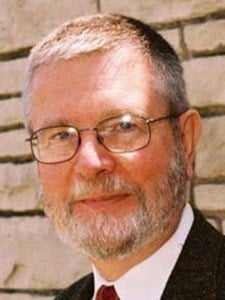
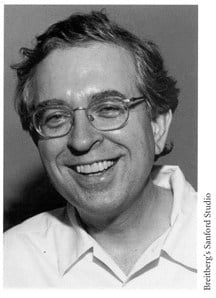
Robert Moore, PhD was Distinguished Service Professor of Psychology, Psychoanalysis and Spirituality in the Graduate Center of the Chicago Theological Seminary where he was the Founding Director of the new Institute for Advanced Studies in Spirituality and Wellness. An internationally recognized psychoanalyst and consultant in private practice in Chicago, he served as a Training Analyst at the C.G. Jung Institute of Chicago and was Director of Research for the Institute for Integrative Psychoanalysis and Psychotherapy and the Chicago Center for Integrative Psychotherapy. Author and editor of numerous books in psychology and spirituality, he lectured internationally on his formulation of a neo-Jungian psychoanalysis and integrative psychotherapy. His publications include THE ARCHETYPE OF INITIATION: Sacred Space, Ritual Process and Personal Transformation; THE MAGICIAN AND THE ANALYST: The Archetype of the Magus in Occult Spirituality and Jungian Psychology; and FACING THE DRAGON: Confronting Personal and Spiritual Grandiosity.
Jungian analyst and author Jean Shinoda Bolen leads a workshop for women “who seek to nurture their own creative and spiritual yearnings and find ways of expressing, articulating, and valuing what grows out of their inner life and the life they have lived so far. In the company of other women who know that suffering and joy and life are linked, personas drop away and soul comes forth.” Bolen weaves stories of psyche and goddess that have the power to touch themes and sacred places in the soul, and she leads listeners through a guided meditation, allowing the opportunity for personal symbols and myths to emerge. This tape set is also intended to serve as a model for women interested in forming their own spiritual groups. It was recorded in 1994.
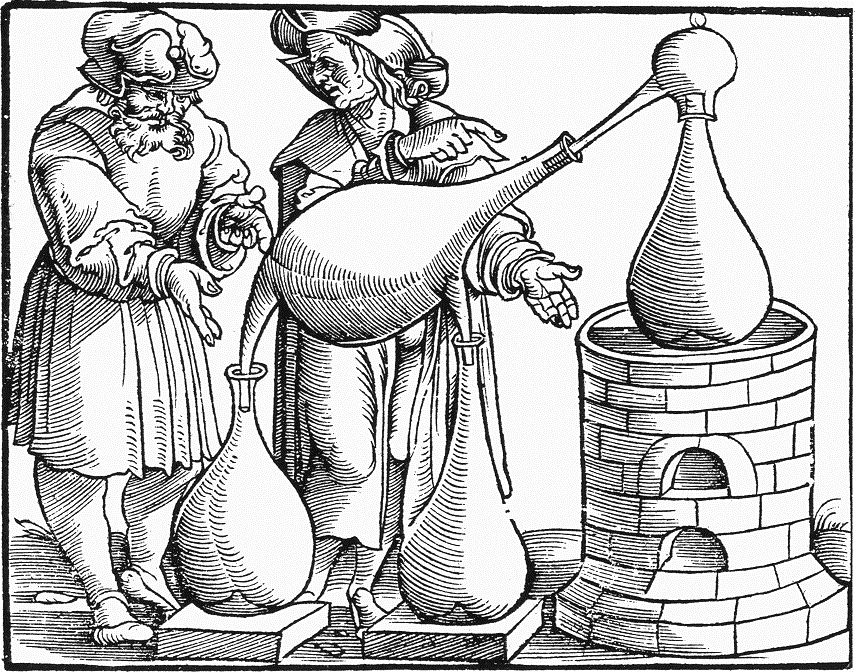
During the last thirty years of his life, Jung turned to alchemy as a fundamental resource for depth psychology. In alchemy he found images and thoughts that were uniquely fitted to his perceptions of psychological life and that confirmed his views of the spontaneous activity and directedness of the unconscious. Jungian analyst and author Murray Stein presents an overview of Jung’s work on alchemy to develop an understanding of the relation of alchemical symbols to the analytical process and individuation. The set includes the following lectures:
Commentary on The Secret of the Golden Flower [in CW 13]
Psychology and Alchemy [CW 12, parts 1 & 2]
The Spirit Mercurius [in CW 13]
The Psychology of Transference [in CW 16]
Mysterium Coniunctionis [CW 14, Chap. 6]
Murray Stein, PhD is a training analyst at the International School for Analytical Psychology in Zurich, Switzerland. His most recent publications include The Principle of Individuation, Jung’s Map of the Soul, and The Edinburgh International Encyclopaedia of Psychoanalysis (Editor of the Jungian sections, with Ross Skelton as General Editor). He lectures internationally on topics related to Analytical Psychology and its applications in the contemporary world. Dr. Stein is a graduate of Yale University (B.A. and M.Div.), the University of Chicago (Ph.D., in Religion and Psychological Studies), and the C.G. Jung Institut-Zurich. He is a founding member of the Inter-Regional Society of Jungian Analysts and Chicago Society of Jungian Analysts. He has been the president of the International Association for Analytical Psychology (2001-4), and is presently a member of the Swiss Society for Analytical Psychology and President of the International School of Analytical Psychology, Zurich.
This episode is “Go I Know Not Whither, Bring Back I Know Not What”, part one of the series The Psychology of Fairy Tales.
“Fairy tales are the purest and simplest expression of collective unconscious processes… They represent the archetypes in their simplest, barest, and most concise form … [and] afford us the best clues to the understanding of the processes going on in the collective psyche.” — Marie-Louise von Franz
This series examines the psychological richness of the fairy tale. Each recording in the series focuses on a single fairy tale and explores the tale’s insight into a particular psychological theme and inner logic. It was recorded in 1991.
Lois Khan, PhD was a practicing psychoanalyst in the Chicago area and Tennessee for almost 50 years. She also taught at the University of Chicago, in addition to lecturing as a psychologist throughout the world.
Women’s contributions have been central to the development of Jung’s analytical psychology from its inception to the present. Their contributions include direct collaborations with Jung, amplification and interpretation of his ideas and original theoretical contributions to the field.
This special program includes lectures and discussion to explore the life, work, and influence of six Jungian women who have contributed significantly to the history of analytical psychology. The speakers are practicing analysts who talk about the ways in which these women have personally affected their own psychological and spiritual development and their work with clients. Through personal reflections and reminiscence of the speakers, listeners will come to know and appreciate the contributions of a wide range of Jungian women to the theory and practice of analytical psychology. It was recorded in 2001.
In this lecture, Dr. Beebe explores a neglected area in analytical psychology, the influence of the father’s unconscious upon the later development of the son. Jung’s analytical psychology offers insight into the way a father’s feminine side influences the formation of the anima of the son. It was recorded on February 2nd, 1984 and includes the original introduction by Murray Stein.
John Beebe, MD a physician specializing in psychotherapy, is a Distinguished Life Fellow of the American Psychiatric Association and a past president of the C. G. Jung Institute of San Francisco. He is the author of Integrity in Depth, editor of C. G. Jung’s Aspects of the Masculine, and co-author of The Presence of the Feminine in Film. He is the founding editor of The San Francisco Jung Institute Library Journal (now titled Jung Journal: Culture and Psyche), and a was the first American co-editor of the London-based Journal of Analytical Psychology. An international lecturer is widely known for his work on psychological types, the psychology of moral process, and the Jungian understanding of film. Recently he has been engaged in training the first generation of analytical psychologists in China.
Audio issue: The microphone in the original event was too sensitive, which caused loud distortions when the speaker got too close to it. We have done what we can to make those less obtrusive, but you will still hear them.
Caroline Stevens, Jungian analyst and wise woman of our Jungian community, introduces Karin Carrington, psychotherapist, author, and teacher who shares her reflections and understandings about “same sex love” and “women loving women.”
This presentation on same sex love was a groundbreaking event in February 23, 1991. Karen thanked the Jung Institute for its sponsorship of this historical event during these years of struggle to achieve legal and cultural rights for gay and lesbian people. I think it is safe to say that Karin’s presentation raised the consciousness of many in the audience concerning same sex love.
Karin situates her comments within the political struggle for lesbian and gay rights at that time. In her presentation, she calls for a restorative analytic theory based in a deep understanding of what it means to love a member of one’s own gender for our selves and for the collective.
Karen quotes an early comment by Jung that homosexuality should not be the concern of legal authority – that persons loving people of their own sex should not be outside of the law. She also examines the impact of Jung’s theory of contra-sexuality as well as the work of Robert Hopcke on the subject of same sex love and of Christine Downing on women loving women.
Finally, Karin opens the discussion to include questions about what is our true erotic nature as well as questions that explore the over-valuation of separation and the symbolic quest of the hero within current cultural values.
Karin Lofthus Carrington is a psychotherapist, consultant, writer, and teacher whose work focuses on the interrelationship of psychology, spirituality, and social conscience. She has authored and edited books on this topic including Same-Sex Love and The Path to Wholeness.
Rediscovering the Wisdom of the Earth with China Galland.
One of the most important features of a pilgrimage is its intimate association with nature through the kaleidoscope of changing weather and landscape that one experiences along the way. Fellow pilgrims, strangers at the start, may feel like old friends by the end of a long journey made sleeping under the stars, walking through rain and sun together. All difficulty and differences are endured in service of one uniting spiritual goal: reaching the shrine and receiving the blessings of the deity therein.
Many contemporary pilgrimages to the Black Madonnas in Europe and Latin America echo the earlier, pre-Christian veneration of the earth as the Great Mother. In India and Nepal, Nature herself is still worshipped. One of the greatest tasks before us today is to understand “what it means ‘earthwise’ to be human in the world today,” as Michael McElroy, atmospheric scientist, told the United Nations.
This presentation explores how the experience of pilgrimage and the growing awareness of the Dark Mother can help us to understand more deeply “what it means ‘earthwise’ to be human in the world today.”
China Galland is the award-winning author of Women in the Wilderness and Love Cemetery: Unburying the Secret History of Slaves, internationally recognized authority on the Black Madonna, leader of pilgrimages to sacred sites, wilderness guide, public speaker, and professor-in-residence at CARE/Graduate Theological Union. More information can be found at her website chinagalland.com.
To be a crone is not a matter of age or appearance. Becoming a “crone” is a crowning inner achievement. “Crones Don’t Whine” is the first of thirteen defining qualities of the crone because whining blocks spiritual and psychological development. Crone qualities are those that can be taken to heart and cultivated throughout life; they support authenticity, integrity, soul growth and social activism. While physiology and socialization make it more difficult for most men to develop crone qualities, exceptional men can become crones. Crone development comes through connecting deeply with others and with soul qualities in ourselves. Maturity, wisdom, and compassion develop over time through love and reflection; they are the fruits of consciousness and choice.
Anita Greene, Ph.D. is a Jungian analyst in private practice in Amherst Massachusetts, and a teacher at the C.G. Jung Institute in Boston. She is also a Rubenfeld Synergist who combines gentle body techniques within her analytic work. She lectures widely on the integration of body and psyche.
There is no commentary for this lecture.
There is a short gap in the audio while the cassette was changed.
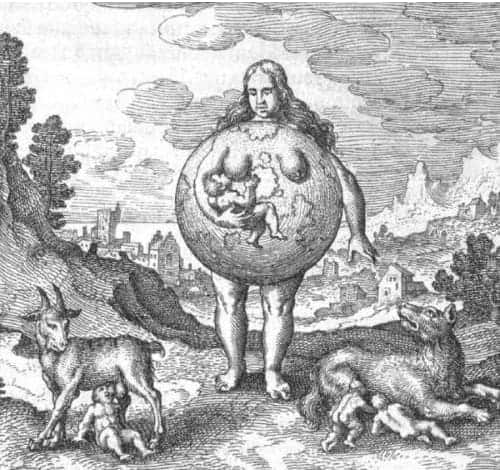
Just as earth is source, support, and home to humankind, so the mother’s body is source, support, and home of each infant. When the individual’s primal bond is scarred by basic faults, therapy often involves the female analysand’s falling through the painful wounds of the personal mother complex to meet the archetypal energies and images in deep therapeutic regression. This manifests initially through psychoidal phenomena, intense emotions, and the transferential dynamics of the therapeutic field. Sometimes expressed as shape-shifting images of the body/Self, which are similar to images of the goddess of nature revered since Neolithic times, the regression can enable reconnection to the healing feminine depths and the emergence of a more secure and authentic ego.
Sylvia Brinton Perera, MA, is a Jungian analyst who lives, practices, writes, and teaches in New York and Vermont. On the faculty and board of the Jung Institute of New York, she lectures and leads workshops internationally. Her publications include Descent to the Goddess: A Way of Initiation for Women; The Scapegoat Complex: Towards a Mythology of Shadow and Guilt; Dreams, A Portal to the Source (with E. Christopher Whitmont); Celtic Queen Maeve and Addiction: An Archetypal Perspective; and The Irish Bull God: Image of Multiform and Integral Masculinity.
This episode includes commentary by Peter Demuth, Psy.D., Jungian Analyst and member of the Chicago Society of Jungian Analysts in private practice in Evanston, IL. More information about Dr. Demuth can be found at demuthpsychologicalservices.com
Toronto analyst Marion Woodman explores the body/spirit relationship, the withdrawing of projection, gender issues, and the surrender of the ego to the Self as these themes relate to personal transformation.
Our Blog shares essays, articles, video, audio, and other resources by members of the Chicago Society of Jungian Analysts and other groups that support the education and development of our community.
The views and opinions expressed in the podcasts and blog posts are those of the respected speakers or authors and do not necessarily represent the views of the C. G. Jung Institute of Chicago.