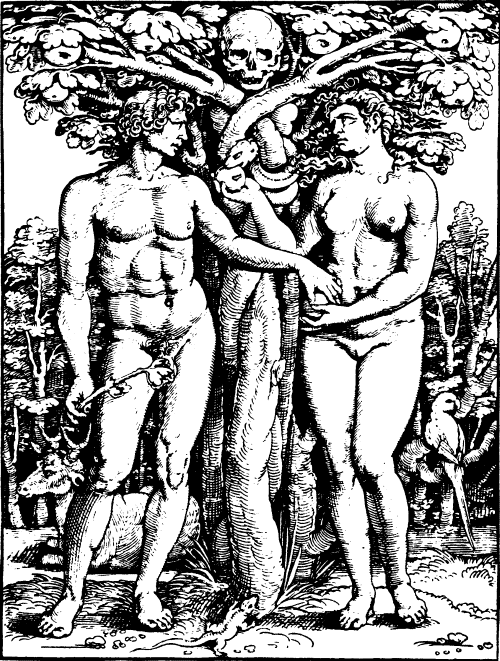
Jungian analyst Murray Stein leads a study of the Bible for its insight into psychological questions about the ego’s proper relation to the self, the ultimate aim of individuation in coniunctio, and encounters with the shadow. The set includes the following lectures:
Origins: The Ego Once- and Twice-Born
Bondage vs. Freedom: Ego in Complex, Ego in Self
Good and Evil: The Problem of Shadow
Individuation: The Journey of Faith
Murray Stein, PhD is a training analyst at the International School for Analytical Psychology in Zurich, Switzerland. His most recent publications include The Principle of Individuation, Jung’s Map of the Soul, and The Edinburgh International Encyclopaedia of Psychoanalysis (Editor of the Jungian sections, with Ross Skelton as General Editor). He lectures internationally on topics related to Analytical Psychology and its applications in the contemporary world. Dr. Stein is a graduate of Yale University (B.A. and M.Div.), the University of Chicago (Ph.D., in Religion and Psychological Studies), and the C.G. Jung Institut-Zurich. He is a founding member of the Inter-Regional Society of Jungian Analysts and Chicago Society of Jungian Analysts. He has been the president of the International Association for Analytical Psychology (2001-4), and is presently a member of the Swiss Society for Analytical Psychology and President of the International School of Analytical Psychology, Zurich.
The psychoanalytic methods of self psychology as developed by Heinz Kohut examine the development and the developmental disturbances of self-esteem and confidence, the formation and malformation of guiding ideals, empathy for the thoughts and feelings of others, initiative and creativity, and even sense of humor and wisdom. Lionel Corbett and Cathy Rives compare and contrast Jung’s theory of the Self, as well as general aspects of Jungian psychology, with Kohut’s self psychology, which is rapidly becoming a mainstream alternative to both classical psychoanalytic drive theory and ego psychology. They also utilize case studies, as well as fairytale and myth analysis, to help illustrate these theories. It was recorded in 1989.
Cathy Rives, MD is a psychiatrist, Jungian Analyst, and Chair of the Clinical Psychology Program at Pacifica Graduate Institute. She is particularly interested in Jungian developmental theory, a way of working analytically that integrates Jungian theory, Object Relations, and Self Psychology. She is also pursuing a new field of study, the law, motivated by a desire to participate more effectively in the field of non-human animal rights.
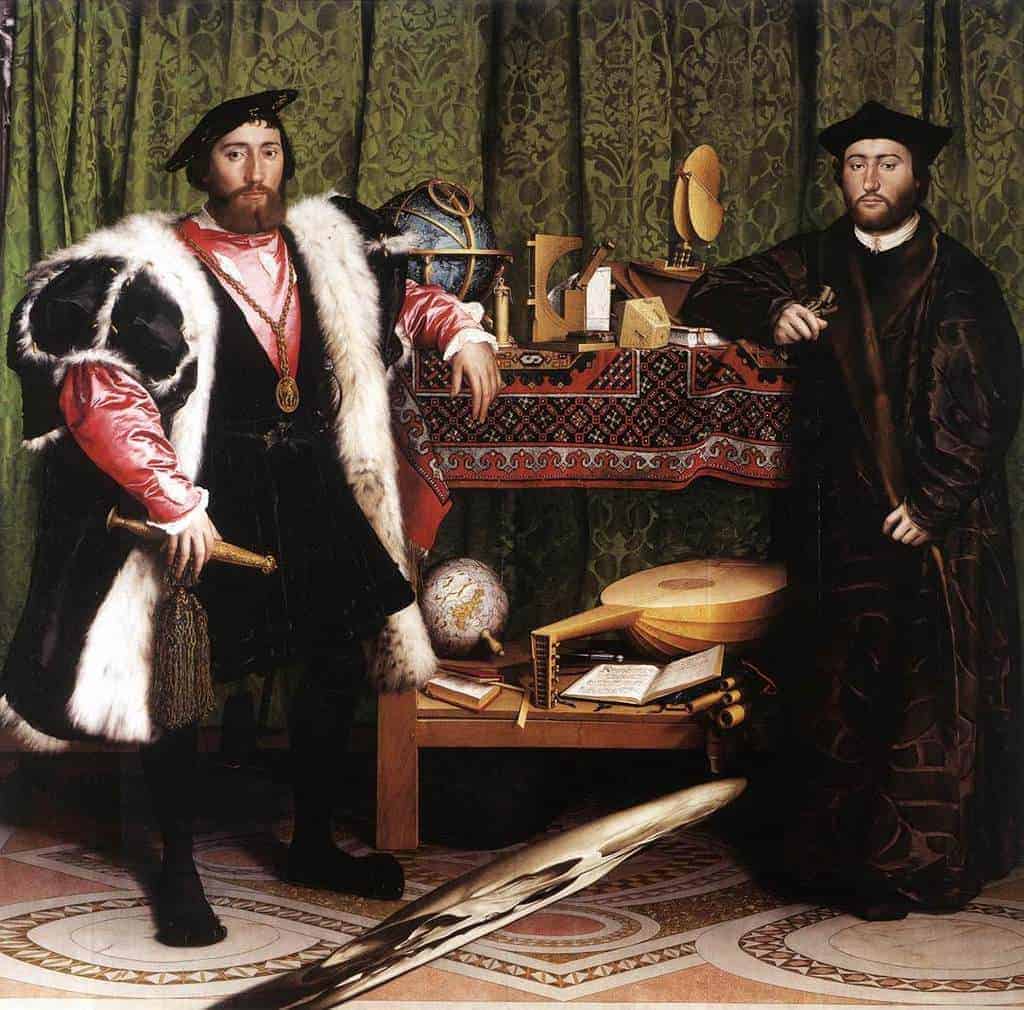
This seminar examines the ways in which the archetypes of the collective unconscious guide, form, and vitalize our daily existence. We can perceive this archetypal influence subjectively in consciousness and objectively in art and literature. As Jung wrote: “The impact of an archetype, whether it takes the form of an immediate experience or is expressed through the spoken word, stirs us because it summons up a voice that is stronger than our own”. In this seminar works of art from pre-historic times up to the present are examined to see how they both express for us and evoke in us the fundamental archetypes of the human experience.
NOTE: We do not have the images that were used in this seminar, though we know one of them is Hans Holbein’s painting The Ambassadors (below).
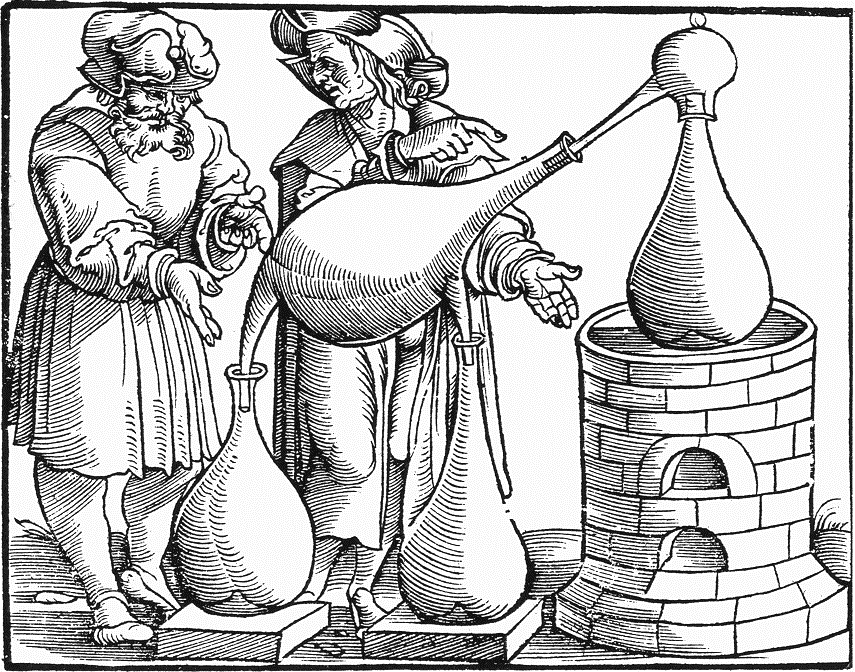
During the last thirty years of his life, Jung turned to alchemy as a fundamental resource for depth psychology. In alchemy he found images and thoughts that were uniquely fitted to his perceptions of psychological life and that confirmed his views of the spontaneous activity and directedness of the unconscious. Jungian analyst and author Murray Stein presents an overview of Jung’s work on alchemy to develop an understanding of the relation of alchemical symbols to the analytical process and individuation. The set includes the following lectures:
Commentary on The Secret of the Golden Flower [in CW 13]
Psychology and Alchemy [CW 12, parts 1 & 2]
The Spirit Mercurius [in CW 13]
The Psychology of Transference [in CW 16]
Mysterium Coniunctionis [CW 14, Chap. 6]
Murray Stein, PhD is a training analyst at the International School for Analytical Psychology in Zurich, Switzerland. His most recent publications include The Principle of Individuation, Jung’s Map of the Soul, and The Edinburgh International Encyclopaedia of Psychoanalysis (Editor of the Jungian sections, with Ross Skelton as General Editor). He lectures internationally on topics related to Analytical Psychology and its applications in the contemporary world. Dr. Stein is a graduate of Yale University (B.A. and M.Div.), the University of Chicago (Ph.D., in Religion and Psychological Studies), and the C.G. Jung Institut-Zurich. He is a founding member of the Inter-Regional Society of Jungian Analysts and Chicago Society of Jungian Analysts. He has been the president of the International Association for Analytical Psychology (2001-4), and is presently a member of the Swiss Society for Analytical Psychology and President of the International School of Analytical Psychology, Zurich.
This episode is “Go I Know Not Whither, Bring Back I Know Not What”, part one of the series The Psychology of Fairy Tales.
“Fairy tales are the purest and simplest expression of collective unconscious processes… They represent the archetypes in their simplest, barest, and most concise form … [and] afford us the best clues to the understanding of the processes going on in the collective psyche.” — Marie-Louise von Franz
This series examines the psychological richness of the fairy tale. Each recording in the series focuses on a single fairy tale and explores the tale’s insight into a particular psychological theme and inner logic. It was recorded in 1991.
Lois Khan, PhD was a practicing psychoanalyst in the Chicago area and Tennessee for almost 50 years. She also taught at the University of Chicago, in addition to lecturing as a psychologist throughout the world.
This episode is part one of the series Myths to Grow By. In his later years, Joseph Campbell defined mythology as a system of energy-evoking and energy-directing symbols which serve four functions for individuals and for the culture: the mystical, the cosmological, the sociological, and developmental functions. This course addresses the personal development aspects of mythological systems, using the writings of Joseph Campbell and others as a guide. Seen in their developmental function, myths are blueprints or road maps to personal growth. To know our own personal myth is to be filled with energy and progressive visions of an attainable goal. To know the myths of a culture is to know the path out the Wasteland. Myths are Daedalus-wings, allowing us to fly out of the labyrinthine pain of our own narrowness. This course explores mythological images and patterns as maps to personal and cultural development. It was recorded in 1995.
Thomas Patrick Lavin, PhD is a Zürich-trained Jungian analyst who holds a PhD in clinical psychology and a PhD in theology. He was formerly chief clinical psychologist for the U.S. Army in Europe and is a founding member of the CG Jung Institute of Chicago. He is in private practice in Wilmette, Illinois, and consults internationally on typology, spirituality and addictions.
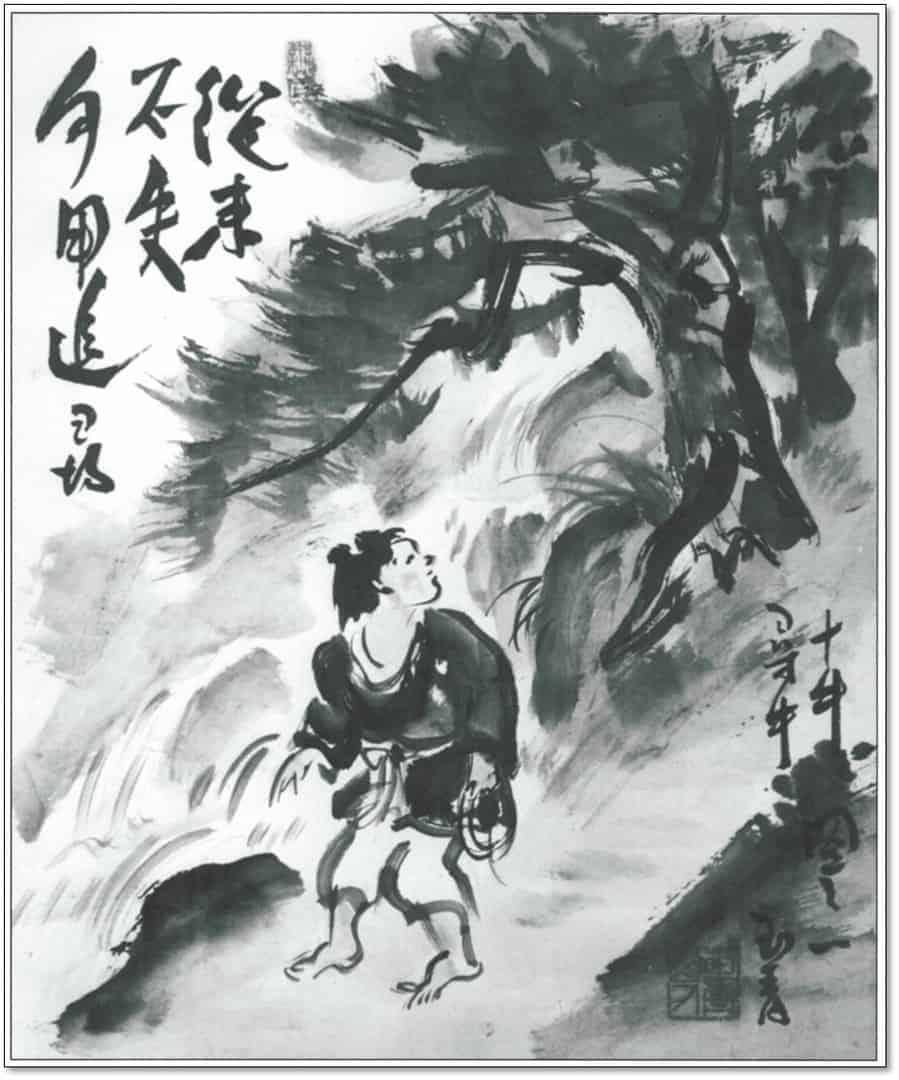
Using examples from Zen Buddhism, Warren Sibilla discusses Jung’s idea that the subjective and objective have a complementary relationship, and that this relationship is necessary in clinical practice – objective knowledge alone is not enough.
Warren Sibilla, Jr, PhD is a Diplomate Jungian Psychoanalyst with a clinical practice in Chicago, IL and South Bend, IN. Dr. Sibilla served as the Director of the Jungian Psychotherapy/Studies Program (2010 – 2016) at the Institute and teaches in our Analyst Training Program. He is engaged in the study and practice of Zen Buddhism including authoring a book on the relationship between Zen Buddhism and Analytical Psychology as well as a paper formally exploring Jung’s 1958 dialogue with Japanese Zen Master and Philosopher Hisamatsu. Dr. Sibilla teaches in the Masters and Doctoral programs at The Chicago School of Professional Psychology and The Institute for Clinical Social Work and facilitates silent contemplative retreats at GilChrist Retreat Center in Michigan. More information about Dr. Sibilla is available on his website, wsibilla.com.
PowerPoint: The slides for this talk are available HERE (right-click and click “Save Link As…” to download)
In this lecture, Dr. Beebe explores a neglected area in analytical psychology, the influence of the father’s unconscious upon the later development of the son. Jung’s analytical psychology offers insight into the way a father’s feminine side influences the formation of the anima of the son. It was recorded on February 2nd, 1984 and includes the original introduction by Murray Stein.
John Beebe, MD a physician specializing in psychotherapy, is a Distinguished Life Fellow of the American Psychiatric Association and a past president of the C. G. Jung Institute of San Francisco. He is the author of Integrity in Depth, editor of C. G. Jung’s Aspects of the Masculine, and co-author of The Presence of the Feminine in Film. He is the founding editor of The San Francisco Jung Institute Library Journal (now titled Jung Journal: Culture and Psyche), and a was the first American co-editor of the London-based Journal of Analytical Psychology. An international lecturer is widely known for his work on psychological types, the psychology of moral process, and the Jungian understanding of film. Recently he has been engaged in training the first generation of analytical psychologists in China.
Audio issue: The microphone in the original event was too sensitive, which caused loud distortions when the speaker got too close to it. We have done what we can to make those less obtrusive, but you will still hear them.
Rediscovering the Wisdom of the Earth with China Galland.
One of the most important features of a pilgrimage is its intimate association with nature through the kaleidoscope of changing weather and landscape that one experiences along the way. Fellow pilgrims, strangers at the start, may feel like old friends by the end of a long journey made sleeping under the stars, walking through rain and sun together. All difficulty and differences are endured in service of one uniting spiritual goal: reaching the shrine and receiving the blessings of the deity therein.
Many contemporary pilgrimages to the Black Madonnas in Europe and Latin America echo the earlier, pre-Christian veneration of the earth as the Great Mother. In India and Nepal, Nature herself is still worshipped. One of the greatest tasks before us today is to understand “what it means ‘earthwise’ to be human in the world today,” as Michael McElroy, atmospheric scientist, told the United Nations.
This presentation explores how the experience of pilgrimage and the growing awareness of the Dark Mother can help us to understand more deeply “what it means ‘earthwise’ to be human in the world today.”
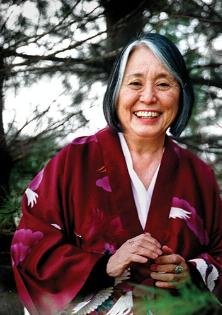
China Galland is the award-winning author of Women in the Wilderness and Love Cemetery: Unburying the Secret History of Slaves, internationally recognized authority on the Black Madonna, leader of pilgrimages to sacred sites, wilderness guide, public speaker, and professor-in-residence at CARE/Graduate Theological Union. More information can be found at her website chinagalland.com.
To be a crone is not a matter of age or appearance. Becoming a “crone” is a crowning inner achievement. “Crones Don’t Whine” is the first of thirteen defining qualities of the crone because whining blocks spiritual and psychological development. Crone qualities are those that can be taken to heart and cultivated throughout life; they support authenticity, integrity, soul growth and social activism. While physiology and socialization make it more difficult for most men to develop crone qualities, exceptional men can become crones. Crone development comes through connecting deeply with others and with soul qualities in ourselves. Maturity, wisdom, and compassion develop over time through love and reflection; they are the fruits of consciousness and choice.
Anita Greene, Ph.D. is a Jungian analyst in private practice in Amherst Massachusetts, and a teacher at the C.G. Jung Institute in Boston. She is also a Rubenfeld Synergist who combines gentle body techniques within her analytic work. She lectures widely on the integration of body and psyche.
There is no commentary for this lecture.
There is a short gap in the audio while the cassette was changed.
Just as earth is source, support, and home to humankind, so the mother’s body is source, support, and home of each infant. When the individual’s primal bond is scarred by basic faults, therapy often involves the female analysand’s falling through the painful wounds of the personal mother complex to meet the archetypal energies and images in deep therapeutic regression. This manifests initially through psychoidal phenomena, intense emotions, and the transferential dynamics of the therapeutic field. Sometimes expressed as shape-shifting images of the body/Self, which are similar to images of the goddess of nature revered since Neolithic times, the regression can enable reconnection to the healing feminine depths and the emergence of a more secure and authentic ego.
Sylvia Brinton Perera, MA, is a Jungian analyst who lives, practices, writes, and teaches in New York and Vermont. On the faculty and board of the Jung Institute of New York, she lectures and leads workshops internationally. Her publications include Descent to the Goddess: A Way of Initiation for Women; The Scapegoat Complex: Towards a Mythology of Shadow and Guilt; Dreams, A Portal to the Source (with E. Christopher Whitmont); Celtic Queen Maeve and Addiction: An Archetypal Perspective; and The Irish Bull God: Image of Multiform and Integral Masculinity.
This episode includes commentary by Peter Demuth, Psy.D., Jungian Analyst and member of the Chicago Society of Jungian Analysts in private practice in Evanston, IL. More information about Dr. Demuth can be found at demuthpsychologicalservices.com
Our Blog shares essays, articles, video, audio, and other resources by members of the Chicago Society of Jungian Analysts and other groups that support the education and development of our community.
The views and opinions expressed in the podcasts and blog posts are those of the respected speakers or authors and do not necessarily represent the views of the C. G. Jung Institute of Chicago.