
Religion & Spirituality

Jung in the World | Animating Female Archetypes & Telling Women’s Stories: Interview with Elizabeth Lesser


Best-selling author Elizabeth Lesser sat down with us to discuss her latest book, Cassandra Speaks: When Women are the Storytellers, the Human Story Changes. Elizabeth is the co-founder of the Omega Institute in Rhinebeck, NY. In the interview, Lesser talks about new models of power with host Patricia Martin and explains why feminine archetypes and female myths are so resonant today. Offering bright insights and deep wisdom, Lesser touches on several of Jung’s theories, including anima and animus, and shares a gem-like memory of Jungian analyst Marion Woodman, who led workshops at the Omega Center during its early years. Having Elizabeth Lesser on Jungianthology was profoundly inspiring; and we invite you to listen for yourself. In this interview they touch on:

The Omega Institute
The Omega Women’s Leadership Center
Archetypes
Power and abuse of power
Masculine theories of leadership
Greek mythology as written by men
The myth of Cassandra
Marion Woodman
Anima/Animus
Simone Biles
How gender roles are changing
Feminist theories and practices of power
How “feminine-ist” power is necessary to face contemporary problems

(more…)

A Changing God Image: What Does It Mean?

with Murray Stein, PhD

Via a generous matching grant from Carl and Patricia Greer, if we can raise $3,000 by May 30, we will receive and additional $3,000 gift. You can help us and double your gift at the same time by making a donation.

Also, the link for our first Spring Gala: Music, Merriment, Memories, & Mirth is now live! On May 22 at 4:30pm CDT, share your colleagues’ reflections, memorials, talents, and fun! It’s a free event and no registration is required.

This episode is the first part of the series A Changing God Image: What Does It Mean? . From the series description:

When a god image changes, what does it mean? In this program Murray Stein addresses four questions: What is a god image? What does a god image change? How does a god image change? and What does it mean when a god image changes?

Recommended readings:
Answer to Job, C.G. Jung
“The Symbolic Life” in Vol. 18 of the Collected Works, C.G. Jung.

It was recorded on April 26, 2003.

Murray Stein, PhD is a training analyst at the International School for Analytical Psychology in Zurich, Switzerland. His most recent publications include The Principle of Individuation, Jung’s Map of the Soul, and The Edinburgh International Encyclopaedia of Psychoanalysis (Editor of the Jungian sections, with Ross Skelton as General Editor). He lectures internationally on topics related to Analytical Psychology and its applications in the contemporary world. Dr. Stein is a graduate of Yale University (B.A. and M.Div.), the University of Chicago (Ph.D., in Religion and Psychological Studies), and the C.G. Jung Institut-Zurich. He is a founding member of the Inter-Regional Society of Jungian Analysts and Chicago Society of Jungian Analysts. He has been the president of the International Association for Analytical Psychology (2001-4), and is presently a member of the Swiss Society for Analytical Psychology and President of the International School of Analytical Psychology, Zurich.

Thank you to everyone who has shared a little bit about themselves. If you’d like us to know about the journey you are on, click this link, and I’ll read your submission on the podcast! No need to share any identifying information. This information will not be used for any other purpose.

You can support this free podcast by making a donation, becoming a member of the Institute, or making a purchase in our online store. Your support enables us to provide free and low-cost educational resources to all.

Links
The Complete Series
All of Dr. Stein’s Lectures

MurrayStein.com


© 2003 Murray Stein. This podcast is licensed under a Creative Commons Attribution-NonCommercial-NoDerivatives 4.0 International License. You may share it, but please do not change it, sell it, or transcribe it.
Executive Producer: Ben Law
Producer: Patricia Martin
Music: Michael Chapman


Thank you to our 2020 donors who gave at the Contributing Member level and above: Barbara Annan, Usha and Ashok Bedi, Jackie Cabe Bryan, Eric Cooper and Judith Cooper, Kevin Davis, George J. Didier, Mary Dougherty, James Fidelibus, John Korolewski, Marty Manning, Dyane Sherwood, Deborah P. Stutsman, Debra Tobin, Alexander Wayne and Lynne Copp, Gerald Weiner, Karen West and James Taylor, and Ellen Young. If you would like to support this podcast, click here to join our community of supporters.

Image for Hire Podcast | Synchronicity and the I-Ching with Dennis Merritt (Audio)

Dennis Merritt, member of the Chicago Society of Jungian Analysts, is interviewed on the Image for Hire podcast. It was released on October 30, 2018. From the description:

The Skrauss discusses synchronicity and the I-Ching with Dennis A. Merrit.
Listen up, Cavedweller. Take a plunge into the divinatory system that cracks into the Tao, the binary code of the Universe.

Names dropped and subjects mentioned:
Synchronicity is a Dimension
How Much Is the I-Ching (Unanswered)
Compendium of Chinese Wisdom
It Came From 1050 BCE
Leibnitz
How to Question the I-Ching
Carol Anthony’s 3RD Edition Guide to the I-Ching
Time is Not Just Quantity; It Is Quality
Gausian Curve
The Rainmaker Story
“Black Elk Speaks”
Wolfgang Pauli
Hexagram 42 “Increase”
The Confucian School
Hexagram 23 “Splitting Apart”
Hexagram 24 “The Turning Point”
Yellow is the Color of the Medium
Donald Trump is a Trickster
Cover Story of the January 1976 edition of Scientific America

Dennis L. Merritt, PhD, is a Jungian psychoanalyst and ecopsychologist in private practice in Madison and Milwaukee, Wisconsin. Dr. Merritt is a diplomate of the C.G. Jung Institute, Zurich and also holds the following degrees: M.A. Humanistic Psychology-Clinical, Sonoma State University, California, Ph.D. Insect Pathology, University of California-Berkeley, M.S. and B.S. Entomology, University of Wisconsin-Madison. Over twenty-five years of participation in Lakota Sioux ceremonies have strongly influenced his worldview.

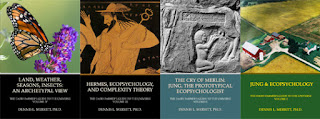
Dr. Merritt is the author of Jung, Hermes, and Ecopsychology: The Dairy Farmer’s Guide to the Universe Volumes 1 – 4.

Links: Dennis Merritt’s Blog | Dennis Merritt’s Practice Website | Dennis Merritt’s Page on the C. G. Jung Institute of Chicago Website | Image for Hire podcast on SoundCloud

The Return of the Archetypal Feminine & the Dawn of the New “Third”

with Laraine Kurisko, PhD, Jungian Analyst

For this Women’s History Month, we’re sharing the seminar The Return of the Archetypal Feminine & the Dawn of the New “Third” in its entirety. It was recorded on January 4, 2019. From the seminar description:

The archetypal “Feminine” is back, and She’s…”unhappy.” From “Me Too,” to the trial of Larry Nassar, to the rising refusal of young adults to be defined as either “male” or “female,” opting instead for the more neutral pronoun “they,” evidence of profound change is all around us. Neumann and Whitmont tell us that consciousness can be conceived as having evolved through stages, beginning the archetypal Great Mother. Several thousand years ago, this feminine consciousness was repressed in the service of the development of “Masculine” ego consciousness, which has, for better and worse, been accomplished. We now have considerable “ego strength” but no connection to anything beyond it, hence, a good deal of turmoil in a world that feels untethered, without purpose or direction. Both “Feminine” and “Masculine” dominated cultures were necessarily one-sided otherwise each could not have developed. But, what is next? And, what is required of us so that the new “third” can emerge?

In this class we will dive deeply into the bigger story at play here – the deep, archetypal dynamics and the wisdom behind them. We will begin to think about, observe, and imagine, the next phase of consciousness. Rather than simply enacting each stage via identification, we can step back and consciously embrace the gifts and costs of each, for men and women. By holding both in a conscious, creative tension of opposites, we can facilitate the emergence of the Mercurial “Divine Child.”

Laraine Kurisko received her PhD in Clinical-Depth Psychology from Pacifica Graduate Institute in 2000 and Diplomate Jungian Analyst from the C. G. Jung Institute of Chicago in 2016. Prior to beginning Analyst training in Chicago she attended the MN Seminar in Jungian Studies for nine years and the Philadelphia Seminar in Jungian Studies for one year. She has worked as a psychologist since 1987, and is currently in private practice in Eden Prairie. A Canadian by birth, she and her family enjoy their annual pilgrimage to their cottage near Sault Saint Marie, Canada, on the shores of Lake Superior.

PowerPoint: The slides are not available for this seminar.

Thank you to everyone who shared a little bit about themselves since the last episode. If you’d like us to know who you are, click this link, and I’ll read your submission on the podcast! No need to share any identifying information. This information will not be used for any other purpose.

You can support this free podcast by making a donation, becoming a member of the Institute, or making a purchase in our online store. Your support enables us to provide free educational resources to all.


© 2019 Laraine Kurisko. This podcast is licensed under a Creative Commons Attribution-NonCommercial-NoDerivatives 4.0 International License. You may share it, but please do not change it, sell it, or transcribe it.
Executive Producer: Ben Law
Producer: Patricia Martin
Music: Michael Chapman


Thank you to our 2020 donors who gave at the Contributing Member level and above: Barbara Annan, Usha and Ashok Bedi, Jackie Cabe Bryan, Eric Cooper and Judith Cooper, Kevin Davis, George J. Didier, James Fidelibus, John Korolewski, Marty Manning, Dyane Sherwood, Deborah P. Stutsman, Debra Tobin, Alexander Wayne and Lynne Copp, Gerald Weiner, Karen West and James Taylor, and Ellen Young. If you would like to support this podcast, click here to join our community of supporters.

Amy Champeau | “Naming” in Tiferet Journal

“We continue to speak, if only in whispers, to something inside us that
wants to be named.”

Dorianne Laux, “Dark Chants,” Only as the Day is Long.

My name is Chaika Runya bat Yitzchak v’ Channa Gittl. This is my ‘Hebrew’ name, my sacred name, my Yiddish name, my hidden name, my underground name, the name that binds me to family lineage and tradition and to my people, going all the way back to the beginning of time. This is the name I am called in Jewish ritual, when I have an aliyah to give a blessing over the Torah or when I am invited to the pulpit to read the Torah, or when I am a witness to someone immersing herself in the sacred baths in order to convert to Judaism.

I am named for two great aunts who were murdered in the Holocaust.

Most mornings of my life, since I was younger than six years old, I’ve woken in terror, heart beating fast, body sweating. In an effort to calm myself I’d listen to music or focus on my breathing before opening my eyes to start the day. Each morning the fear would dissolve as I moved into the day’s activities, only to return the next.

One morning, not long ago I decided to turn toward the fear and terror rather than away, to be curious about it, to explore it, to get to know it. I curled up in the fetal position in bed, tuning in to the sensations I experienced physically. I became aware of a feeling like electric jolts pounding and jumping in my chest and arms. I asked the sensations, “What is the message held in my body?”

What I heard them say was this: “Life is not safe.”

My mother tells me my aunts, Chaika and Runya, the younger sisters of my mother’s father, were shot, killed and buried in a mass grave in then Austria-Hungary during the Holocaust. In my mind’s eye, here is how I imagine them: They are two young women, maybe in their 20s; their light brown hair hangs in braids down their backs, each wears a dark wool dress, a cream-colored pinafore, woolen knee-high socks and sturdy shoes. They stand with their family and friends and fellow-townspeople, all of whom have been herded out of their homes, their beds, and lined up at the town’s edge, in rows, ahead of them the deep pit into which their lifeless bodies will be tossed, one on top of another, like sacks of potatoes, to be covered with dirt, and erased.

I imagine dogs barking wildly and the loud yelling of male voices in a language my aunts and their friends and family don’t understand. They do understand what will happen to them. I imagine the rifle shots as faceless men mechanically shoot them from behind, one by one, and I imagine the unbearable, unimaginable terror of waiting as your turn comes, hearing the screams, hearing the heavy plop as each body falls into the pit, witnessing your loved ones’ deaths, knowing your inescapable fate, waiting to feel pain, feeling the bullet entering your chest from the back, breathing your last breath, collapsing and tumbling, finally, into the pit. In their names, their stories, their lives, their deaths take residence within the confines of my body, mind and soul, carried within me like a blessing, or like a parasite.

(more…)

Madness, Religious Experience, and the Wisdom to Know the Difference

with Thomas Patrick Lavin, PhD

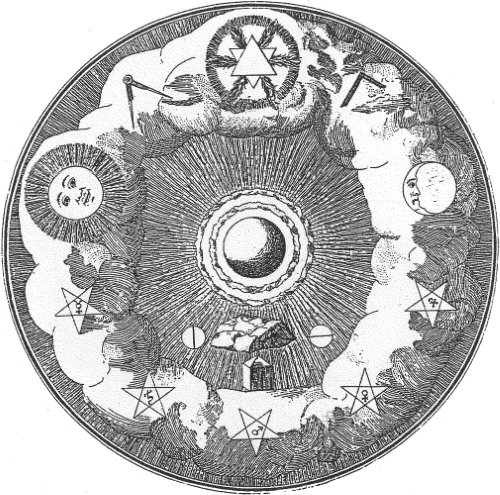
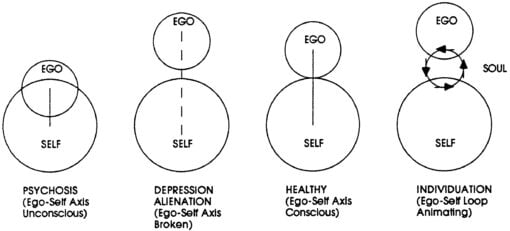
This diagram accompanies the lecture series

This episode is the first session of the series Madness, Religious Experience, and the Wisdom to Know the Difference. It was recorded in July 1993. From the series description:

In the history of humankind, there have always been seeming psychotic features accompanying authentic religious experience, and there have often been apparent religious images and/or identifications associated with psychotic disorders. In our transitioning and liminal culture, what Jung has called the “transcendent function” acts like a balancing pole for those of us who feel “called” to walk the tightrope between madness and religious ecstasy.

This course examines the work of C.G. Jung and others to help develop imaginal strainers to sift the sounds of the many voices which call to us. It explores our perceptions of the presence of the divine in madness and the madness in the divine.

Topics in this program include:

•   Varieties of Religious Experience
•   Varieties of Psychotic Experience
•   Higher Powers and Deeper Powers: The Transcendent/Immanent Axis
•   Feeding the Ego-Self Loop

Note: I am away from home through May 2021 so my microphone quality will be less optimal during this time. Thanks for your understanding!

Thomas Patrick Lavin, PhD is a Zürich-trained Jungian analyst who holds a PhD in clinical psychology and a PhD in theology. He was formerly chief clinical psychologist for the U.S. Army in Europe and is a founding member of the CG Jung Institute of Chicago. He is in private practice in Wilmette, Illinois, and consults internationally on typology, spirituality and addictions.

Links
The complete series
All of Dr. Lavin’s lectures in our online store
Tomas Patrick Lavin on Jungianthology
Support this podcast


© 1993 Thomas Patrick Lavin. This podcast is licensed under a Creative Commons Attribution-NonCommercial-NoDerivatives 4.0 International License. You may share it, but please do not change it, sell it, or transcribe it.
Executive Producer: Ben Law
Producer: Patricia Martin
Music: Michael Chapman


Thank you to our 2020 donors who gave at the Contributing Member level and above: Barbara Annan, Usha and Ashok Bedi, Jackie Cabe Bryan, Eric Cooper and Judith Cooper, Kevin Davis, George J. Didier, James Fidelibus, John Korolewski, Marty Manning, Dyane Sherwood, Deborah P. Stutsman, Debra Tobin, Alexander Wayne and Lynne Copp, Gerald Weiner, Karen West and James Taylor, and Ellen Young. If you would like to support this podcast, click here to join our community of supporters.

Murray Stein | On the Importance of Numinous Experience in the Alchemy of Individuation

In a letter to P.W. Martin (20 August 1945), the founder of the International Study Center of Applied Psychology in Oxted, England, C.G. Jung confirmed the centrality of numinous experience in his life and work: “It always seemed to me as if the real milestones were certain symbolic events characterized by a strong emotional tone. You are quite right, the main interest of my work is not concerned with the treatment of neuroses but rather with the approach to the numinous. But the fact is that the approach to the numinous is the real therapy and inasmuch as you attain to the numinous experiences you are released from the curse of pathology. Even the very disease takes on a numinous character” (Jung 1973, 1: 377). If one holds the classical Jungian view that the only genuine cure for neurosis is to grow out of it through pursuing individuation, then treatment based on this model would seem necessarily to include “the approach to the numinous,” as Jung states so firmly in this letter. The individuation process, as proposed by Jung and his followers, typically includes experiences of a numinous nature.

The question is: How are such momentous experiences related to and used within the context of analysis and the individuation journey, and how do they contribute to the overall process of individuation? On the answer to this complex question rests the difference between psychological individuation and the development of spirituality. While the psychological hero(ine) of the individuation journey is by no means identical to the spiritual hero(ine) of the journey to God (however this term may be defined), it is not always easy to tell where their paths diverge, precisely because Jung placed such central importance on numinous experience for individuation. And yet they do diverge, and decisively.

On Healing and Numinous Experience

We can begin by investigating how attaining to numinous experiences releases a person from the curse of pathology, as Jung claims in his letter to P.W. Martin. Generally speaking, an “approach to the numinous” is considered a religious undertaking, a pilgrimage. The “attainment to the numinous experiences” that Jung speaks of refers to religious experiences of a quasi-mystical nature. By itself, this attainment might well persuade a person that life is meaningful. Numinous experience creates a convincing link to the transcendent, and this may well lead to the feeling that character flaws like addictions or behavioral disorders are trivial by comparison with the grand visions imparted in the mystical state. The pathological symptom can be interpreted as an incitement to go on the spiritual quest, or even as a paradoxical doorway into transcendence, and this can donate meaning to the malady itself. Perhaps some degree of pathology is needed, in fact, in order for a person to feel strongly enough motivated to set out on a spiritual quest to begin with. In this case, attainment to numinous experiences would bring about a change in the feeling that pathology is a curse, even if it did not result in curing the pathology itself, although it might lead to this as well.

(more…)

Freddie Taborda | Psychological Wisdom of the “Lord’s Prayer” (English/Español)

I would like to take some time to write about the psychological wisdom of a prayer -“The Lord’s Prayer”- that has guided the lives of millions of Catholic people around the world. My objective is to offer (like Edward Edinger did; see his book, “Transformation of the God-Image”) a brief psychological distillation (intra-psychic perspective) of that prayer.

First, here is the prayer:

“Our Father who art in Heaven,
hallowed be thy name.
Thy kingdom come.
Thy will be done on earth, as it is in heaven.
Give us this day our daily bread
and forgive us our trespasses,
as we forgive those who trespass against us,
and lead us not into temptation,
but deliver us from evil.”

From a psychological point of view, the relationship between our ego and the unconscious is important for our psychological well-being, especially the relationship between our consciousness and the center of the unconscious, which Analytical Psychology (Jung) calls the Self or the God Image in us. According to Jung, God is in each of us and that He/She is the center of the unconscious, which contains not only all the undiscovered and unknown potentials, talents, and abilities in each human life but, also, the dark aspects of human nature.

“Our Father who are in Heaven”

Then, what does the first sentence – “Our Father who are in Heaven” – mean psychologically?

It may mean that, inside of each of us, there is a place (Heaven) where all the undiscovered and unknown potentials, skills, talents, abilities as well as the dark aspects are located, and that the Creator of Life -God (Father)- as well as the fundamental impulse to create is there, too.

“Hallowed be Thy name”

What does this sentence mean psychologically?

The Self -God in us- is sacred. The prayer is asking people to declare the Self sacred and to view the inner center of our lives -the Self- as holy and whole. Given that the Self or God in us is dynamic center from where all psychological life begins -wishes, desires, thoughts, unknown potentials, undiscovered talents, and untapped skills- the second sentence of prayer is asking us to view and hold our psychological lives as sacred and divine. In a world where, unfortunately, outer reality seems to be the most important aspect of a human life, redeeming the “inner life and its center” as sacred seeks to restore the great psychological value of inner life.

(more…)

Gather Up Your Brokenness: Love, Imperfection, & Human Ideals (Part 2)

In celebration of our Holiday Giving Drive, we are unlocking a full seminar by Polly Young-Eisendrath, “Gather Up Your Brokenness: Love, Imperfection, & Human Ideals”. You can be a part of this campaign by visiting our website and making a donation. Donors at the Supporter level and above will be acknowledged in the credits of this podcast. There are other benefits to donating so please consider visiting our website and making a contribution.

This episode is the second half of “Gather Up Your Brokenness: Love, Imperfection, & Human Ideals”. The first half was published on November 22nd.

In the poetic tradition of Zen monk and bard, Leonard Cohen, this presentation celebrates our brokenness. Often, we hear about grieving our mistakes, failures, losses and imperfections, but rarely do we learn how to mine them for their richness. Because human beings are naturally broken – with personalities that are largely unconscious, reactive and hard to manage – we have countless opportunities in our relationships and work to see our selves in the cracks of the mirror. This presentation will draw on Carl Jung’s psychology of individuation and on the Buddha’s teachings on awakening to offer a new vision of imperfection with its inherent openings to compassion and love. 

PowerPoint slides used in the talk are available HERE

Polly Young-Eisendrath, PhD is Clinical Associate Professor of psychiatry at the University of Vermont Medical College. She is a psychologist and Jungian analyst practicing in the mountains of central Vermont, where she lives and writes. She has published thirteen books, many chapters and articles that have been translated into fourteen languages. Her books include The Self-Esteem Trap: Raising Confident and Compassionate Kids in an Age of Self-ImportanceThe Resilient Spirit: Transforming Suffering Into Insight And RenewalThe Gifts Of Suffering: A Guide To Resilience And RenewalWomen and Desire: Beyond Wanting to Be Wantedand You’re Not What I Expected: Learning to Love the Opposite Sex.

More Seminars by Polly Young-Eisendrath

Support Us: Visit Our StoreMake a Donation


© 2016 Polly Young-Eisendrath. This podcast is licensed under a Creative Commons Attribution-NonCommercial-NoDerivatives 4.0 International License. You may share it, but please do not change it, sell it, or transcribe it.
Music by Michael Chapman
Edited and produced by Benjamin Law

Gather Up Your Brokenness: Love, Imperfection, & Human Ideals (Part 1)

In celebration of our Holiday Giving Drive, we are unlocking a full seminar by Polly Young-Eisendrath, “Gather Up Your Brokenness: Love, Imperfection, & Human Ideals”. You can be a part of this campaign by visiting our website and making a donation. Donors at the Supporter level and above will be acknowledged in the credits of this podcast. There are other benefits to donating so please consider visiting our website and making a contribution.

This episode is the first half of “Gather Up Your Brokenness: Love, Imperfection, & Human Ideals”. The second half will be published later this month. NOW LIVE HERE

In the poetic tradition of Zen monk and bard, Leonard Cohen, this presentation celebrates our brokenness. Often, we hear about grieving our mistakes, failures, losses and imperfections, but rarely do we learn how to mine them for their richness. Because human beings are naturally broken – with personalities that are largely unconscious, reactive and hard to manage – we have countless opportunities in our relationships and work to see our selves in the cracks of the mirror. This presentation will draw on Carl Jung’s psychology of individuation and on the Buddha’s teachings on awakening to offer a new vision of imperfection with its inherent openings to compassion and love. 

PowerPoint slides used in the talk are available HERE

A note about sound: There were microphone issues that were resolved after a few minutes.

Polly Young-Eisendrath, PhD is Clinical Associate Professor of psychiatry at the University of Vermont Medical College. She is a psychologist and Jungian analyst practicing in the mountains of central Vermont, where she lives and writes. She has published thirteen books, many chapters and articles that have been translated into fourteen languages. Her books include The Self-Esteem Trap: Raising Confident and Compassionate Kids in an Age of Self-ImportanceThe Resilient Spirit: Transforming Suffering Into Insight And RenewalThe Gifts Of Suffering: A Guide To Resilience And RenewalWomen and Desire: Beyond Wanting to Be Wantedand You’re Not What I Expected: Learning to Love the Opposite Sex.

More Seminars by Polly Young-Eisendrath

Support Us: Visit Our StoreMake a Donation


© 2016 Polly Young-Eisendrath. This podcast is licensed under a Creative Commons Attribution-NonCommercial-NoDerivatives 4.0 International License. You may share it, but please do not change it, sell it, or transcribe it.
Music by Michael Chapman
Edited and produced by Benjamin Law

Thomas Moore on Aging and the Soul

Thomas Moore will be visiting us in October to lead a two-day seminar (registration is open now). As an introduction to Moore’s perspective and voice, we are sharing the first hour of his previous workshop with us, Cultivating Soul, which included two parts:

Part 1: Ageless Soul
Thomas Moore will speak about the themes of his book, Ageless Soul, and engage in conversation with attendees and analysts. Ageless soul offers positive and inspiring guidance for becoming a full person as time goes by. Since we are all aging, it is for anyone who has ever thought about getting older. It’s especially valuable for people 50 and over. It seems more difficult than ever these days to deal creatively with aging. This book provides a deep and comprehensive plan that sees aging not as losing capacity but as becoming who you are destined to be, a real human being. It covers key matters, such as:

 – the shock of discovering that you’re getting older
  – how to keep your youth in a deep way
  – how to manage your sexuality as you age
  – how spirituality can mature and become more important over time
  – how to value your life by leaving a conscious legacy for your family and your society
  – responding well to loneliness and depression
  – nurturing friendships and community as you get older

Part 2: Care of the Soul in Troubled Times
For all of our problems, our times are in many ways better than the past. Throughout history, much has been achieved creatively in very troubled times. This is a time to resist the culture (contemptus mundi) and live your own life of excellence and beauty. It’s a time to assume leadership for change and returning to eternal values. Study the best of lives in our past and be inspired toward creativity and excellence (aréte).

This seminar was recorded on October 28, 2017.

Thomas Moore, PhD is the author of nearly two dozen books on deepening spirituality and cultivating soul in every aspect of life. His book, Care of the Soul, was a #1 New York Times bestseller. Well-known within the Jungian community, he has been a monk, a musician, a university professor, and a psychotherapist. He lectures frequently in Ireland and has a special love of Irish culture. He has a PhD in religion from Syracuse University and has won several awards for his work, including an honorary doctorate from Lesley University and the Humanitarian Award from Einstein Medical School of Yeshiva University. Three of his books have won the prestigious Books for a Better Life awards. He writes fiction and music and often works with his wife, artist and yoga instructor, Hari Kirin. Much of his recent work has focused on the world of medicine, speaking to nurses and doctors about the soul and spirit of medical practice. thomasmooresoul.com

For the full seminar, CLICK HERE.
To register for Moore’s upcoming workshop, CLICK HERE.

Support Us: Visit Our StoreShop on AmazonMake a Donation


© 2017 Thomas Moore. This podcast is licensed under a Creative Commons Attribution-NonCommercial-NoDerivatives 4.0 International License. You may share it, but please do not change it, sell it, or transcribe it.
Music by Michael Chapman
Edited and produced by Benjamin Law

Mythology and Psychology: A Jungian Perspective

with Robert Moore, PhD

This episode is part one of the series Myth and Psyche: An Introduction to Jungian Perspectives on Human Mythology. It was recorded in 1992.

According to Jung, myth-making is a natural and impersonal potential present in the collective unconscious of all peoples throughout all times. Drawing on the contributions of Jung, Campbell, and Eliade, this course explores the role of myth in human life. Five of the major mythological themes prominent in world mythology are examined in terms of their contemporary psychological and cultural significance:

  1. Mythology of Creation
  2. Mythology of The Divine Child
  3. Mythology of The Hero
  4. Mythology of The Shaman
  5. Mythology of The Apocalypse

This episode is the introductory session for the series, titled “Mythology and Psychology: A Jungian Perspective”.

Robert Moore, PhD was Distinguished Service Professor of Psychology, Psychoanalysis and Spirituality in the Graduate Center of the Chicago Theological Seminary where he was the Founding Director of the new Institute for Advanced Studies in Spirituality and Wellness. An internationally recognized psychoanalyst and consultant in private practice in Chicago, he served as a Training Analyst at the C.G. Jung Institute of Chicago and was Director of Research for the Institute for Integrative Psychoanalysis and Psychotherapy and the Chicago Center for Integrative Psychotherapy. Author and editor of numerous books in psychology and spirituality, he lectured internationally on his formulation of a neo-Jungian  psychoanalysis and integrative psychotherapy.  His publications include THE ARCHETYPE OF INITIATION: Sacred Space, Ritual Process and Personal TransformationTHE MAGICIAN AND THE ANALYST: The Archetype of the Magus in Occult Spirituality and Jungian Psychology; and FACING THE DRAGON: Confronting Personal and Spiritual Grandiosity.

For the complete series, CLICK HERE
For all of Dr. Moore’s lectures, CLICK HERE

Support Us:     


© 1992 Robert Moore. This podcast is licensed under a Creative Commons Attribution-NonCommercial-NoDerivatives 4.0 International License. You may share it, but please do not change it, sell it, or transcribe it.
Music by Michael Chapman
Edited and produced by Benjamin Law

Filter Posts

  • About Jung Chicago Radio & Blog

    Jung Chicago Radio is home to a variety of podcasts that range from archival seminar recordings (Institute Archives), to interviews (Jung in the World) to discussion on film (Healing Cinema), fairy tales (Jungian Ever After), and our programs.

    Our Blog shares essays, articles, video, audio, and other resources by members of the Chicago Society of Jungian Analysts and other groups that support the education and development of our community.

    The views and opinions expressed in the podcasts and blog posts are those of the respected speakers or authors and do not necessarily represent the views of the C. G. Jung Institute of Chicago.

    Login

    This search engine will search our public programs, the Jung Chicago Radio and Blog, and our store.

    To search only the store, visit our Store page.

    If you’re looking for a Jungian Analyst, use our Find an Analyst search engine or browse the Chicago Society of Jungian Analysts page.