We are continuing remote learning for all programs for the remainder of this academic year. We anticipate resuming in-person programs in September 2022. Join our mailing list for updates.
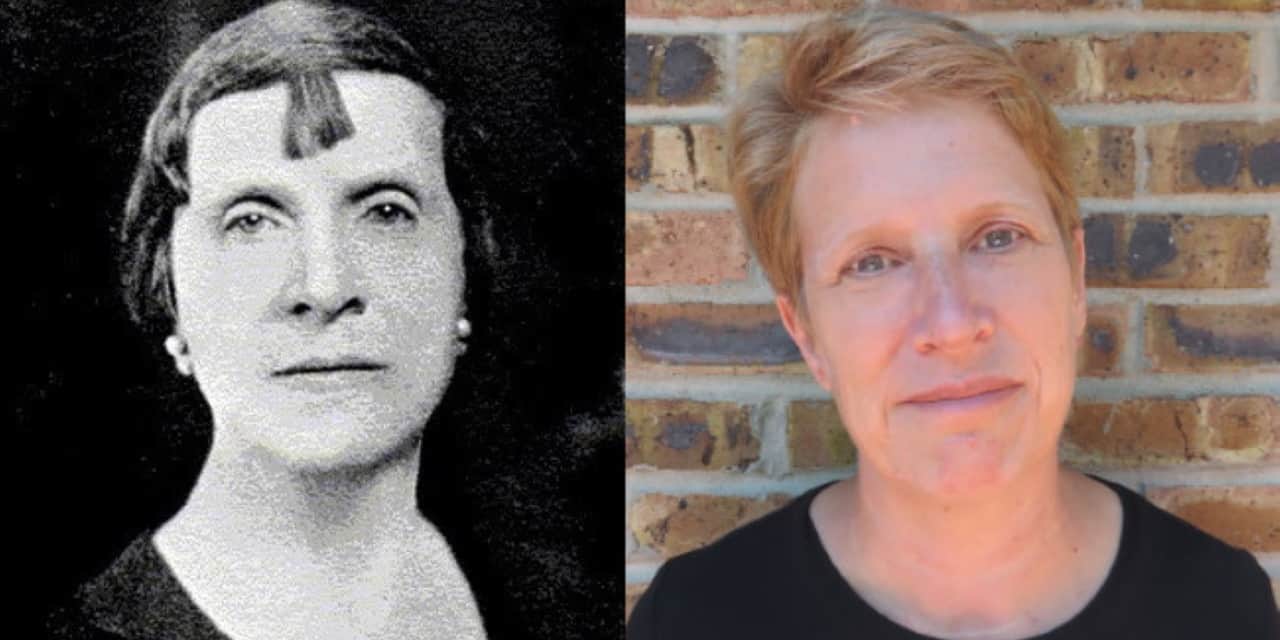
To celebrate International Women’s Day, we are sharing the seminar and panel discussion “Edith Rockefeller McCormick: Philanthropist, Intellectual, Analyst” in its entirety. The first hour is a presentation by Andrea Friederici Ross, author of Edith: The Rogue Rockefeller McCormick, followed by reflections by Kennon McKee, PhD, Jungian analyst and Victoria Drake, PhD, that opens up for general discussion.
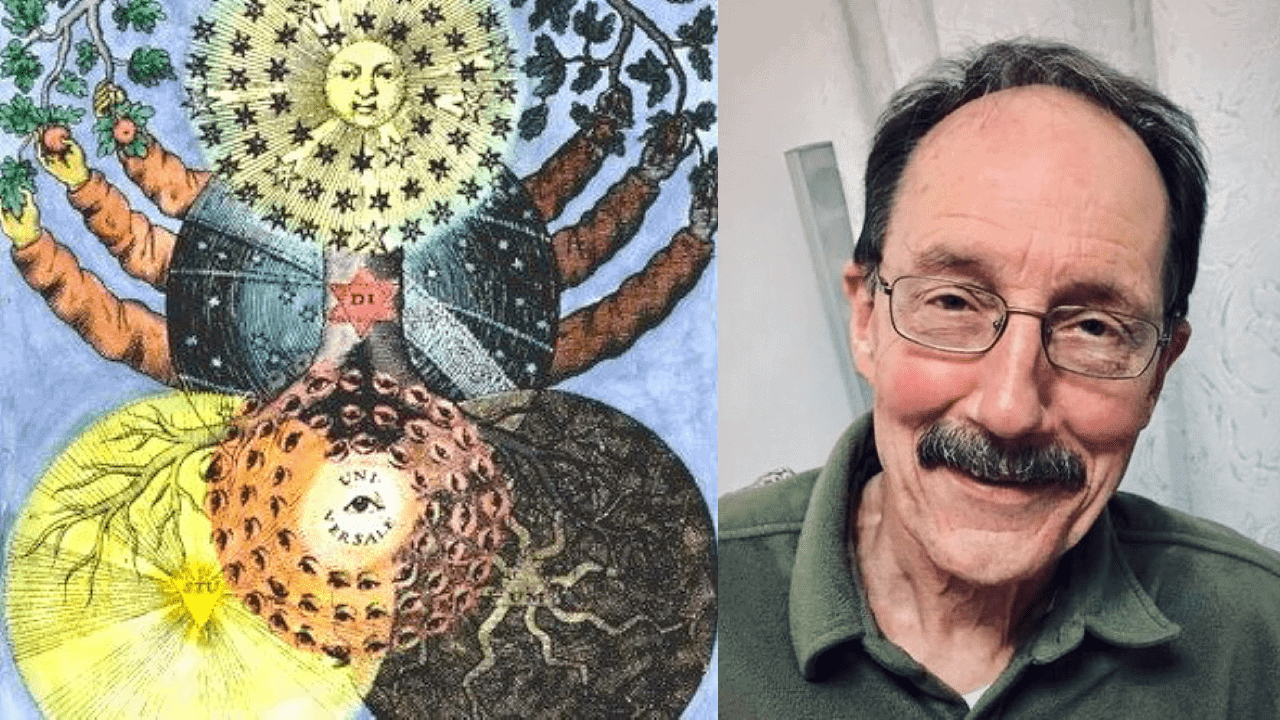
Dr. John Ryan Haule (1942, USA), is a Jungian Analyst, writer, & lecturer. He graduated from the C. G. Jung Institute Zurich in 1980 and is a NCPsyA, Certified Psychoanalyst as well as a Training Analyst at the C. G. Jung Institute-Boston. He works in his private practice in Massachusetts and is the author of books on Romantic Love, Therapy as Relationship, New Age Phenomena, and many articles on these topics, as well as shamanism, history of psychoanalysis, mysticism, and popular culture.
Stefano Carpani M.A., M.Phil. (1978) is an Italian psychoanalyst-in-training (diploma candidate) at the C.G. Jung Institute Zurich and a Ph.D. candidate at the Centre for Psychoanalytical Studies, University of Essex (UK). He works in private practice in Berlin (DE).
Many believe we are in the Anthropocene Era, an era marked by the planet-wide influence of our species. The field of ecopsychology emerged in the early 1990s as a belated response from the psychological community to address the cascading effects of human-created environmental damage. Jungian ecopsychology offers one of the best frameworks for analyzing our dysfunctional relationship with the environment—and with each other—through an archetypal analysis of the layers of the collective unconscious. Jung was deeply connected with his native Swiss soil that was reflected in the ecological aspects of his conceptual system and his interest in alchemy as his main symbol system. Ecology begins with our relationship with “the little people” in our dreams and dreams can be used to help us connect deeply to the land using Hillman’s concept of Aphrodite as the Soul of the World. In 1940 Jung foretold a paradigm shift that he labeled a “new age” and “Aquarian Age”. The new paradigm will be based on ecological concepts and reflected in the economic system being developed by the sustainable economists. We must think in these terms as a species if there is any hope of averting a planetary nightmare.
During our Holiday Giving Drive we are presenting a series of interviews called Jung in the World. In this episode, Patricia Martin interviews Roula-Maria Dib, creative writer and literary scholar, who views Carl Jung as a modernist and has written about the power of the modernist moment in history to give rise to the discipline of psychology. Her book, Jungian Metaphor in Modernist Literature, creates a new context for understanding Carl Jung’s work and his most important theories: the context of the collective in which he lived. In this discussion, they touch on:
Mark Saban joins us to talk about the complexity of C. G. Jung’s own personality, and how that has shaped the way Analysts are trained today. They discuss:
Jason Smith’s book Religious but Not Religious: Living a Symbolic Life is a concise and thoughtful exploration of the question of religion, its value, and meaning. Smith explores religion from two perspectives, as an organizing container provided by collective traditions and as an individual quest for meaning necessitating attention to the unconscious. He shows that belonging can be very important for one’s psychological health, but it must be accompanied by a sustained uncovering of the religious dimensions of life. Remaining unconscious can produce a state of god-like inflation. Throughout the book Smith examines the dangers of scientific rationalism that, as a rule, result in a naïve relationship with religion, religious symbols, and religious institutions. Wonder and the emptying of one’s mind to the experience of the transcendent (kenosis) are the essential attitudes for pursuing the symbolic life.
Viewing the full article requires a purchase of the article, issue, or subscription to Jung Journal: Culture & Psyche.
Vladislav (Vlado) Šolc (pronounced “Schultz”) is a professional psychotherapist and Jungian analyst practicing in Milwaukee, Wisconsin. Vlado received training from the C. G. Jung Institute of Chicago and Charles University in Prague. He is the author of five depth-psychology-oriented books: Psyche, Matrix, Reality; The Father Archetype; In the Name of God—Fanaticism from the Perspective of Depth Psychology;Dark Religion: Fundamentalism from the Perspective of Jungian Psychologyand most recently Democracy and Individuation in the Times of Conspiracy Theories.
On Thursday, October 21 at 5PM Pacific, we are particularly excited to be featuring Dr. Dyane Sherwood giving a presentation on the alchemical illuminated manuscript, the Splendor Solis. The illuminated manuscript of the Splendor Solis is one of the Treasures of the British Library, and in recent years has become widely known for the beauty of its 22 illuminated paintings. In her presentation, Dyane Sherwood will place the Splendor Solis in context, give the audience an overview, and then focus on some of the images in depth. We will discover the sophisticated consciousness behind three series of images that portray a process of depth transformation that moves from (1) a personal process, (2) to an appreciation of a relationship between archetypal, environmental, and inner states, and (3) finally to a profound acceptance of the nature of being. Dr. Sherwood will address two interrelated themes of the Splendor Solis that are more relevant today than ever before: the fact that humans can use Nature to work against Nature and the need for, in Jungian terms, redemption of the Feminine Principle.
Dyane Sherwood collaborated with the late Joseph L. Henderson, MD on a book relating the images of the Splendor Solis to the process of transformation in analysis. Dr. Henderson had his personal analysis with C.G. Jung and was the only American contributor to Jung’s remarkable book, Man and His Symbols. Dr. Sherwood is a Jungian psychoanalyst, sand-play therapist, and author. She founded the Analytical Psychology Press.
Carl Jung was known to be endlessly creative and said art is an innate drive within all of us. People who identify as creatives are prone to certain mental health issues that are somewhat specific to their work. In particular, their shadow material is often overlooked in our culture in favor of a more romantic, poetic view of their identities. Author Jessica Carson uses Jungian theory in her book Wired This Way, a guide to the wellbeing of the creative spirit. It helps us understand creatives as more fully complex human beings. In this discussion, they touch on:
Love was a great mystery to C. G. Jung. It is thought that his pursuit of love and the feminine aspect of his psyche was an animating force in his famous red book. Maci Daye, trained psychologist, certified sex therapist, and author of Passion and Presence: A Couples Guide to Awakened Intimacy & Mindful Sex. Maci’s work delves into the deep roots of love and why eros is a profound path to individuation.
Our Blog shares essays, articles, video, audio, and other resources by members of the Chicago Society of Jungian Analysts and other groups that support the education and development of our community.
The views and opinions expressed in the podcasts and blog posts are those of the respected speakers or authors and do not necessarily represent the views of the C. G. Jung Institute of Chicago.