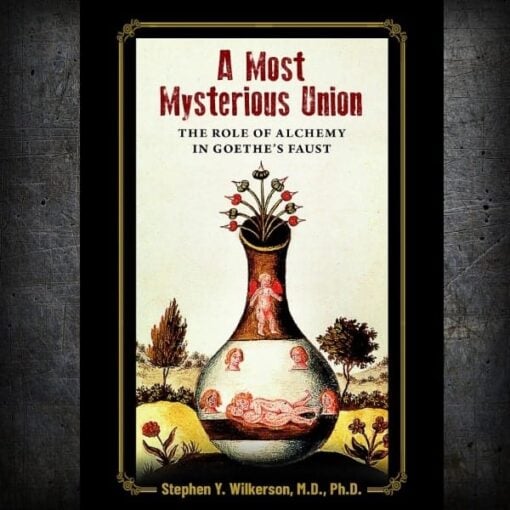
Readers today are especially thrilled by the prospect of good news. Drought and global warming, civil war and famine, poverty and economic inequity—yes, bad news abounds. This book by Dr. Stephen Wilkerson, on the other hand, is about hope and optimism for the future. The recorded history of our world is largely one of a sometimes worthy patriarchal striving. It has, however, all too often been tarnished, marred, and horribly disfigured by the hatreds, intolerance, and destruction that have accompanied it. And the good news? There is another way, poignantly and persuasively outlined nearly two hundred years ago by Johann Wolfgang von Goethe, involving the Divine Feminine.
Preparing to Meet the Gods: The Soul Turned Inward with John Van Eenwyk, PhD
Experiencing the archetypes as personified gods and goddesses active in our lives reveals the great powers shaping our moods, choices, and actions. Facing the Gods: Archetypal Patterns of Existence illuminates the Olympian stories that serve as reflecting pools where we, as psychic heirs of Greece, discover ourselves. By recognizing the gods and goddesses at work we can gain release from archetypally determined patterns. It was recorded in 1991. This episode is part one of the series, which includes the following individual lectures:
Preparing to Meet the Gods: The Soul Turned Inward – John Van Eenwyk
Hera – Lois Khan
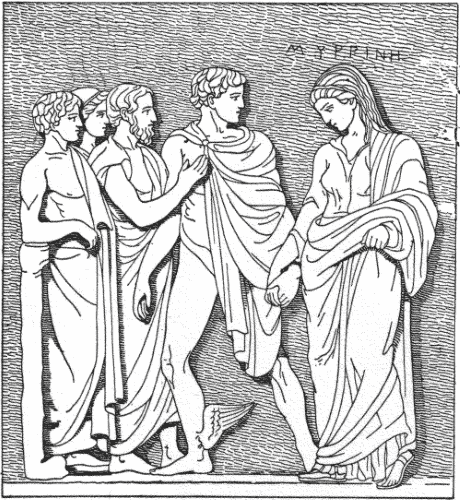
Hermes – Murray Stein
Demeter and Kore – Lucille Klein
Athena – Anne Avery
Zeus – Lee Roloff
Aphrodite and Eros – James Wyly
Dionysus – Caroline Stevens
Dr. John R. Van Eenwyk received his PhD in religion and psychological studies from the University of Chicago. A clinical psychologist and Training Analyst with the Pacific Northwest Society of Jungian Analysts, he maintains a private practice in Jungian Analysis in Olympia, Washington. He is also an ordained priest in the Episcopal Church and a Clinical Instructor at the University of Washington School of Medicine. The author of Archetypes and Strange Attractors: The Chaotic World of Symbols, he publishes widely and lectures internationally on both Jungian psychology and the treatment of torture survivors.
Lecture 1 – Breaking the Code of the Archetypal Self: An Introductory Overview of the Research Discoveries Leading to Neo-Jungian Structural Psychoanalysis
Lecture 2 – Deep Structures and the War of the Psychological Systems
Lecture 3 – Structural Diagnosis: A Neo-Jungian Approach to Understanding Psychopathology
Lecture 4 – Toward a “Structural Cure” in Integrative Psychotherapy: Foundations
Lecture 5 – The Necessary Partnership between Integrative Psychotherapy and Integrative Spirituality: Fundamentals of a Neo-Jungian Postmodern Vision
Robert Moore, PhD was Distinguished Service Professor of Psychology, Psychoanalysis and Spirituality in the Graduate Center of the Chicago Theological Seminary where he was the Founding Director of the new Institute for Advanced Studies in Spirituality and Wellness. An internationally recognized psychoanalyst and consultant in private practice in Chicago, he served as a Training Analyst at the C.G. Jung Institute of Chicago and was Director of Research for the Institute for Integrative Psychoanalysis and Psychotherapy and the Chicago Center for Integrative Psychotherapy. Author and editor of numerous books in psychology and spirituality, he lectured internationally on his formulation of a neo-Jungian psychoanalysis and integrative psychotherapy. His publications include THE ARCHETYPE OF INITIATION: Sacred Space, Ritual Process and Personal Transformation; THE MAGICIAN AND THE ANALYST: The Archetype of the Magus in Occult Spirituality and Jungian Psychology; and FACING THE DRAGON: Confronting Personal and Spiritual Grandiosity.
With the current debate over the nature and content of gender, Jung’s concepts of the anima/animus are being re-examined and, in some cases, reformulated or even discarded as a means of conceptualizing psychological life. It was recorded in 1989.
This lecture is part of the set Views of the Animus, which includes the following lectures:
The four archetypal couples inherent in the Self—the King and Queen, the Warriors, the Magicians, the Lovers—create four distinct psychosocial environments within a relationship. The archetypal dynamics underlying both fulfillment and frustration in human relationships are examined in this seminar recording, with particular focus on marital dynamics and sexual dysfunction.
Robert Moore, PhD was Distinguished Service Professor of Psychology, Psychoanalysis and Spirituality in the Graduate Center of the Chicago Theological Seminary where he was the Founding Director of the new Institute for Advanced Studies in Spirituality and Wellness. An internationally recognized psychoanalyst and consultant in private practice in Chicago, he served as a Training Analyst at the C.G. Jung Institute of Chicago and was Director of Research for the Institute for Integrative Psychoanalysis and Psychotherapy and the Chicago Center for Integrative Psychotherapy. Author and editor of numerous books in psychology and spirituality, he lectured internationally on his formulation of a neo-Jungian psychoanalysis and integrative psychotherapy. His publications include THE ARCHETYPE OF INITIATION: Sacred Space, Ritual Process and Personal Transformation; THE MAGICIAN AND THE ANALYST: The Archetype of the Magus in Occult Spirituality and Jungian Psychology; and FACING THE DRAGON: Confronting Personal and Spiritual Grandiosity.
Frederick Raymond Gustafson Jr., 77, of Watertown, passed away on Tuesday, July 17, 2018, at his home surrounded by family.
Fred was born on April 4, 1941, in Rockford, Illinois, the son of Frederick Sr. and Edith (Hall) Gustafson. He was raised by his paternal grandparents, Joseph and Myrtle (Gustafson) Ekstein. He was united in marriage to Karen Kastman in 1963 in Sacramento, California. Fred was a lifelong student: Augustana College in Illinois (B.A. in philosophy), Lutheran School of Theology in Chicago (MDiv), Andover Newton Theological School in Boston (D.Min.). Once ordained he became a mission developer for the Prince of Peace Lutheran Church in Harvey, Michigan, where he served for four years.
Dr. Cwik is a clinical psychologist, hypnotherapist and senior diplomate Jungian Analyst in private practice in the Chicago area. After studying Chemistry as an undergraduate, he entered military service and then changed his career path to psychology. After studying with Rosiland Cartwright in the Dream and Sleep Lab at the University of Illinois, Chicago Circle, he was in the first class at the Illinois School of Professional Psychology. He interned at the University of Maryland, School of Medicine, Department of Psychiatry where he trained in hypnotherapy and psychoanalytic psychotherapy and returned to Chicago to begin private practice. He is on the teaching faculty of the Chicago Institute and the Florida and Minnesota Seminars for the Interregional Society of Jungian Analysts. He is an Assistant Editor for the Journal of Analytical Psychology. He is former: Co-Director of Training of the Analyst Training Program in Clinical Supervision and Curriculum and Co-Director of Clinical Training Program in Analytical Psychotherapy at the C.G. Jung Institute of Chicago, and Senior Adjunct Faculty at the Illinois School of Professional Psychology. He provides videoconferencing supervision and analysis. He has published on analytic structure, supervision, alchemical imagery, active imagination, dreams, and numerous reviews.
This course offers a Jungian understanding and healing of addictions by considering the correspondence between Bill Wilson, co-founder of Alcoholics Anonymous, and Carl Jung, whom Wilson praises for being one of the key influences leading to the formation of AA and its 12 Steps. The meaning of addiction within our culture is also examined by utilizing the psychology of narcissism as a key to understanding.
Diagrams used in this talk are not available, but in-depth descriptions of John’s work can be found in his book, Compass of the Soul.
John Giannini, MDiv, LCPC, NCPsyA was a Jungian analyst in private practice in Chicago and Evanston. He holds an MDiv in Religion and Psychology from St. Albert’s College, an MA from the University of Chicago Divinity School, an MBA from Stanford University, and LCPC certification with the State of Illinois. John published articles and lectured widely throughout the U.S. and Canada on the wounded child within and narcissistic/addictive behavior. He is the author of Compass of the Soul, an updated understanding of typology.
According to Jung, myth-making is a natural and impersonal potential present in the collective unconscious of all peoples throughout all times. Drawing on the contributions of Jung, Campbell, and Eliade, this course explores the role of myth in human life. Five of the major mythological themes prominent in world mythology are examined in terms of their contemporary psychological and cultural significance:
Mythology of Creation
Mythology of The Divine Child
Mythology of The Hero
Mythology of The Shaman
Mythology of The Apocalypse
This episode is the introductory session for the series, titled “Mythology and Psychology: A Jungian Perspective”.
Robert Moore, PhD was Distinguished Service Professor of Psychology, Psychoanalysis and Spirituality in the Graduate Center of the Chicago Theological Seminary where he was the Founding Director of the new Institute for Advanced Studies in Spirituality and Wellness. An internationally recognized psychoanalyst and consultant in private practice in Chicago, he served as a Training Analyst at the C.G. Jung Institute of Chicago and was Director of Research for the Institute for Integrative Psychoanalysis and Psychotherapy and the Chicago Center for Integrative Psychotherapy. Author and editor of numerous books in psychology and spirituality, he lectured internationally on his formulation of a neo-Jungian psychoanalysis and integrative psychotherapy. His publications include THE ARCHETYPE OF INITIATION: Sacred Space, Ritual Process and Personal Transformation; THE MAGICIAN AND THE ANALYST: The Archetype of the Magus in Occult Spirituality and Jungian Psychology; and FACING THE DRAGON: Confronting Personal and Spiritual Grandiosity.
Most depth psychological theories look backward into the personal history of the individual in order to find the causes for neurotic symptoms, gain insight into their persistence in the present, and diminish their effects in the future. A key feature of Jungian psychology is the addition of a forward focus, a constructive, teleological emphasis on the meaning of symptoms, and the need to discover what the symptom is calling the sufferer to notice and change. This places Jung in a category of psychological practitioners who seek to promote the possible evolution of the person from present status to future transcendence.
Russian spiritual teacher G.I. Gurdjieff sought to bring his students to a place of consciousness that went far beyond what was generally thought of as “being awake”. The core of his teaching, that humankind was unfinished and did not possess a soul but was capable of creating one through intense inner work, created discomfort in his followers and stimulated them to find ways to break through to new levels of awareness – a method he called “the way of the sly one”. P.D. Ouspensky, Gurdjieff’s foremost disciple, also taught about the possible evolution of human consciousness and provided a more systematized interpretation of Gurdjieff’s teachings.
Ken James, PhD maintains a private practice in Chicago, Illinois. His areas of expertise include dream work and psychoanalysis, archetypal dimensions of analytic practice, divination and synchronicity, and ways to sustain the vital relationship between body, mind and spirit. He has done post-doctoral work in music therapy, the Kabbalah, spirituality and theology, and uses these disciplines to inform his work as a Jungian analyst. For more information visit soulworkcenter.org
As we enter a new year, it seems right to share the recording of the program “The Fate of Depth Psychology in the New Millenium”, held in 1998. It includes introductory remarks by June Singer and a lengthy discussion with panel and audience members. We hope this event will facilitate reflection as we enter 2018. From the original CD jacket:
“As we approach the year 2000 humanity finds itself, as it always will, wrestling with the eternal questions of the meaning of existence and their relationship to spirit and matter. Given the direction of contemporary brain research and science, the growing psychopharmacological approach to mental and emotional disorders, the emergence of managed care, and the economics of psychotherapy and psychoanalysis, we have to wonder what challenges depth psychology will face in the years ahead.
This program takes up this critical question as seven Jungian analysts share their individual visions of the fate that awaits depth psychology in the new millennium. The panel members each present a brief synopsis of his/her vision and then engage with the audience in a lively discussion of their ideas, reactions, and intuitions.”
Jungian analyst and author Jean Shinoda Bolen leads a workshop for women “who seek to nurture their own creative and spiritual yearnings and find ways of expressing, articulating, and valuing what grows out of their inner life and the life they have lived so far. In the company of other women who know that suffering and joy and life are linked, personas drop away and soul comes forth.” Bolen weaves stories of psyche and goddess that have the power to touch themes and sacred places in the soul, and she leads listeners through a guided meditation, allowing the opportunity for personal symbols and myths to emerge. This tape set is also intended to serve as a model for women interested in forming their own spiritual groups. It was recorded in 1994.
Our Blog shares essays, articles, video, audio, and other resources by members of the Chicago Society of Jungian Analysts and other groups that support the education and development of our community.
The views and opinions expressed in the podcasts and blog posts are those of the respected speakers or authors and do not necessarily represent the views of the C. G. Jung Institute of Chicago.