The four archetypal couples inherent in the Self—the King and Queen, the Warriors, the Magicians, the Lovers—create four distinct psychosocial environments within a relationship. The archetypal dynamics underlying both fulfillment and frustration in human relationships are examined in this seminar recording, with particular focus on marital dynamics and sexual dysfunction.
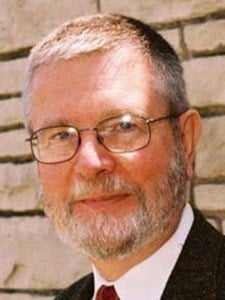
Robert Moore, PhD was Distinguished Service Professor of Psychology, Psychoanalysis and Spirituality in the Graduate Center of the Chicago Theological Seminary where he was the Founding Director of the new Institute for Advanced Studies in Spirituality and Wellness. An internationally recognized psychoanalyst and consultant in private practice in Chicago, he served as a Training Analyst at the C.G. Jung Institute of Chicago and was Director of Research for the Institute for Integrative Psychoanalysis and Psychotherapy and the Chicago Center for Integrative Psychotherapy. Author and editor of numerous books in psychology and spirituality, he lectured internationally on his formulation of a neo-Jungian psychoanalysis and integrative psychotherapy. His publications include THE ARCHETYPE OF INITIATION: Sacred Space, Ritual Process and Personal Transformation; THE MAGICIAN AND THE ANALYST: The Archetype of the Magus in Occult Spirituality and Jungian Psychology; and FACING THE DRAGON: Confronting Personal and Spiritual Grandiosity.
In this seminar, Dr. Moore stresses that “although it is important that people find and affirm their common human spiritual roots, it is time to realize that tribalism in human culture, politics, and religion must be transcended. Jungian thought may be a vehicle to assist in facilitating that process.”
Robert Moore, PhD was Distinguished Service Professor of Psychology, Psychoanalysis and Spirituality in the Graduate Center of the Chicago Theological Seminary where he was the Founding Director of the new Institute for Advanced Studies in Spirituality and Wellness. An internationally recognized psychoanalyst and consultant in private practice in Chicago, he served as a Training Analyst at the C.G. Jung Institute of Chicago and was Director of Research for the Institute for Integrative Psychoanalysis and Psychotherapy and the Chicago Center for Integrative Psychotherapy. Author and editor of numerous books in psychology and spirituality, he lectured internationally on his formulation of a neo-Jungian psychoanalysis and integrative psychotherapy. His publications include THE ARCHETYPE OF INITIATION: Sacred Space, Ritual Process and Personal Transformation; THE MAGICIAN AND THE ANALYST: The Archetype of the Magus in Occult Spirituality and Jungian Psychology; and FACING THE DRAGON: Confronting Personal and Spiritual Grandiosity.
During the last thirty years of his life, Jung turned to alchemy as a fundamental resource for depth psychology. In alchemy he found images and thoughts that were uniquely fitted to his perceptions of psychological life and that confirmed his views of the spontaneous activity and directedness of the unconscious. Jungian analyst and author Murray Stein presents an overview of Jung’s work on alchemy to develop an understanding of the relation of alchemical symbols to the analytical process and individuation. The set includes the following lectures:
Commentary on The Secret of the Golden Flower [in CW 13]
Psychology and Alchemy [CW 12, parts 1 & 2]
The Spirit Mercurius [in CW 13]
The Psychology of Transference [in CW 16]
Mysterium Coniunctionis [CW 14, Chap. 6]
Murray Stein, PhD is a training analyst at the International School for Analytical Psychology in Zurich, Switzerland. His most recent publications include The Principle of Individuation, Jung’s Map of the Soul, and The Edinburgh International Encyclopaedia of Psychoanalysis (Editor of the Jungian sections, with Ross Skelton as General Editor). He lectures internationally on topics related to Analytical Psychology and its applications in the contemporary world. Dr. Stein is a graduate of Yale University (B.A. and M.Div.), the University of Chicago (Ph.D., in Religion and Psychological Studies), and the C.G. Jung Institut-Zurich. He is a founding member of the Inter-Regional Society of Jungian Analysts and Chicago Society of Jungian Analysts. He has been the president of the International Association for Analytical Psychology (2001-4), and is presently a member of the Swiss Society for Analytical Psychology and President of the International School of Analytical Psychology, Zurich.
Jung called individuation the method by which a person becomes a separate unity or whole. In Jungian psychology, individuation has sometimes been called the goal of the analytic process. This terminology can be misleading since individuation is not a product, but a process in which we are engaged throughout our lives. The mysterious process of individuation is the focus of this course. Engaging lecture and reflection on Jung’s Collected Works provide an understanding of the nature of individuation as well as ways to enhance and foster that process. It was recorded in 1997.
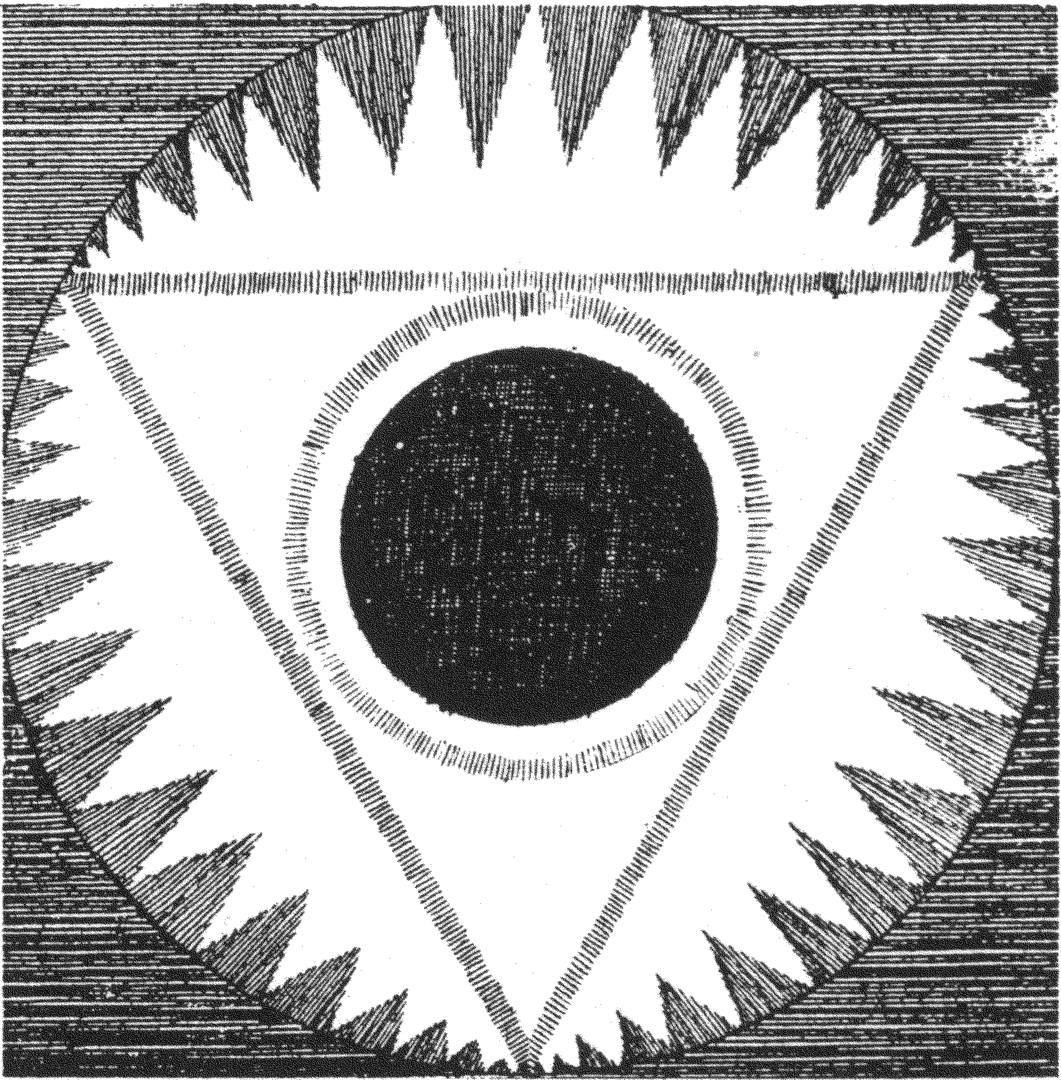
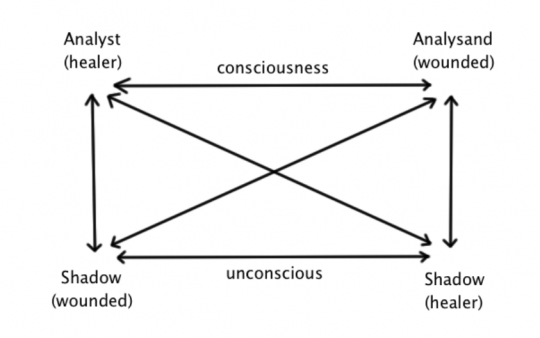
A diagram is referenced is the talk which is probably this one. Though not explicitly described as being between analyst and analysand, the structure is essentially the same.
Ken James, PhDÂ is director of Student Services at the Laboratory School, University of Chicago. His areas of expertise include dream work and psychoanalysis, archetypal dimensions of analytic practice, divination and synchronicity, hypnosis as a therapeutic medium, and Eye Movement Desensitization and Reprocessing. He has done post-doctoral work in music therapy and theology, and uses these disciplines to inform his work as a Jungian analyst. For more information visit soulworkcenter.org
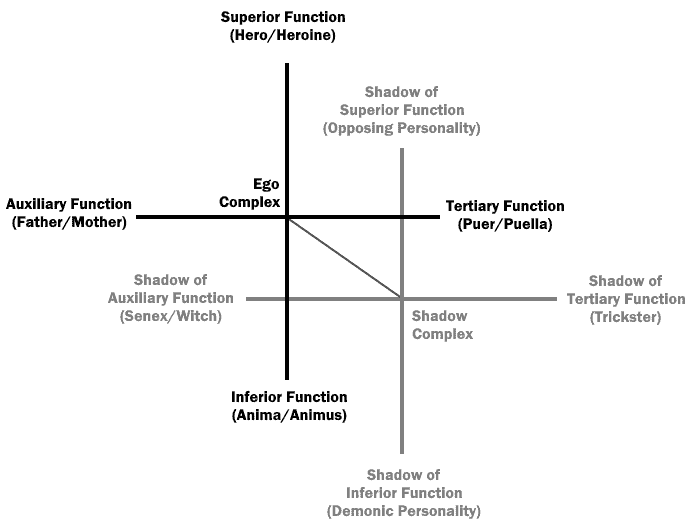
Jung’s theory of psychological types is an attempt to make comprehensible the regular differences between individuals. His concepts of introversion and extraversion, thinking, feeling, sensation, and intuition have gained wide currency since their introduction in 1920. However, applying these concepts to practical situations is often confusing. Dr. Beebe’s new model of typology shows how the eight types relate to complexes that can be recognized in dreams and styles of behavior. The model, which permits the types to be recognized more easily and with more precision, is illustrated with examples drawn from clinical work and works of creative imagination. It was recorded in 1988.
The following diagram outlines Beebe’s framework (click image to enlarge):
John Beebe, MD a physician specializing in psychotherapy, is a Distinguished Life Fellow of the American Psychiatric Association and a past president of the C. G. Jung Institute of San Francisco. He is the author of Integrity in Depth, editor of C. G. Jung’s Aspects of the Masculine, and co-author of The Presence of the Feminine in Film. He is the founding editor of The San Francisco Jung Institute Library Journal (now titled Jung Journal: Culture and Psyche), and a was the first American co-editor of the London-based Journal of Analytical Psychology. An international lecturer, Beebe is widely known for his work on psychological types, the psychology of moral process, and the Jungian understanding of film. Recently he has been engaged in training the first generation of analytical psychologists in China.
This episode is part one of the series Terror, Evil, and Loss of the Self. In this seminar, Brenda Donahue discusses how survivors of childhood deprivation or physical and sexual abuse routinely describe themselves as freaks, existing outside of normal human relations because they feel evil or bad. This is because the child victim takes the evil of the abuser into him/herself in order to preserve the primary attachment to the parents. This sense of badness or evil becomes a staple of the personality structure, and many survivors spend their lives refusing to be absolved of blame. This course presents basic concepts from analytical psychology and shows how they can be useful in the treatment of post-traumatic stress syndrome. It was recorded in 1994.
Brenda Donahue, RN, LCSW is a Jungian analyst in private practice in the western suburbs of Chicago and author of C. G. Jung’s Complex Dynamics and the Clinical Relationship: One Map for Mystery.
This episode is part one of the series The Jungian Psyche: A Deeper Look at Analytical Psychology. The course, recorded in 1991, offers a careful exploration of some of Jung’s key theoretical texts. Aimed at giving the advanced student of analytical psychology a greater appreciation of the details of Jung’s theoretical model of the psyche, the class proceeds in a systematic fashion through the basic concepts and considers how they interrelate to form a whole. Suggested readings from Jung’s Collected Works are announced at the start of each class section. During this talk Dr. Stein discusses Jung’s Aion: Researches into the Phenomenology of the Self andPsychological Types, the theory, historical use, and emergence of the term ego, and the theory of complexes.
Murray Stein, PhD is a training analyst at the International School for Analytical Psychology in Zurich, Switzerland. His most recent publications include The Principle of Individuation, Jung’s Map of the Soul, and The Edinburgh International Encyclopaedia of Psychoanalysis (Editor of the Jungian sections, with Ross Skelton as General Editor). He lectures internationally on topics related to Analytical Psychology and its applications in the contemporary world. Dr. Stein is a graduate of Yale University (B.A. and M.Div.), the University of Chicago (Ph.D., in Religion and Psychological Studies), and the C.G. Jung Institut-Zurich. He is a founding member of the Inter-Regional Society of Jungian Analysts and Chicago Society of Jungian Analysts. He has been the president of the International Association for Analytical Psychology (2001-4), and is presently a member of the Swiss Society for Analytical Psychology and President of the International School of Analytical Psychology, Zurich.
Our Blog shares essays, articles, video, audio, and other resources by members of the Chicago Society of Jungian Analysts and other groups that support the education and development of our community.
The views and opinions expressed in the podcasts and blog posts are those of the respected speakers or authors and do not necessarily represent the views of the C. G. Jung Institute of Chicago.