Jung Chicago Radio & Blog – Page 3 – C. G. Jung Institute of Chicago

Patricia Martin | What Happens When Your Online Persona Takes Over

The Experiment: The B-sides Will Explore New Territory in Jungian Thought

Sometimes the best discoveries come from saying “yes” to an experiment.

Five years ago, during the COVID shutdown, I took a leap: launching a podcast with the C. G. Jung Institute of Chicago. After devoting two years immersed in Jung’s work as a student in the Institute’s Jungian Studies Program, and subsequently leading a Collected Works reading group, I’d joined the Institute’s public program committee just as we faced an urgent question—how do we stay connected when we can’t gather in person?

A podcast felt right. And I was itching to explore new directions during the torpor of the shutdown. What started as an experiment has grown into something beyond what I imagined—a global audience and conversations with leading voices in psychology who generously share their insights with our listeners.

When Restlessness Becomes a Compass

This summer, I felt a familiar stirring again. I’ve learned to trust these moments. They’re rarely about boredom—they’re usually invitations to evolve, to stretch into something new.

That’s how the “B-sides” series was born. Think of it as going off-road on the path to individuation—intimate conversations about what it actually feels like to navigate digital life, wrestle with uncertainty, and maintain the connection to our inner realm.

The Hidden Cost of Online Influence

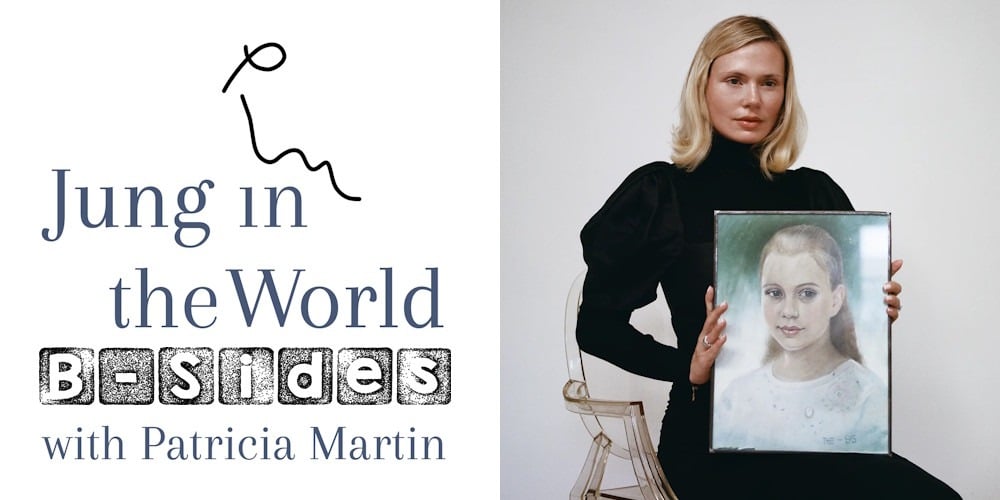
For our first episode, I sat down with Hilde Helphenstein, an artist and art world critic whose own experiment as an online influencer spiraled into something she never saw coming.

Hilde created Jerry Gagosian—an online persona supposedly related to Larry Gagosian, the legendary NY gallery owner and kingmaker of the contemporary art world. Her feeds drew thousands of followers. At prestigious live events, such as Art Basel and the Whitney Biennial, people approached her as “Jerry” and she’d correct them, explaining Jerry was just an online identity.

People waved that away. The persona stuck.

What began as a cheeky experiment became her identity in the world. And as Hilde surrendered to living as someone else, emotional consequences followed—ultimately reaching a breaking point that forced her to make a choice: keep performing or reclaim her true self.

A Case Study for Our Persona-driven Age

Hilde’s conversation is unflinching. She walks us through her undoing with remarkable honesty delivering a poignant portrait of influencer culture from the inside, and a cautionary tale for an era when who we are online is not necessarily who we actually are.

You may recall the classic New Yorker cartoon. A dog sits at the computer with the caption: “On the internet, nobody knows you’re a dog.” It used to be funny. Hilde’s story shows us why it’s no laughing matter anymore—and what it cost her to claw her way back to herself.

Listen In

The conversation is in two parts—a before-and-after portrait of one woman’s struggle with digital identity, followed by her journey back to herself.

The collective is living through a metamorphosis few consented to. The question isn’t whether our digital personas will change us—they already have. The pressing question is whether we’ll become conscious of the consequences in time to choose what we’re becoming, or whether we’ll arrive at ourselves as strangers.

(more…)

Jung in the World B-Sides | Living as Someone Else: The Hidden Cost of Online Personas with Hilde Lynn Helphenstein (Part 2)

This episode is part of a new series, Jung in the World B-Sides, where we go off-road to explore the rugged psychological terrain of our current culture.

This episode is part 2 of our interview with Hilde Lynn Helphenstein. Part 1

“Know thyself”—from Socrates to Shakespeare, this wisdom echoed across centuries. But the digital age is turning it inside out. As online influencers rise to fame, persona is overtaking the self. The obsession with self-representation has eclipsed the drive to be true to oneself.

What does it mean to live your life as someone else? In this two-part interview, host Patricia Martin talks with the infamous Jerry Gogosian—real name Hilde Helphenstein—about the hidden psychological costs of her seven-year experiment living as her persona and how she clawed her identity back.

Watch the video of this interview:

(more…)

Vlado Solc | The Witching Time of the Soul: A Jungian Reflection on Halloween and Death

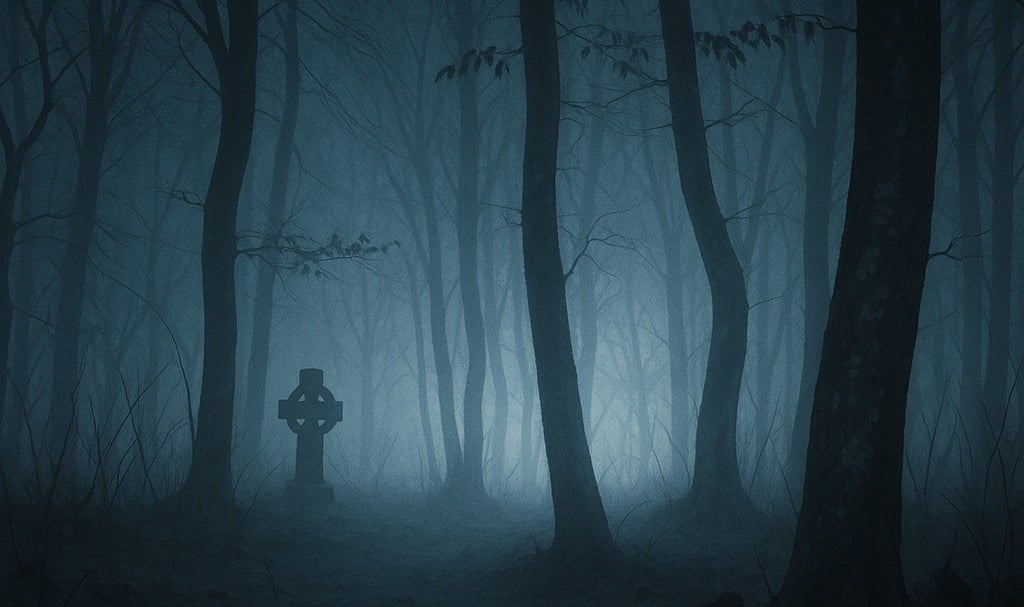
AI Image of a dark forest and a gravestone

“‘Tis now the very witching time of night,

When churchyards yawn, and hell itself breathes out

Contagion to this world: now could I drink hot blood.”

(Shakespeare, Hamlet, ca. 1600)

On the thirty-first of October, countries as distant as Mexico, Brazil, Scotland, Australia, New Zealand, Puerto Rico, Canada, and, above all, the United States, celebrate one of the strangest and most popular pagan holidays: Halloween. Over the past two decades, this festival has also taken root in the Czech Republic, Slovakia, and other Eastern European countries, where it overlaps with the Christian commemoration of All Souls’ Day.

Its origins, however, reach back more than two millennia to the ancient Celtic custom known as Samhain, once celebrated in northern France, England, and Ireland. In various forms, this archetypal motif appears in religions and myths across the world. The theme that Halloween brings to consciousness holds deep psychological significance, as it addresses a core insight for curating the well-being of humankind.

Samhain: The End of Summer

The Celts called the festival Samhain. The old Irish and Gaelic word samfuin means “the end of summer” or “the setting of the sun.” The festival marked the conclusion of the harvest and the beginning of the Celtic New Year. The Gallic calendar divided the year into two halves—the dark and the light—each beginning with the months Samonios and Giamonios, respectively. Samhain thus opened the dark half of the year, a time when the sun withdrew and the fires of transformation were kindled. The New Year’s celebration lasted three days—Trinoux Samoni—a triple feast that symbolically contained the movement from life toward death and back again.

(more…)

Jung in the World B-Sides | Living as Someone Else: The Hidden Cost of Online Personas with Hilde Lynn Helphenstein (Part 1)

This episode is part of a new series, Jung in the World B-Sides, where we go off-road to explore the rugged psychological terrain of our current culture.

Part 2 is now up. Listen to Part 2

“Know thyself”—from Socrates to Shakespeare, this wisdom echoed across centuries. But the digital age is turning it inside out. As online influencers rise to fame, persona is overtaking the self. The obsession with self-representation has eclipsed the drive to be true to oneself.

What does it mean to live your life as someone else? In this two-part interview, host Patricia Martin talks with the infamous Jerry Gogosian—real name Hilde Helphenstein—about the hidden psychological costs of her seven-year experiment living as her persona and how she clawed her identity back.

Watch the video of this interview:

(more…)

Call for Proposals | 2026 Online & In-Person Programs

The C. G. Jung Institute Chicago welcomes proposals for programs of interest to the general public that explore Jungian thought, including the emotional and psychological issues of contemporary living, from a creative, symbolic, or spiritual perspective. Using the online form, you can propose an event, lecture, or workshop to offer in person and/or virtually. All proposals will be considered for the 2026 calendar year. The submission deadline is November 30, 2025.

Proposals are now closed. To be informed when they reopen, join our mailing list.

Jung in the World episode banner image with Connie Zweig photo

Jung in the World | Approaching Shadow Work with Connie Zweig


Patricia Martin and Connie Zweig discuss the nature of shadow work. Before doing shadow work, we live an unexamined life – overeating, criticizing yourself or your partner, blaming someone, procrastinating – which leads to uncontrollable, self-sabotaging behaviors.

(more…)

Vlado Solc | From Illusion to Conscious Suffering: A Jungian View of Politics, Possession, and Redemption

In recent decades, we have observed how high politics and society are being increasingly influenced by low motives and emotional drives such as envy, frustration, manipulation, deception, or revenge. The division of society has intensified, accompanied by aggression and the entrenchment of one-sided positions. In the United States in particular, we are witnessing a rise in irrational attitudes, conspiratorial thinking, and accompanying attacks on pluralism, minorities, those who hold differing opinions and “others.”

The article is an extended and revised version of the one originally published in Vesmír, which was based on an interview that Vlado gave to Psychologie.cz.

Alchemical Nigredo
A decade before Donald Trump’s emergence on the political scene, those impulses had begun to be heard in American society. Psychologically, we might view this as an emergence of the “narcissistic archetype.” Possession by this archetype manifests in the ego as self-absorbed, self-centered focus, where “mine” is presented as universal, righteous, correct, and perfect. Thus, a sense of entitlement arises to impose this ideal upon others, even at the cost of one-sidedness, control, or cruelty. Mythical Narcissus rejected Echo’s love and remained enchanted by his own reflection. This indicates an emotional detachment, splitting off the psychic poles of thinking and feeling—that is, a loss of contact with the soul, the heart—typically accompanied by a loss of compassion, intuition, perspective, and understanding of higher motives. Things that were previously subjected to moral scrutiny are now – under the new paradigm – reconsidered as a new value; bold acts are no longer feared—because now it is done in the name of truth. The new truth! But where is the “old” truth? It is now pushed away by the complex that got constellated. And Trump emerged as a major object of the collective projection of this complex within the American psyche. As the chosen Über-Narcissus, he legitimized shadow emotions—rage, entitlement, xenophobia—emotions that had previously been repressed under the weight of collective scrutiny. Thus, he allowed the collective shadow to manifest openly, without burdening shame.

This opened the door to authoritarian dynamics and narcissistic manipulation. When society becomes psychically fragmented—when people lose both internal and external cohesion—they often seek a dominant figure to restore a sense of order: someone emotionally expressive, seemingly confident and strong. As a rule manipulators and narcissists then contain the chaos during turbulent times and offer temporary relief by directing the collective shadow outward—by way of scapegoating towards the state, immigrants, minorities… Anyone perceived as different. The forms of oppression in a family controlled by a narcissist are quite similar to those by which a totalitarian state controls its citizens.

(more…)

Institute Archive | Dreams: Gifts from the Unconscious with June Singer


The author of the acclaimed introduction to the practice of Jungian psychology, Boundaries of the Soul, June Singer draws from personal and professional experience to discuss the importance of dreams, those gifts from the unconscious which profoundly imbue our conscious lives. This program provides an excellent introduction not only to Jung’s dream theory, but also its application in psychoanalysis—from one of the masters of the art. It was recorded on September 21, 1975.

(more…)

Jungian Ever After | Orpheus and Euridice – Creativity


We begin our coverage of Orpheus and Euridice. This episode is primarily focused on the archetypal power of creativity as demonstrated in Edith Hamilton’s telling of the story. We will read Ovid’s version and dig into other elements of the story in the following episode.

(more…)

Psychologie.cz | The Fisher King Without Clothes: Interview with Vlado Solc

This article originally appeared on psychologie.cz. Vlado Solc, member of the Chicago Society of Jungian Analysts, is interviewed by Jan Majer, Editor-in-Chief of Psychologie.cz.

In his books, Jungian Analyst Vlado Solc has been describing for many years how high politics is increasingly dominated by base motives – envy, frustration, the need for revenge. The turn of events is unexpected and disturbing. And beneath the surface, something deeper is happening. It’s not about politics, it’s about the soul.


Jan Majer – Years ago, you pointed out that high politics and society were increasingly being driven by low motives — envy, frustration, the need for revenge. In recent weeks, a lot has happened. What new insights have these events brought you? What psychological connection have you realized?

~ Vlado Šolc – Even before Donald Trump entered the political scene, low impulses had begun to awaken in American society. I called it an emergence of the Narcissistic archetypal dynamics. This goes beyond individual vanity — Narcissus is a symbol of psychic fragmentation, of the ego being consumed by an image of oneself to the point that deeper, conscious connection becomes impossible. Psychologically, this represents a splitting of psychic opposites, a loss of living contact with the soul, which typically leads to a loss of compassion, perspective, and understanding of higher motives such as art, ethics, and spirituality.

In this fragmented state, what had previously been considered via lenses of moral anxiety suddenly became a new value, no longer viewed with fear, but with fearless excitement. Trump rose up as a great object of collective projection of this American complex; as a chosen Über-Narcissus, he legitimized these shadowy emotions — rage, entitlement, xenophobia — which had previously been suppressed due to social oversight. He thus gave permission for the collective shadow to manifest openly, without shame.

This opened the door to authoritarian dynamics and all narcissistic manipulation that catalyzes it. When society is psychologically fragmented, when people lose inner and outer cohesion, they often seek a dominant figure to restore a sense of order — someone emotionally expressive, certain, and seemingly strong. Manipulators and narcissists channel the chaos of the collective psyche and provide it with temporary relief by directing the collective shadow outward onto scapegoats: the state, immigrants, or anyone slightly different from oneself.

(more…)

Statement (June 4, 2025)

We of the C. G. Jung Institute of Chicago wish to foster concern for the collective well-being and for a just and fair society for all, especially the most vulnerable. As such we support fundamental human rights, the rule of law, and a society governed by democratically elected institutions. This is a moral and ethical statement consistent with our philosophy and teaching. Following Jung, we intend to help others meet the world with generosity, kindness and truthfulness.

Jung in the World | Reframing Self and Society in a World on Fire with Laura Tuley and John White


Jungian Psychoanalysts Laura Tuley and John White discuss Jungian Analysis in a World on Fire: At the Nexus of Individual and Collective Trauma, a volume of essays, all authored by practicing Jungian psychoanalysts, of which they were the editors. It examines and illuminates ways of working with individual analytic and therapeutic clients in the context of powerful and current collective forces, in the United States and beyond.

(more…)

Filter Posts

  • About Jung Chicago Radio & Blog

    Jung Chicago Radio is home to a variety of podcasts that range from archival seminar recordings (Institute Archives), to interviews (Jung in the World) to discussion on film (Healing Cinema), fairy tales (Jungian Ever After), and our programs.

    Our Blog shares essays, articles, video, audio, and other resources by members of the Chicago Society of Jungian Analysts and other groups that support the education and development of our community.

    The views and opinions expressed in the podcasts and blog posts are those of the respected speakers or authors and do not necessarily represent the views of the C. G. Jung Institute of Chicago.

    Login

    This search engine will search our public programs, the Jung Chicago Radio and Blog, and our store.

    To search only the store, visit our Store page.

    If you’re looking for a Jungian Analyst, use our Find an Analyst search engine or browse the Chicago Society of Jungian Analysts page.