Our Spring Fundraising Drive is live! Support this podcast by making a donation today. The first $7,000 in donations will be matched!
Jung and the Post-Human Age, with Pacifica professor and author Glen Slater is a deep dive into what digital culture is doing to the human psyche as we internalize the fractiousness of the outer world.
We recorded this shortly after the 2024 US election results but, as it took some time to edit, we decided to post on inauguration day (reposted here from the original feed). In a time when self-absorbed billionaires have taken control of government, this episode’s topic feels particularly relevant.
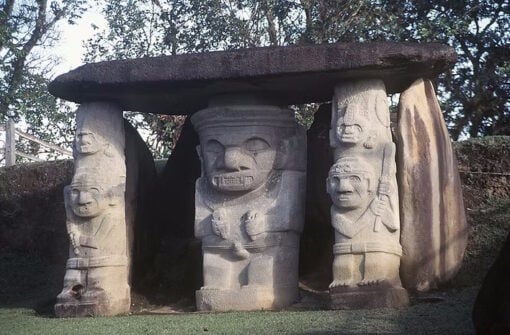
In a previous article that I wrote (“What The Death May Teach The Living About the Individuation Process”), I stated the hypothesis that archetypal images, carved on stone statues by an aboriginal group and located on a necropolis, could provide psychological guidance for the journey of life, death, and rebirth, specifically for the journey of the afterlife. It seems that each person and his/her spirit may have to go through the journey of living, dying, and rebirth. Therefore, the individual spirit of a human being may go through three phases; a) the living (“incarnated spirit”); b) the Death (“spirit”), and c) the Rebirth (“reincarnated spirit”) (Credit for the Image: UNESCO-Sacred Sites-Martin Gray).
You may be skeptical and question the relevance of talking about death and the afterlife when we are still alive and want to fulfill our individuation process. That is a reasonable point of view. However, I would like to invite the reader to consider the following two issues: 1) that there are certain archetypal images, while we are alive, that appear in dreams, visions, paintings, sculptures, etc that will be, also, essential and relevant, after we die, during the journey to the afterlife. If we could determine what similar archetypal images are crucially relevant for both, the cycle of living and for the afterlife, then, each of us will have not only a much larger “vision and mission” about life and death but, also, less karma that would decrease the necessity to reincarnate. Those archetypally relevant (images), if related consciously during living, would contribute, first, towards enlightment, second towards decreasing the individual karma that forces reincarnation and, third, following Jung’s thought about the afterlife, the spirit of a person who has died and who did not fulfilled, on earth, the Destiny (the archetypal endowments) that was given to him/her, will be forced, after death, to continue atempting to relate and integrate those archetypal images that were not realized during the living phase. Unfortunately, and according to Jung, the ‘dead’ or the ‘spirits of the dead’ will not be able to integrate the archetypal messages because the opposite -being humanly alive- is not available to them for consciousness to be realized. This article will attempt to further discuss these ideas within the context of the statue of the Jaguar-Man that is located at the entrance of a tomb in a necropolis in San Agustin, Colombia.
The journey is not just about life; it is also about death, the afterlife, and possibly about the beyond (i.e., Rebirth). Therefore, the sculpture to be discussed in this article may provide important archetypal information for the living during the phase of living and dying; 2) that the dead, or the world of the spirits, as it is known in indigenous cultures, may provide valuable existential and psychological information to the living.
Jungian analysis has focused its efforts on the phase of living; however, Jung’s thoughts on the subtle body and the Philosopher’s Stone may enlarge the scope of Jungian analysis that includes, also, the phase of death, and rebirth. Therefore, rather than exclusively focusing and emphasizing the process of individuation during the phase of “living” life, Jungian analysis, with its emphasis on the collective unconscious and God Within, could broaden and facilitate the analytical process for the individual to go not only through the phase of life (the individuation process) but, also, to prepare AND continue for and during the phases of death, the afterlife, and the beyond, which may include resurrection, rebirth, and reincarnation.
Our Spring Fundraising Drive is live! Support this podcast by making a donation today. The first $7,000 in donations will be matched!
Patricia Martin and Paul Bishop, author and professor at the University of Glasgow, discuss the mystery of the holy grail, what it meant to Carl Jung, and what it offers us.
Robert Tyminski’s book, The Psychological Effects of Immigrating, is an exceptionally useful read in these turbulent times. As thoughtful people grapple with the bewildering array of policies from the White House aimed at immigrants, there is a collective anguish over how to respond. The cruel hypocrisy is that our national identity has been forged by immigrant stories. Still, sympathetic citizens also feel the tug of conscience when recent waves of immigrants aren’t easily absorbed into the economic fabric of our towns and cities as in previous generations.
At the core of Tyminski’s book is a focus on the mental health issues that arise for immigrants. A practicing Jungian analyst, Tyminski deftly weaves stories from his casework with myth and history to create an emotional landscape for the immigrant experience.
The basis of empathy is context. If we cannot see the human struggle of immigrants, it’s largely because it’s being drowned out by survival memes—it’s us against them. More constructive solutions elude us. This is where Tyminski’s work shines. His writing creates poignant profiles of immigrants working hard to fit in and the psychological costs for failing to do so: isolation, erasure, inadequacy, idealization of a past life, and feelings of doom and dread.
This episode departs from the physicality of Hercules’ deeds to discuss a more spiritual tale of love. Eros and Psyche is in many ways a story in opposition to Hercules. For while he remains emotionally unchanged by the end of his tale, the very core of this love story is emotional development.
Paul is the author of “Transformative Experience,” a widely read philosophical investigation of personal change. As a professor at Yale University, she is revitalizing a humanities approach to philosophy that helps us look at ourselves across the ups and downs of individuation.
In this episode we discuss the story of Hercules, the strongest man and perhaps the most well known of Greek heroes. While folks are probably familiar with general highlights of his story, many of the finer details may be surprising. After consuming the entirety of his legend, it’s hard to call it anything else but tragic.
Howling about Jung, Hillman, individuation, the shadow & the spiritual life with Ken James. Dr. Kenneth James maintains a private practice in Chicago, Illinois at The Soulwork Center. His areas of expertise include dream work and psychoanalysis, archetypal dimensions of analytic practice, divination and synchronicity, and ways to sustain the vital relationship between body, mind and spirit. He has done post-doctoral work in music therapy, the Kabbalah, spirituality and theology, and uses these disciplines to inform his work as a Jungian analyst.
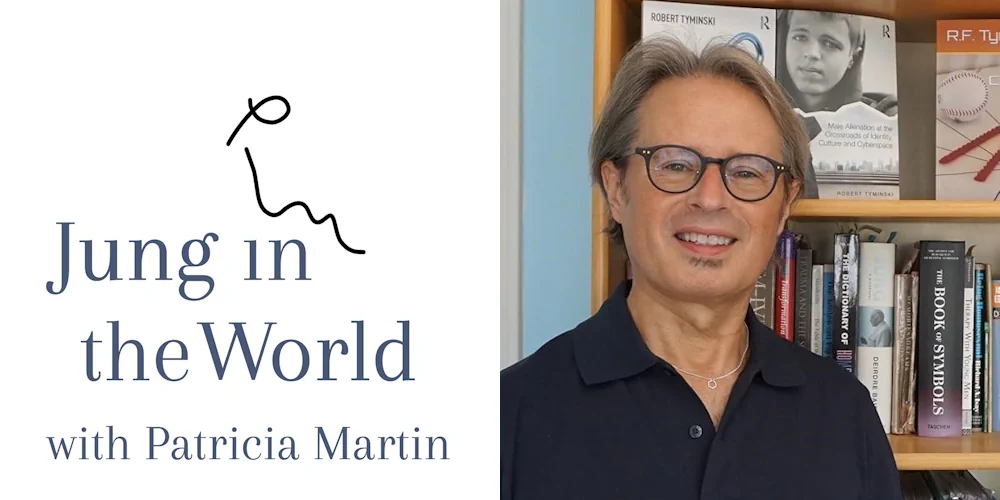
Jungian analyst and author Robert Tyminski brilliantly weaves poignant case studies with Jungian theory and mythology in an interview that meets the urgency of our times when ideas about masculinity are roiling in the Collective.
Our Blog shares essays, articles, video, audio, and other resources by members of the Chicago Society of Jungian Analysts and other groups that support the education and development of our community.
The views and opinions expressed in the podcasts and blog posts are those of the respected speakers or authors and do not necessarily represent the views of the C. G. Jung Institute of Chicago.