Daniel T. Bourne Show | Three Psychodynamic Approaches to Psychotherapy: Erik Mansager, Kenneth James, and Nancy McWilliams (Video/Audio)

Chicago Society of Jungian Analysts member Ken James appeared on the Daniel T. Bourne Show to discuss Jungian Analysis. Watch the video below or listen on Apple Podcasts or Spotify.

From the episode description:

Three Psychodynamic Approaches to Psychotherapy What does psychodynamic therapy actually look like in the room? Inspired by the APA’s Three Approaches to Psychotherapy, this video offers a public-facing demonstration of three psychodynamic traditions in action:

• Adlerian Depth Psychotherapy
• Jungian Analysis
• Psychoanalysis

Rather than explaining these approaches in theory, this video shows how each therapist listens, responds, and works with meaning, relationship, and inner life as it unfolds in real time. This project was created with accessibility in mind. Too often, psychodynamic therapy and psychoanalysis are hidden behind paywalls, dense language, or misconceptions about being outdated or inaccessible. My goal is to make these approaches visible, understandable, and freely available to students, clinicians, and anyone curious about depth-oriented therapy. In a field where this kind of material is often locked behind expensive trainings or subscriptions, it’s genuinely exciting to be able to offer nearly five hours of high quality content completely free. Psychodynamic therapy has shaped the foundations of psychotherapy as we know it. This video is a small effort to give it its rightful due, while showing that it remains alive, relational, and deeply human. Whether you’re new to therapy, considering training, or simply curious about how different therapists think and work, I hope this offers a clear window into psychodynamic practice.

Note: Information contained in this video is for educational purposes only and is not intended as a substitute for treatment or consultation with a mental health professional or business consultant.

Vlado Solc | Mysterium Musicus: Techno, Trance, Rhythm, and the Return of Ancient Rituals

“In every chaos there is a cosmos; in every disorder there is a secret order.” 
(C.G. Jung)

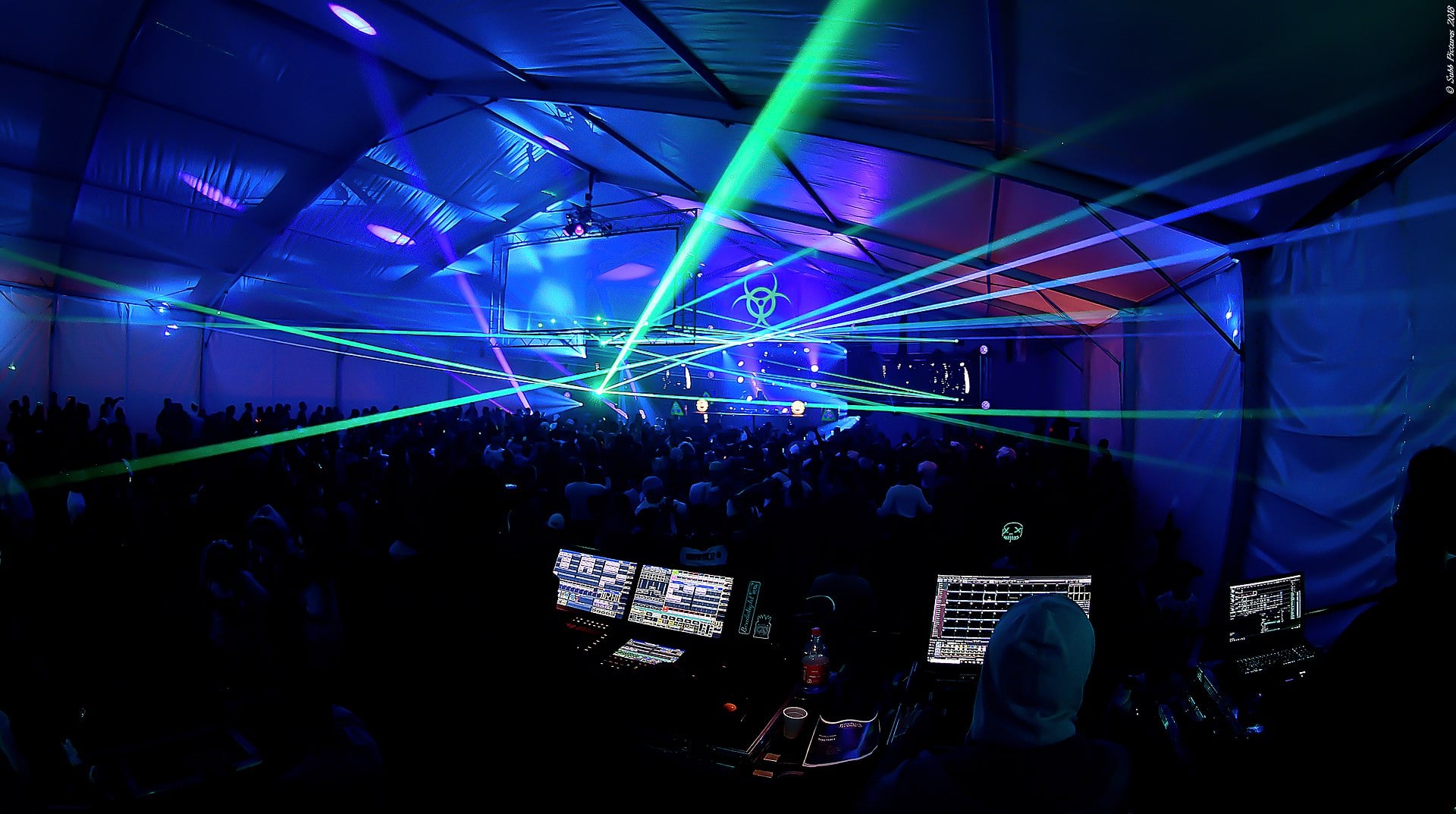
The unceasing interest in techno scene naturally raises the question of what it is about this “technoculture,” as it likes to call itself, that is so attractive and fascinates young people practically all over the world.² The name techno—i.e., Electronic Dance Music (EDM)³—already indicates that it is the result of the modern computerization of music. This music emerged in the second half of the 1980s in the United States, particularly in Detroit, Michigan, and Chicago. The original sound of techno developed from synthesized music shaped by strong African American influences, including Chicago house, funk, electro, and electric jazz. These elements blended with rhythms reminiscent of African tribal drumming, as well as futuristic and science-fiction motifs reflecting the social imagination and lived realities of late-twentieth-century America.

(more…)
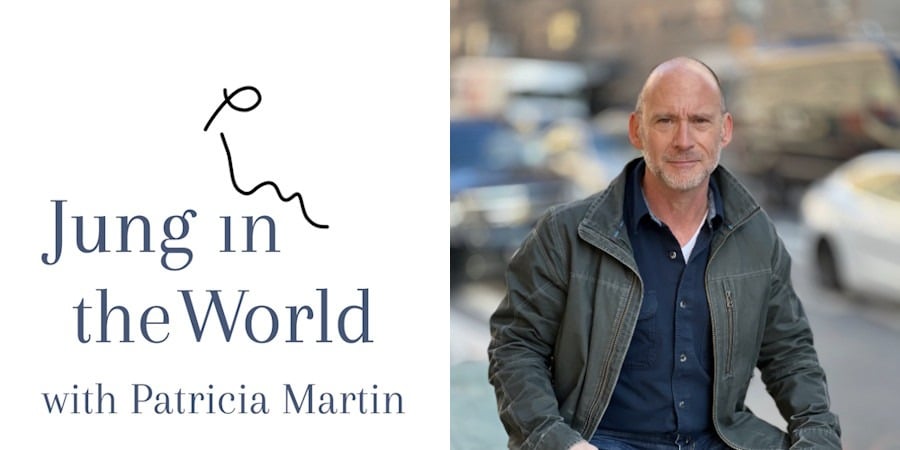
Photo of Bill Hayes

Jung in the World | Individuation at 75: Oliver Sacks’s Journey to Wholeness with Bill Hayes


Individuation isn’t about becoming better. It’s about becoming whole. At 75, neurologist Oliver Sacks finally integrated the parts of himself he’d kept hidden—his sexuality, his need for love, his domestic life (who knew he kept a library of Jung’s work). Bill Hayes talks intimately about Sacks’s late-life transformation which exemplifies Jung’s crucial insight: growth isn’t about fixing what’s broken. It’s about integrating what you’ve exiled.

(more…)

The Explorer Poet Podcast | Unconscious Beliefs and Dark Religions with Vladislav Šolc (Audio)

Chicago Society of Jungian Analysts member Vlado Solc appeared on the Explorer Poet Podcast. From the episode description:

In this conversation with Vladislav Šolc, we explore the intersection of Jungian psychology and religion, discussing personal journeys through faith, the concept of dark religion, the importance of self-knowledge, how unconscious beliefs shape our understanding of reality, the role of symbolism in religion, the psychological implications of conspiracies, the quest for consciousness, confronting our inner darkness to achieve personal growth.

Vlado Solc | Healing the Nation in a Time of Narcissistic Split 

This interview by Zuzana Vitková with Vlado Šolc originally appeared in dennikn.sk.

Do American psychologists or psychiatrists currently comment on Trump’s behavior in the public sphere?

Yes, quite often. Beyond Steven Buser’s book Real and Present Danger, American psychologists and psychiatrists have addressed Trump’s behavior in several other works. For example, psychologist Dan P. McAdams offers a detailed psychological portrait in The Strange Case of Donald J. Trump: A Psychological Reckoning. Another example is Dangerous Charisma: The Political Psychology of Donald Trump, which combines psychoanalytic perspectives with political psychology to explore what drives Trump’s behavior and his appeal. These books are part of a broader body of psychological commentary that regularly appears in both academic and public discourse.

In recent weeks, Donald Trump has repeatedly expressed his desire for annexing Greenland, established a “Peace Council” to which he invited Vladimir Putin and several other totalitarian countries, and accepted a framed Nobel Peace Prize from its current laureate. As a Jungian Analyst, what is your reaction when you observe the statements and actions of the American president?

Psychologists and Jungians who study Trump have long pointed out that he exhibits pronounced narcissistic traits. In such a personality structure, the central life aim is the gratification of one’s own needs, and experience, relationships, and reality itself are organized around propping the ego.  Because he has reached this kind of “inflated position” as president of the United States, he is constantly confirming to himself what he can get away with and what his power allows him to do. And the more he tests it, the more distorted his sense of self becomes. The attempt to annex Greenland is, in my view, just another example of the enactment of the grandiose fantasy.

(more…)

Jung in the World | Psychopaths, Narcissists, and the Monster Behind the Mask with Peter Demuth

Host Patricia Martin explores with guest Peter Demuth, a Jungian analyst, how psychopaths and narcissists construct false selves, their emotional deficits, and why society often rewards their pathology—until individual disorders spiral into collective crises that breach even legal boundaries. Rather than rehashing tired tropes, Demuth strikes original notes on the severest personality disorders, making room for genuine optimism that we can reclaim empathy as our shared human virtue.

(more…)

Vlado Solc | Ball Games from a Depth-Psychological Viewpoint

Register for Vlado Solc’s upcoming webinar, Individuation in a Divided World: Deception, Lies, and the Quest for Wholeness

In the game, earthly reality becomes fleeting, a moment thrown behind the shoulder and folded into the past. The mind loosens its habitual boundaries and prepares to accept the unimaginable, stepping into a realm governed by different laws. Here it is relieved of the weights that bind it to ordinary life and becomes, if only for a while, free, unbridled, and touched by the divine (Hugo Rahner).

Unrestrained passions, crowd-madness, and the ecstatic swings between euphoria and wrath appear most vividly in the collective dramas of politics, war, and competitive sport. They also surface in religious gatherings and musical concerts, where the psychic temperature rises and the emotional field becomes charged. The danger always lies in the splitting of affect—whether the crowd collapses into the dualistic moral categories of us and them, heroes and enemies. Once this bifurcation takes hold, the group is seized by archetypal forces that can overwhelm individual consciousness.

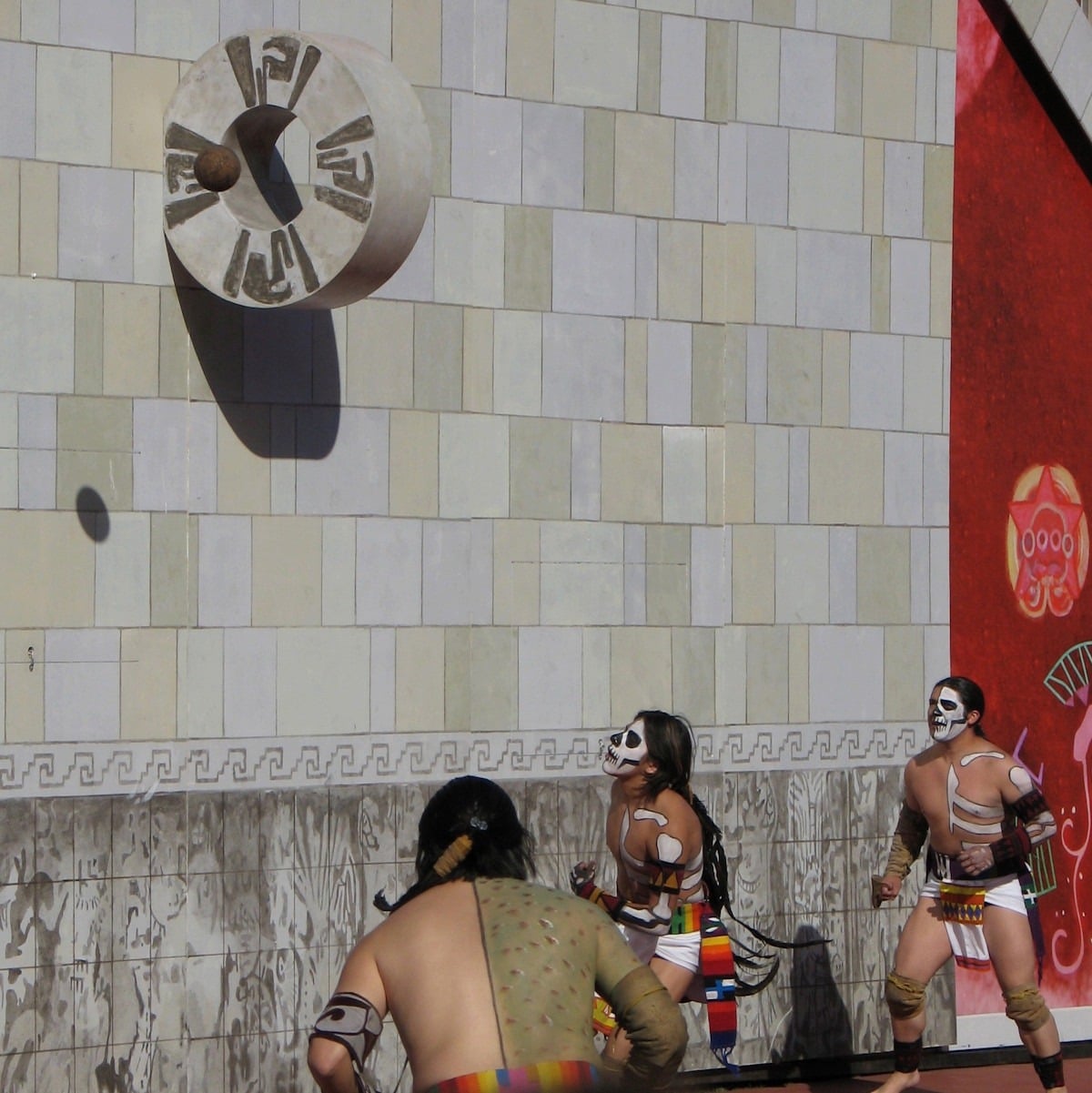
Ball games have long been one of the principal cultural vessels for these strong energies. For millennia they have offered humanity a symbolic container in which the primordial struggle between life and death, order and chaos, light and shadow, may be enacted. One might therefore ask whether the ball game and religion share a deeper kinship. Do they both serve, in their own ways, the development and enlargement of consciousness? And is this still true today?

The oldest archaeological evidence of ball games comes from Central America and reaches back more than 3,000 years. Yet the Maya likely played the game known as pitz as early as four and a half millennia ago (Ekholm, 1991). Similar traditions appear in Egypt and Mesopotamia only later. But these ancient ball games were not sports in the contemporary sense. Although crowds filled specially constructed arenas, the games were primarily sacred rituals. Their purpose was to initiate participants into the mysteries of the cosmos, to appease the deities, and to stimulate the fertility of the earth.

(more…)

Patricia Martin | What Happens When Your Online Persona Takes Over

The Experiment: The B-sides Will Explore New Territory in Jungian Thought

Sometimes the best discoveries come from saying “yes” to an experiment.

Five years ago, during the COVID shutdown, I took a leap: launching a podcast with the C. G. Jung Institute of Chicago. After devoting two years immersed in Jung’s work as a student in the Institute’s Jungian Studies Program, and subsequently leading a Collected Works reading group, I’d joined the Institute’s public program committee just as we faced an urgent question—how do we stay connected when we can’t gather in person?

A podcast felt right. And I was itching to explore new directions during the torpor of the shutdown. What started as an experiment has grown into something beyond what I imagined—a global audience and conversations with leading voices in psychology who generously share their insights with our listeners.

When Restlessness Becomes a Compass

This summer, I felt a familiar stirring again. I’ve learned to trust these moments. They’re rarely about boredom—they’re usually invitations to evolve, to stretch into something new.

That’s how the “B-sides” series was born. Think of it as going off-road on the path to individuation—intimate conversations about what it actually feels like to navigate digital life, wrestle with uncertainty, and maintain the connection to our inner realm.

The Hidden Cost of Online Influence

For our first episode, I sat down with Hilde Helphenstein, an artist and art world critic whose own experiment as an online influencer spiraled into something she never saw coming.

Hilde created Jerry Gagosian—an online persona supposedly related to Larry Gagosian, the legendary NY gallery owner and kingmaker of the contemporary art world. Her feeds drew thousands of followers. At prestigious live events, such as Art Basel and the Whitney Biennial, people approached her as “Jerry” and she’d correct them, explaining Jerry was just an online identity.

People waved that away. The persona stuck.

What began as a cheeky experiment became her identity in the world. And as Hilde surrendered to living as someone else, emotional consequences followed—ultimately reaching a breaking point that forced her to make a choice: keep performing or reclaim her true self.

A Case Study for Our Persona-driven Age

Hilde’s conversation is unflinching. She walks us through her undoing with remarkable honesty delivering a poignant portrait of influencer culture from the inside, and a cautionary tale for an era when who we are online is not necessarily who we actually are.

You may recall the classic New Yorker cartoon. A dog sits at the computer with the caption: “On the internet, nobody knows you’re a dog.” It used to be funny. Hilde’s story shows us why it’s no laughing matter anymore—and what it cost her to claw her way back to herself.

Listen In

The conversation is in two parts—a before-and-after portrait of one woman’s struggle with digital identity, followed by her journey back to herself.

The collective is living through a metamorphosis few consented to. The question isn’t whether our digital personas will change us—they already have. The pressing question is whether we’ll become conscious of the consequences in time to choose what we’re becoming, or whether we’ll arrive at ourselves as strangers.

(more…)

Jung in the World B-Sides | Living as Someone Else: The Hidden Cost of Online Personas with Hilde Lynn Helphenstein (Part 2)

This episode is part of a new series, Jung in the World B-Sides, where we go off-road to explore the rugged psychological terrain of our current culture.

This episode is part 2 of our interview with Hilde Lynn Helphenstein. Part 1

“Know thyself”—from Socrates to Shakespeare, this wisdom echoed across centuries. But the digital age is turning it inside out. As online influencers rise to fame, persona is overtaking the self. The obsession with self-representation has eclipsed the drive to be true to oneself.

What does it mean to live your life as someone else? In this two-part interview, host Patricia Martin talks with the infamous Jerry Gogosian—real name Hilde Helphenstein—about the hidden psychological costs of her seven-year experiment living as her persona and how she clawed her identity back.

Watch the video of this interview:

(more…)

Vlado Solc | The Witching Time of the Soul: A Jungian Reflection on Halloween and Death

AI Image of a dark forest and a gravestone

‘Tis now the very witching time of night,

When churchyards yawn, and hell itself breathes out

Contagion to this world: now could I drink hot blood.”

(Shakespeare, Hamlet, ca. 1600)

On the thirty-first of October, countries as distant as Mexico, Brazil, Scotland, Australia, New Zealand, Puerto Rico, Canada, and, above all, the United States, celebrate one of the strangest and most popular pagan holidays: Halloween. Over the past two decades, this festival has also taken root in the Czech Republic, Slovakia, and other Eastern European countries, where it overlaps with the Christian commemoration of All Souls’ Day.

Its origins, however, reach back more than two millennia to the ancient Celtic custom known as Samhain, once celebrated in northern France, England, and Ireland. In various forms, this archetypal motif appears in religions and myths across the world. The theme that Halloween brings to consciousness holds deep psychological significance, as it addresses a core insight for curating the well-being of humankind.

Samhain: The End of Summer

The Celts called the festival Samhain. The old Irish and Gaelic word samfuin means “the end of summer” or “the setting of the sun.” The festival marked the conclusion of the harvest and the beginning of the Celtic New Year. The Gallic calendar divided the year into two halves—the dark and the light—each beginning with the months Samonios and Giamonios, respectively. Samhain thus opened the dark half of the year, a time when the sun withdrew and the fires of transformation were kindled. The New Year’s celebration lasted three days—Trinoux Samoni—a triple feast that symbolically contained the movement from life toward death and back again.

(more…)

Jung in the World B-Sides | Living as Someone Else: The Hidden Cost of Online Personas with Hilde Lynn Helphenstein (Part 1)

This episode is part of a new series, Jung in the World B-Sides, where we go off-road to explore the rugged psychological terrain of our current culture.

Part 2 is now up. Listen to Part 2

“Know thyself”—from Socrates to Shakespeare, this wisdom echoed across centuries. But the digital age is turning it inside out. As online influencers rise to fame, persona is overtaking the self. The obsession with self-representation has eclipsed the drive to be true to oneself.

What does it mean to live your life as someone else? In this two-part interview, host Patricia Martin talks with the infamous Jerry Gogosian—real name Hilde Helphenstein—about the hidden psychological costs of her seven-year experiment living as her persona and how she clawed her identity back.

Watch the video of this interview:

(more…)

Call for Proposals | 2026 Online & In-Person Programs

The C. G. Jung Institute Chicago welcomes proposals for programs of interest to the general public that explore Jungian thought, including the emotional and psychological issues of contemporary living, from a creative, symbolic, or spiritual perspective. Using the online form, you can propose an event, lecture, or workshop to offer in person and/or virtually. All proposals will be considered for the 2026 calendar year. The submission deadline is November 30, 2025.

Proposals are now closed. To be informed when they reopen, join our mailing list.

Filter Posts

  • About Jung Chicago Radio & Blog

    Jung Chicago Radio is home to a variety of podcasts that range from archival seminar recordings (Institute Archives), to interviews (Jung in the World) to discussion on film (Healing Cinema), fairy tales (Jungian Ever After), and our programs.

    Our Blog shares essays, articles, video, audio, and other resources by members of the Chicago Society of Jungian Analysts and other groups that support the education and development of our community.

    The views and opinions expressed in the podcasts and blog posts are those of the respected speakers or authors and do not necessarily represent the views of the C. G. Jung Institute of Chicago.

    Login

    This search engine will search our public programs, the Jung Chicago Radio and Blog, and our store.

    To search only the store, visit our Store page.

    If you’re looking for a Jungian Analyst, use our Find an Analyst search engine or browse the Chicago Society of Jungian Analysts page.