
Home › Past Programs › Past Live Courses & Events › A Closer Look at Book One of Jung’s Liber Novus
Online Only with Final Session In-Person Only
Daniel Ross, Boris Matthews, & George Bright
9 Monthly Saturdays, 9am-12pm
Oct 26, 2024 – Jun 21, 2025
CEs Available
This series will not be recorded. Registration will be closed after the first session begins.
$180.00 – $290.00Price range: $180.00 through $290.00
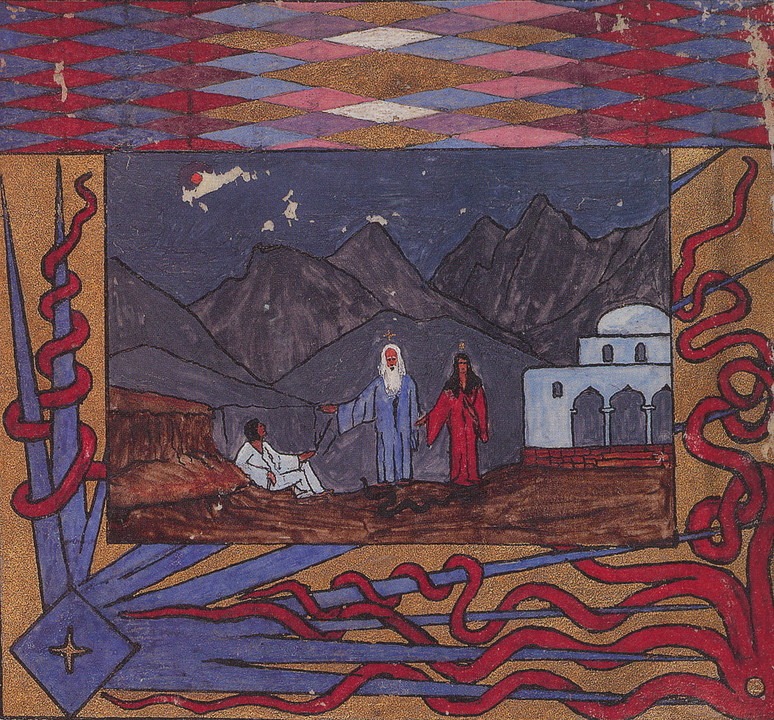
Working with Jung’s Liber Novus, perhaps his most mysterious work, can be transformative. In spring 2024, the C. G. Jung Institute of Chicago offered an ambitious six month series on the whole Liber Novus called “A Fresh Look at the Red Book: Reading Jung’s Liber Novus with Jungian Psychoanalysts”. Now we want to offer a much slower paced, closer read of this great work starting with Book One.
We can understand what Jung was getting at in the Liber Novus, as well as the paintings in the Red Book version of the Liber Novus, as individuation, the “salvation of the soul.” There is a difference between salvation and well-being. Adolf Guggenbuhl-Craig writes that “well-being” can lead to a deadness in the marriage; the pursuit of savation may give it marriage a chance. The focus on well-being includes the pursuit of comfort and security; salvation involves conflict, struggle, sacrifice and transformation.
As one participant of A Fresh Look at the Red Book shared:
“I loved this course and really appreciated the scholarly involvement of both you [Dan Ross] and Boris, and of George Bright (his historical knowledge and ability to succinctly express this is phenomenal). I’ve been in a red book reading group for 2 years but have not had the benefit of clinical feedback or interpretations. I have definitely needed this. The historical overview of Jung’s process and development of his thinking integrates the material exceedingly well. And I need to keep hearing about ‘the new god’ so i can continue to process it and be aware of the process with my patients”
In this series, we will be working more slowly with just Book One of the Liber Novus over a nine-month period, with three-hour sessions the fourth Saturday of each month beginning in October 2024 and ending in June 2025.
NOTE: The final session of the series, on June 21, will meet in-person at the C. G. Jung Institute of Chicago.
| Salon Schedule | |
| Monthly Saturdays, 9am-12pm North American Central Time For each session, read the corresponding chapters to prepare |
|
| October 26 | Ch1: Refinding the Soul Ch2: Soul and God |
| November 23 | Ch3: On the Service of the Soul Ch4: The Desert, Experiences in the Desert |
| December 28 | Ch5: Descent into Hell in the Future |
| January 25 | Ch6: Splitting of the Spirit Ch7: Murder of the Hero |
| February 22 | Ch8: The Conception of God |
| March 29 | Ch9: The Mysterium Encounter |
| April 26 | Ch10: Instruction |
| May 24 | Ch11: Resolution |
| June 21 | Ch12: Prologue (The Way of What is to Come) This session will meet in-person in Chicago |
Learning Objectives
At the end of the series, attendees will be able to:
Required Reading
Each salon will focus on a section of Liber Novus as outlined in our course description. We expect that you have and will be reading Liber Novus along with us. The facsimile which includes the paintings is more expensive but not necessary for our discussion, as it is quite expensive. We will present and discuss the images from Liber Novus during the salon sessions, so you have the option of purchasing the less expensive Reader’s Edition.
Speakers
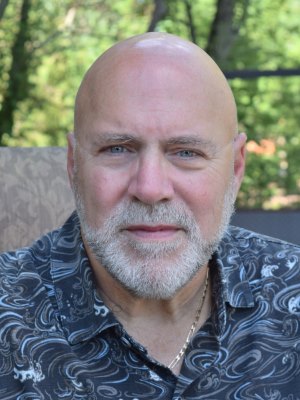 Daniel Ross, PMHNP is a Psychiatric Mental Health Nurse Practitioner and Diplomate Jungian Analyst. He brings a medical, psychiatric, and analytical perspective to the field of end-of-life care. As he searched for a deeper understanding of his hospice work and his own personal life journey, he first completed the two-year Clinical Training Program at the C. G. Jung Institute of Chicago in 2008; then went on to complete the Analyst Training Program. Daniel is in private practice in the northwest suburbs working with adults seeking Jungian psychoanalysis. He has been Co-Director of the Jungian Psychotherapy Program and Jungian Studies Program (JPP/JSP) (2021-2023) at the C. G. Jung Institute of Chicago and is currently the Director of Training as well as a Training Analyst for the Analyst Training Program (ATP) at the C.G. Jung Institute of Chicago. He has presented widely on Death and Dying from a Jungian perspective. He has also presented at 2022 IAAP conference, Death and Immortality: From Gilgamesh to Frankenstein.
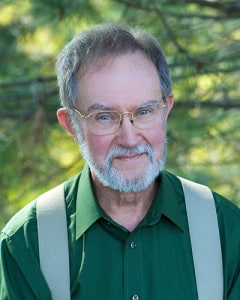 Boris Matthews, PhD, LCSW, NCPsyA graduated from the C. G. Jung Institute of Chicago, and maintains a practice of analytical psychology in the Milwaukee and Madison, WI, areas. He is particularly interested in working with persons who recognize need to develop a balanced adaptation to the “outside” and to the “inside” worlds, work that involves awareness of the individual’s psychological typology. Dreams, active imagination, and spiritual concerns are integral elements in the analytic work, the ultimate goal of which is to develop a functioning dialog with the non-ego center, the Self. He is former Director of Training of the Analyst Training Program, regularly teaches classes for analytic candidates, and conducts study groups in Madison as well as by video conference.
George Bright was educated at Cambridge University and The London School of Economics. He is a Training & Supervising Analyst of the Society of Analytical Psychology and a co-founder of The Circle of Analytical Psychology, a London-based group engaged in the study of Jung’s Liber Novus and Black Books. He works in private practice in London. His 1997 paper Synchronicity as a basis of analytic attitude won the Michael Fordham Prize.
This search engine will search our public programs, the Jung Chicago Radio and Blog, and our store.
To search only the store, visit our Store page.
If you’re looking for a Jungian Analyst, use our Find an Analyst search engine or browse the Chicago Society of Jungian Analysts page.
This program will be recorded and distributed by the C. G. Jung Institute of Chicago for educational and historical purposes. By registering for this program, you consent to appear as an audience member on a recording that will be distributed by the C. G. Jung Institute of Chicago. Without expectation of compensation or other remuneration, now or in the future, you give your consent to the C. G. Jung Institute of Chicago, its affiliates, and agents to use your image and likeness and/or any interview statements from you in its publications, advertising, or other media activities (including the Internet).