
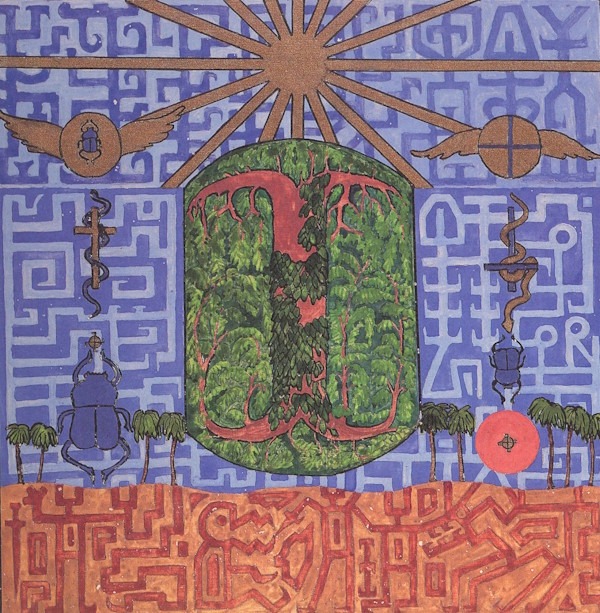
After Jung finished writing Liber Novus in June 1915, which included the majority of the active imaginations he had between November 1913 and April 1914, together with his commentaries on them, he decided to make a calligraphic version of it. Modelled on medieval manuscripts, Jung used Gothic script, historiated initials, and paintings to illustrate significant episodes in the text. By the early autumn of 1915 he had transcribed Liber Primus onto seven parchment sheets. For symbolic or practical reasons, Jung then decided to put Liber Secundus into a large book bound in red leather – The Red Book – which he had begun by the late autumn of 1915. He continued to transcribe Liber Secondus until 1928 but never finished it. The historiated initials and paintings in The Red Book follow the text through the chapters on Izdubar episode and the Opening of The Egg, which took Jung until February 1917 to finish. Taken together, the parchment paintings for Liber Primus and the first part of Liber Secundus in The Red Book provide us with his initial attempts to illuminate the visionary, the first series of visual images in his ongoing process of individuation.
After Jung completed ’The Opening of the Egg’ during February 1917, the subsequent paintings in the Red Book reflect his active imagination experiences recorded in the Black Books and also relate to his ongoing conceptualization of analytical psychology between 1917 and 1928. This second module of this series will focus on the images produced during this time.
You do not need to have attended the first module to attend the second module in this series.
| Schedule | |
| Monthly Sundays 1-3pm North American Central Time* *Because US Daylight Savings Time and British Summer Time have different schedules, April 18 session will be at 2-4pm CDT / 7-9pm GMT |
|
| Oct 18 1-3pm CDT 7-9pm BST |
The Incantations and the Opening of the Egg: 1916-February 1917 |
| Nov 22 1-3pm CDT 7-9pm BST |
Man and Cosmos: Scrutinies Jung’s Preliminary Sketch, painting of the Systema Mundi Totius and Cosmic Images: 1916-early June 1917 |
| Dec 20 1-3pm CST 7-9pm GMT |
The Birth of Phanes in the Soul: Jung’s Mandala sketches and paintings: 1917-1918 |
| Jan 17 1-3pm CST 7-9pm GMT |
Paintings of Psychological and Divine Differentiation: 1919 |
| Feb 28 1-3pm CST 7-9pm GMT |
The Atmavictu series, the Lapis Philosophorum, ‘Stern Vision’, ‘Amor Triumphat’: 1919-1921 |
| Mar 21 1-3pm CST 7-9pm GMT |
Star Dragon, Star and Tree, Head and Runes, The World Ash, The Reconciling Symbol: 1921-1922 |
| Apr 18 2-4pm CDT 7-9pm GMT |
Philemon, The Anima as Altar, Window on Eternity, The Golden Castle, Mandala of the Self and the Ancestors: 1924-1929/30 |
Learning Objectives
At the end of the series, attendees will be able to:
Recommended Reading
These readings will be emailed with the Zoom link to attend.
Speaker
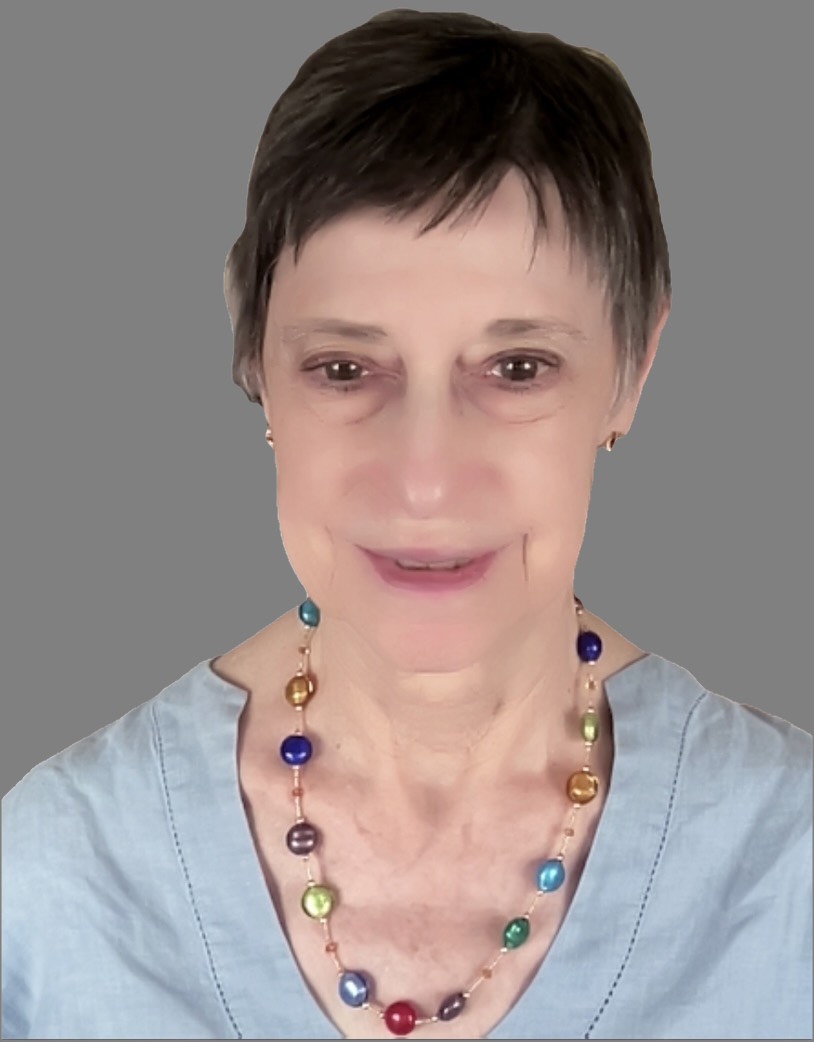 Diane Finiello Zervas is an art historian and a senior member and supervisor at the Independent Group of Analytical Psychologists, London, with a special interest in the interface between creativity and psychology. She has published two books and numerous articles on Florentine medieval and renaissance art, served as a guest editor and author for Harvest, and edited Francesco Donfrancesco’s Soul-Making: Interweaving Art and Analysis (Routledge 2009). She is a co-founder with George Bright and Katerina Sarafidou of the Circle of Analytical Psychology, which offers a two-year reading seminar on Liber Novus and The Red Book. Diane’s initial interest in Jung’s Red Book led to ‘Intimations of the Self’: Jung’s Mandala Sketches, 1917’ for The Art of C.G. Jung (W.W. Norton & Company 2019). A contributor to Phanës. Journal for Jung History since 2019, her most recent book is ‘Enchanting the Unconscious’: Jung’s Reception in Great Britain, The Red Book and his English Seminars, 1919 & 1920′ (Routledge 2025). She is currently completing a book on Jung’s visual imagery in The Red Book.