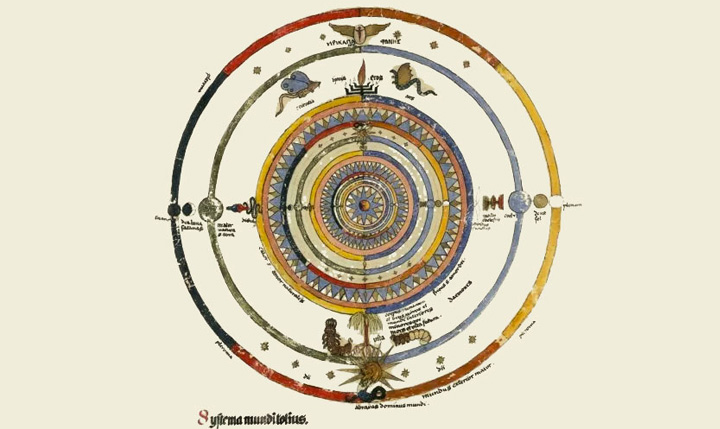
The first of a grim pair of episodes depicting filicide within Greek myths. We piece together the story of Agamemnon’s sacrificing Iphigenia for favorable winds – and the fallout of such action after the war. All this with an eye for how the choices parents make either support or harm the parents’ individuation.
Individuation isn’t about becoming better. It’s about becoming whole. At 75, neurologist Oliver Sacks finally integrated the parts of himself he’d kept hidden—his sexuality, his need for love, his domestic life (who knew he kept a library of Jung’s work). Bill Hayes talks intimately about Sacks’s late-life transformation which exemplifies Jung’s crucial insight: growth isn’t about fixing what’s broken. It’s about integrating what you’ve exiled.
The theme of individuation sounds through Jung’s writings, like a leitmotiv, from the time of his break with Freud and psychoanalysis onward without pause to his death. All things considered, it is perhaps his major psychological idea, a sort of backbone for the rest of the corpus. Introducing the term in his esoteric, anonymously published little book Septem Sermones ad Mortuos (Seven Sermons to the Dead) in 1915, Jung deepened and expanded the idea in the much revised work, also begun in the same period, Two Essays in Analytical Psychology (Coll. Wks., Vol. 7) and in the summary work of the early period, Psychological Types (Coll. Wks., Vol. 6). Later he added further substance to the notion in his studies of archetypes and especially in his researches on alchemy. He detailed individuation clinically in his seminars (Dream Analysis, The Visions Seminar, and Nietzsche’s Zarathustra) as well as in several case studies. It also played an important role in his many writings on religion and culture. Individuation was taken up as a central theme by nearly all of Jung’s important students. Major contributions were made to the theory by Fordham, who studied individuation in children, and by Neumann, who saw individuation as unfolding in three major stages, each containing several sub-phases. Hillman, a Jungian deconstructionist, has vigorously attacked the notion of psychological development in general and individuation in particular, holding a view that such ideas are nothing but fantasies used to construct modern psychological myths. More recently, Jacoby has added refinement and differentiation to the theory of individuation by introducing data from modern infant research. Samuels has introduced the feature of political consciousness and involvement. The debate goes on. In the following pages, I present a distillation and synthesis of the Jungian tradition on the central theme of individuation, situating this particular discussion in the clinical setting of psychotherapy and showing how the working Jungian psychotherapist may use this developmental idea in practice.
We’ve just launched our Spring Fundraising Drive! We need your help to keep this free podcast, our classes, and our training programs going. Become a supporter by making a donation today!
Imposter Syndrome seems ubiquitous in the collective. This episode explores the psychological underpinnings of the “as-if” personality through a Jungian lens. Host Patricia Martin talks with author and Jungian analyst Susan Schwartz about the inner world of Imposter Syndrome and why the same forces that can disturb personal development, can also provide the impetus to embrace a more complete self. Schwartz draws from her recent book, Imposter Syndrome and The ‘As-If’ Personality in Analytical Psychology.
Jean Shinoda Bolen leads a workshop which offers an appreciation of how myth, legend, poetry, and contemporary stories provide insights that are meaningful in ordinary life, with particular attention given to those times in a person’s life when major changes are occurring.
Nora Swan-Foster, Jungian Analyst, author, and art therapist, joins Patricia Martin to discuss Jung, the Red Book, art therapy, and the art-making process.
Our final episode of season 1 is a story near and dear to Raisa. This episode gets a lot more personal than some, as we discuss periods of awakening and transformation from various points in our own lives.
Bestselling author Jean Twenge reveals the effects of technology on the collective, based on her research on generational differences. Twenge’s interview with Patricia Martin answers the question, “Is the digital age breaking us down or building us up?”.
University of Chicago Professor and online game designer Patrick Jagoda, PhD talks with Patricia Martin about ways that online games and new media apply Jungian theory to create emotional bonds with users.
Fire as a feminine aspect is the central image of this workshop by Jungian analyst and author Jean Shinoda Bolen. Fire takes many forms in our imagination, dreams, metaphors, and in our life experiences. We think of hearth fire, campfire, creative fire, passionate fire, consuming fire, destructive fire, transforming fire, wildfire, Pentecostal fire, fire signs, fiery redheads, fire-breathing dragons and firewalks. We fight fire with fire and go through the fire; our fire is put out, rekindled, and dampened: we can be fired up, flare up, burnt up, and burned out. We tend the fire and keep the homefires burning. Fire as a feminine quality is about spirit, energy, and intensity, about warmth and illumination, about rage and outrage. Inner fire is reflected in our work, in our relationships, and in the activist and feminist stances we take in the world. Using poetry and a guided meditation, Dr. Bolen’s workshop helps the listener gain insights into herself and find her personal symbols.
Elizabeth Eowyn Nelson, PhD joins Patricia Martin for a lively conversation about the value of Jungian thought in our tech-centric times. Nelson is on the faculty at Pacifica Graduate Institute, where she is a scholar on dreams, technology, and cultural studies. In this episode, she brings a wealth of insight to our contemporary moment, exploring what it means to pursue personal growth in a digital culture.
Our Blog shares essays, articles, video, audio, and other resources by members of the Chicago Society of Jungian Analysts and other groups that support the education and development of our community.
The views and opinions expressed in the podcasts and blog posts are those of the respected speakers or authors and do not necessarily represent the views of the C. G. Jung Institute of Chicago.