Religion & Spirituality

Vlado Solc | The Witching Time of the Soul: A Jungian Reflection on Halloween and Death

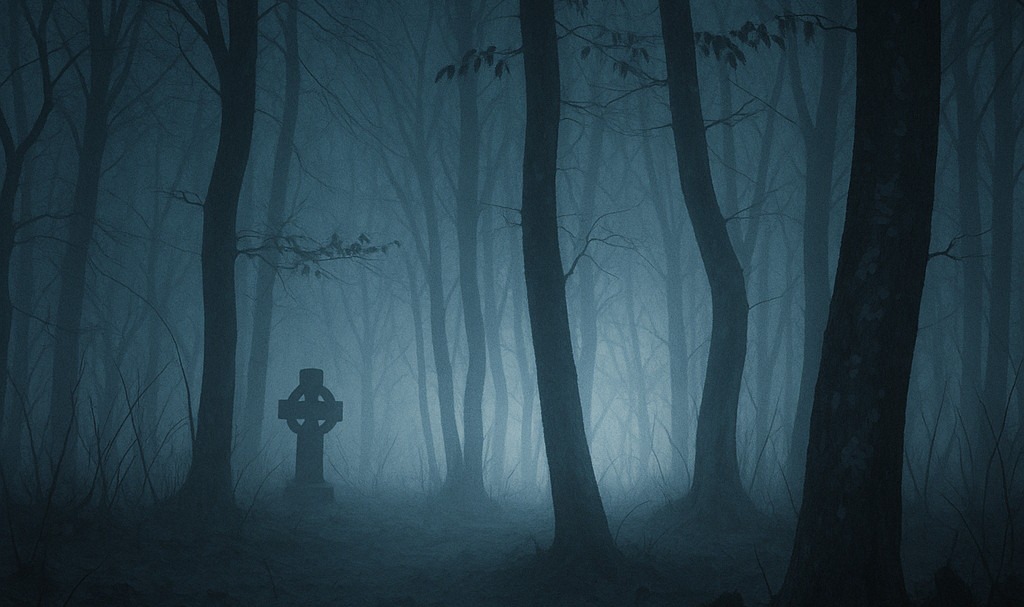
AI Image of a dark forest and a gravestone

‘Tis now the very witching time of night,

When churchyards yawn, and hell itself breathes out

Contagion to this world: now could I drink hot blood.”

(Shakespeare, Hamlet, ca. 1600)

On the thirty-first of October, countries as distant as Mexico, Brazil, Scotland, Australia, New Zealand, Puerto Rico, Canada, and, above all, the United States, celebrate one of the strangest and most popular pagan holidays: Halloween. Over the past two decades, this festival has also taken root in the Czech Republic, Slovakia, and other Eastern European countries, where it overlaps with the Christian commemoration of All Souls’ Day.

Its origins, however, reach back more than two millennia to the ancient Celtic custom known as Samhain, once celebrated in northern France, England, and Ireland. In various forms, this archetypal motif appears in religions and myths across the world. The theme that Halloween brings to consciousness holds deep psychological significance, as it addresses a core insight for curating the well-being of humankind.

Samhain: The End of Summer

The Celts called the festival Samhain. The old Irish and Gaelic word samfuin means “the end of summer” or “the setting of the sun.” The festival marked the conclusion of the harvest and the beginning of the Celtic New Year. The Gallic calendar divided the year into two halves—the dark and the light—each beginning with the months Samonios and Giamonios, respectively. Samhain thus opened the dark half of the year, a time when the sun withdrew and the fires of transformation were kindled. The New Year’s celebration lasted three days—Trinoux Samoni—a triple feast that symbolically contained the movement from life toward death and back again.

(more…)

Vlado Solc | QAnon: Eclipse of the Soul

“In an odd way, the conspiracy theorist’s view is both frightening and reassuring. It is frightening because it magnifies the power of evil, leading in some cases to an outright dualism in which light and darkness struggle for cosmic supremacy. At the same time, however, it is reassuring, for it promises a world that is meaningful rather than arbitrary. Not only are events nonrandom, but the clear identification of evil gives the conspiracist a definable enemy against which to struggle, endowing life with purpose.” (Michael Barkun 2003)

Odysseus’ Shipwreck

In the Homeric Opus, the embattled and traumatized Odysseus is shipwrecked at Ogygia Island: “Then, all at once Zeus thundered and hit the ship with a lightning bolt. Smitten by Zeus’ bolt, the ship spun around and was filled with sulphurous fumes. My shipmates fell out of the ship, and, like seahawks, they were carried by waves past the black ship” (Homer, 1871, p. 12.407–19).

(more…)
Jung in the World Didier Solc Episode Banner

Jung in the World | Fundamentalism’s Dark Side: A Jungian View with George Didier & Vladislav Šolc


Two Jungian analysts discuss fundamentalism, shadow, and a new way forward. George Didier and Vlado Šolc, authors of the book Dark Religion: Fundamentalism from the Perspective of Jungian Psychology, join Patricia Martin for a conversation about the psychology of religion as a destructive force and why it is important to understand the shadow side of fundamentalism.

(more…)

Jung in the World | The Collective Break Down: Technology, Individualism & the Future with Jean Twenge

Transcript


Bestselling author Jean Twenge reveals the effects of technology on the collective, based on her research on generational differences. Twenge’s interview with Patricia Martin answers the question, “Is the digital age breaking us down or building us up?”.

(more…)

Freddie Taborda | Aluna, the Collective Unconscious & God

ENGLISH/SPANISH

“In the Dark Night of the Soul, Bright Flows the River of God” (Juan de La Cruz)

Human beings have been seeking to periodically experience the profound love towards the Divine as well as the intense beauty and ecstasy that comes with it. This union was sought by the poet, Juan de Yepes y Alvarez (better known as Juan de La Cruz – John of the Cross), and this article will focus primarily on understanding some sentences from a mystic poem that he wrote as well as amplifying them with the wisdom of the Kogi Indians.

On a side note, I make the contention that a similar experience is reached by the individual, at some point, at the farthest end of the process of individuation and wholeness, during a Jungian Analysis that is methodologically conducted in the manner delineated by Jung, which was closely followed by his early collaborators (Von Franz, Hannah, Harding, Edinger, etc).

(more…)

Institute Archive | Women’s Spirit: The Fire Within with Jean Shinoda Bolen

This episode is the first part of the series Women’s Spirit: The Fire Within (the full series is available for purchase on our website). From the seminar description:

Fire as a feminine aspect is the central image of this workshop by Jungian analyst and author Jean Shinoda Bolen. Fire takes many forms in our imagination, dreams, metaphors, and in our life experiences. We think of hearth fire, campfire, creative fire, passionate fire, consuming fire, destructive fire, transforming fire, wildfire, Pentecostal fire, fire signs, fiery redheads, fire-breathing dragons and firewalks. We fight fire with fire and go through the fire; our fire is put out, rekindled, and dampened: we can be fired up, flare up, burnt up, and burned out. We tend the fire and keep the homefires burning. Fire as a feminine quality is about spirit, energy, and intensity, about warmth and illumination, about rage and outrage. Inner fire is reflected in our work, in our relationships, and in the activist and feminist stances we take in the world. Using poetry and a guided meditation, Dr. Bolen’s workshop helps the listener gain insights into herself and find her personal symbols.

(more…)

Freddie Taborda | What the Dead May Teach the Living About the Individuation Process: A Jungian Perspective About an Aboriginal Necropolis

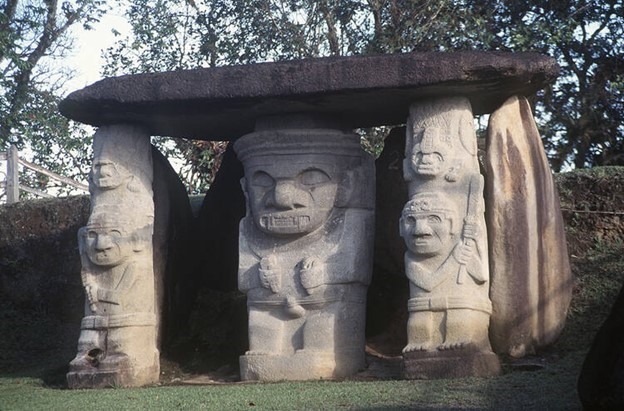
Death was sacred to some aboriginal people in Colombia. Near the town of San Agustin and Isnos, the journey to death called for a necropolis to be built by unknown indigenous tribes. Approximately more than 2000 years ago, funerary mounds, megalithic, anthropomorphic, anthropozoomorphic, and zoomorphic statues, funerary corridors, and stone slab tombs were constructed beneath the earth! Earth mounds covered stone slab dolmens that contained the dead body of important people who had natural powers or occupied important roles in their tribe (Instituto Colombiano de Antropologia e Historia-ICANH, 2011). We know very little about who these tribes were and why they abandoned this area by the 14th and 15th century. The indigenous people who currently live near this area do not seem to have a direct racial lineage with these Colombian ancestors.

Why do these aboriginal people construct and bury these “death-related” sites underground? What is the meaning of the anthropomorphic, anthrozoomorphic, and zoomophic stone sculptures? This brief article attempts to provide a psychological hypothesis to these questions, from an Analytical (Jungian) Psychology perspective, in order to emphasize “ancestral wisdom” (Leon, 2010) of indigenous for modern times.

This post was first published on thehealingpsyche.org.

Freddie Taborda, LCPC, PsyD is a Jungian Analyst with over 30 years of clinical experience. He maintains a private practice in Chicago, Illinois.


Links: Dr. Taborda’s Website | About Dr. Taborda | Dr. Taborda’s Page on the C. G. Jung Institute of Chicago’s Website

Institute Archive | Jung & the Environment with Dennis Merritt


We are sharing the webinar “Jung & the Environment” in full. The video version is available on YouTube.

Many believe we are in the Anthropocene Era, an era marked by the planet-wide influence of our species. The field of ecopsychology emerged in the early 1990s as a belated response from the psychological community to address the cascading effects of human-created environmental damage. Jungian ecopsychology offers one of the best frameworks for analyzing our dysfunctional relationship with the environment—and with each other—through an archetypal analysis of the layers of the collective unconscious. Jung was deeply connected with his native Swiss soil that was reflected in the ecological aspects of his conceptual system and his interest in alchemy as his main symbol system. Ecology begins with our relationship with “the little people” in our dreams and dreams can be used to help us connect deeply to the land using Hillman’s concept of Aphrodite as the Soul of the World. In 1940 Jung foretold a paradigm shift that he labeled a “new age” and “Aquarian Age”. The new paradigm will be based on ecological concepts and reflected in the economic system being developed by the sustainable economists. We must think in these terms as a species if there is any hope of averting a planetary nightmare. 

(more…)

Freddie Taborda | “JAMAYA PU’LAPUIN?”: A Brief Archetypal Teaching from Wayuu Aborigines to Jungian Psychology

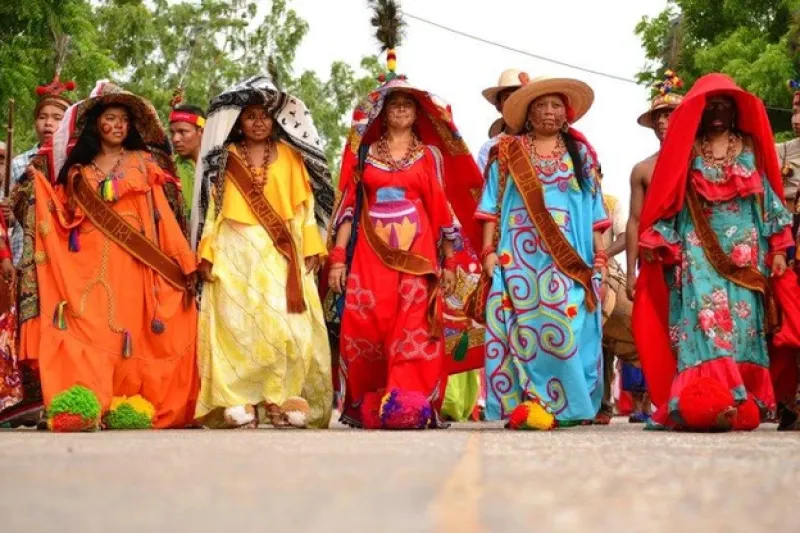
Jamaya Pu’lapuin?” (“How was your dream?”) are the first words with which the Wayuu greet each other daily. In contrast, when people from industrialized societies meet, they may say, “Hi”, “Hola”, “How are you?.” The greeting of ‘How are you?’ does not exist in the Wayuu language. An initial comparison of the greetings between these two groups of people may reveal the following: the Wayuu emphasize the primacy of the aa’in (soul) in life, which gets manifested in dreams, as well as the individual caring for the soul in another person’s life. Given the daily forgetfulness of the existence and subjective experience of the unconscious in the industrialized people, the word “You” in their greetings may be referring to the “Ego” and, less so to the integrated whole of the conscious and the unconscious. From a Jungian perspective, the Wayuu seem to be, initially, more interested in unconscious processes than “civilized people” are.

Therefore, Jungian analysts could learn, from the Wayuu aborigens, that the first question to be asked, when an analysand comes for the first time and to subsequent sessions to analysis, is “How was your dream?” (“Jamaya Pu’lapuin”). This is congruent with Jung’s writings and clinical practice where the centrality of dreams, as revealing the wisdom of the Self, was fundamental. There are exceptions, of course.

The Wayuu (“The People of the Sun, Sand, and Wind”) are an indigenous tribe that live in the desert of La Guajira Peninsula, which borders Colombia and Venezuela. They live in small settlements called “Rancherias,” which consists of five or six houses made of branches, corrals, and mud houses. Because their societal structure is matrilineal, each Rancheria is composed of people belonging to the same matrilineal clan. Some of these clans are, for example, the Aspushana (“Sour with Something”), the Epieyu (“Where Sleepiness is Felt”), the Jayaliyuu (“Eyes without Head”), etc. Furthermore, Wayuu children primarily bear their mother’s last name (and not the father’s), and each clan is identified with a symbolic drawing (“Kanaas”) that usually has a geometric shape that alludes to an animal, a plant, or a geographical place.

Therefore, the importance of images in Wayuu’s cosmology is comparable to the primacy of images in Analytical Psychology.

According to Paz (2017), Lapu refers to a deity that, through dreams, conveys messages to people. Dreams help the Wayuu to prognosticate many of outer events, such as death, health, adversities, etc. The Wayuu seek signals in dreams on how an adverse event can be prevented. At night, the aa’in (soul) of a Wayuu wanders, and such travel is aptly described in dreams. In recent decades, and within the field of Analytical Psychology, there is a greater tendency to see dreams as a comment, primarily, of the “analytical field” and, less so, of the intrapsychic life of the individual. The Wayuu perspective that dreams are helpful comments or warnings about outer events, such as a marriage, taking a trip, buying a house, taking a new job, moving to another city, etc, is becoming, unfortunately, less relevant to Analytical Psychologists because of the idea that “subjective interpretations” of dreams are emphasized more than “objective interpretations.” A close reading of Wayuu’s cosmology may help Analytical Psychology to have a more balanced view and hold the tension of the opposites of viewing dreams subjectively and objectively. Therefore, next time we want to relocate to another city, change jobs, have more children and, (why not?) getting together with a friend, etc., let us consult a dream about it, like the Wayuu do.

(more…)

The Adventure of Being Human: Beyond the Myth of Biological Salvation with Polly Young-Eisendrath


This episode is the opening lecture of a weekend given by Polly Young-Eisendrath. It contains a 1-hour lecture followed by an hour of Q&A. From the seminar description:

We all sense a connection with the source that underlies our existence, whether or not we recognize it as such and we all wish to identify with something larger than ourselves. Some feel this as a spiritual yearning, while others wish for fame or celebrity or the knowledge of a larger truth. The spiritual isolation and materialism (both economic and philosophical) of our times make it difficult to find trustworthy methods from institutional religions, non-traditional approaches, psychology, or philosophy for seeking knowledge of this source. However, our desire to help others (and ourselves) and our willingness to love deeply and authentically can offer the common ground through which we can find this knowledge, but it requires a dedicated understanding of our own suffering and its transformation.

Instead of seeking such insight into our subjective lives, we Americans embrace popular myths of biological salvation and pharmaceutical soothing. It?s not just that we seek instant solutions to complex problems, rather we have lost our taste for the adventure of human life, replacing it with ideals of economic and biological ?security? and hopes for absolute control of our diet and health.

This program offers a critique of this contemporary myth of biological salvation and presents accounts from psychoanalysis (Jungian and otherwise) and Buddhism of how embracing our limitations can open the path to transformation and lasting contentment.

(more…)

Filter Posts

  • About Jung Chicago Radio & Blog

    Jung Chicago Radio is home to a variety of podcasts that range from archival seminar recordings (Institute Archives), to interviews (Jung in the World) to discussion on film (Healing Cinema), fairy tales (Jungian Ever After), and our programs.

    Our Blog shares essays, articles, video, audio, and other resources by members of the Chicago Society of Jungian Analysts and other groups that support the education and development of our community.

    The views and opinions expressed in the podcasts and blog posts are those of the respected speakers or authors and do not necessarily represent the views of the C. G. Jung Institute of Chicago.

    Login

    This search engine will search our public programs, the Jung Chicago Radio and Blog, and our store.

    To search only the store, visit our Store page.

    If you’re looking for a Jungian Analyst, use our Find an Analyst search engine or browse the Chicago Society of Jungian Analysts page.