In Memoriam: Tom Kapacinskas

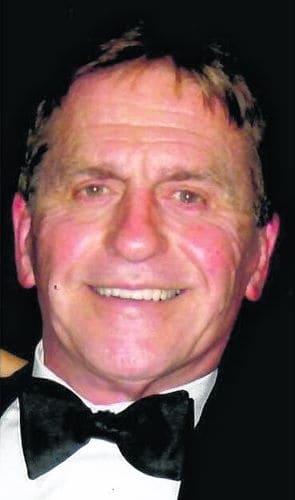
SOUTH BEND, IN – Thomas John Kapacinskas was born on October 31, 1941. He died on Friday, August 14, 2020.

Tom was educated at St. Bede Academy in Peru, IL and the University of Notre Dame, BA ‘63, JD ‘68. Tom completed a post-doctoral diploma in Analytical Psychology (Jungian Psychoanalysis) in 1972 at the C.G. Jung Institut-Zuerich. He taught the great books seminar from an archetypal perspective and courses in Jung’s psychology of religion at the University of Notre Dame from 1972 to 1979. He maintained a private practice in Jungian Analysis in South Bend. In 1975, together with the late June Singer of Chicago, Tom was a founding member of the Inter Regional Society of Jungian Analysts and their Training Institute, and in 1980 of the Chicago Society of Jungian Analysts and the C.G. Jung Institute of Chicago. Tom lectured and presented seminars in the psychology of religion nationally and internationally, encouraging the development of the Lithuanian Jung Society in 1990. During his Notre Dame teaching years, Tom was chairperson of annual conferences in Jungian Psychology and its cross-disciplinary relevance.

(more…)

Mythology of the Great Self Within

with Robert Moore, PhD

Fall online programs are open for registration, including Dreaming in Times of Turmoil, Becoming Marcel Proust: Claiming Self in a Conflicted World, and a reading & consultation group for clinicians: Attachment, Affect Regulation and the Reflective Function in Analytical (Depth) Psychotherapy.

In light of the financial difficulties imposed by the pandemic, we are offering our online courses at 40% off our regular fee. You can support our efforts to make education accessible during this time by making a donation.

This episode is the first 90 minutes of the course Mythology of the Great Self Within. From the course description:

World mythological traditions present many images of a Great Self that dwells within each human individual. This course examines a number of these images from mythological and spiritual traditions and then turns to a discussion of the psychological basis for this phenomenon. Special attention is given to the implications for our experience of both pathological grandiosity and creative visioning.

It was recorded in 1993.

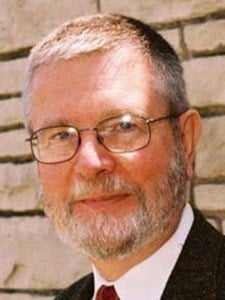
Robert Moore, PhD was Distinguished Service Professor of Psychology, Psychoanalysis and Spirituality in the Graduate Center of the Chicago Theological Seminary where he was the Founding Director of the new Institute for Advanced Studies in Spirituality and Wellness. An internationally recognized psychoanalyst and consultant in private practice in Chicago, he served as a Training Analyst at the C.G. Jung Institute of Chicago and was Director of Research for the Institute for Integrative Psychoanalysis and Psychotherapy and the Chicago Center for Integrative Psychotherapy. Author and editor of numerous books in psychology and spirituality, he lectured internationally on his formulation of a neo-Jungian  psychoanalysis and integrative psychotherapy.  His publications include THE ARCHETYPE OF INITIATION: Sacred Space, Ritual Process and Personal TransformationTHE MAGICIAN AND THE ANALYST: The Archetype of the Magus in Occult Spirituality and Jungian Psychology; and FACING THE DRAGON: Confronting Personal and Spiritual Grandiosity.

For the complete series, CLICK HERE.
For all of Dr. Moore’s lectures, CLICK HERE.

Support Us:   Shop on Amazon  Make a Donation


© 1993 Robert Moore. This podcast is licensed under a Creative Commons Attribution-NonCommercial-NoDerivatives 4.0 International License. You may share it, but please do not change it, sell it, or transcribe it.
Music by Michael Chapman
Edited and produced by Benjamin Law
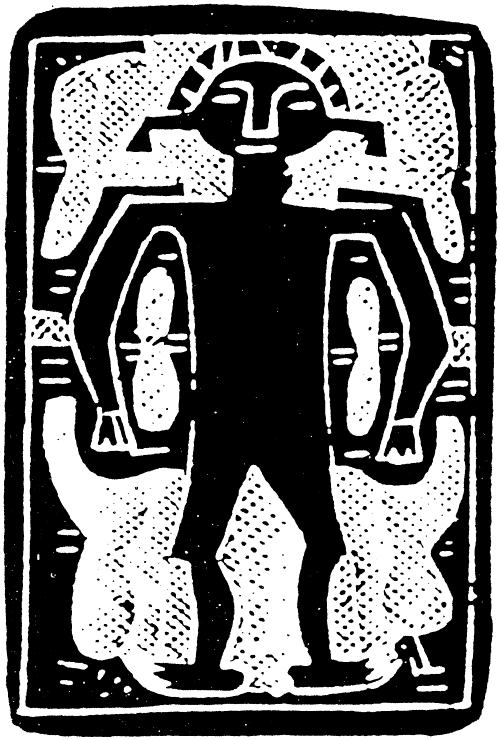
Illustration: Wood carving from Amazon Indian Peoples


Thank you to our 2019 Supporter level donors: Bill Alexy, Usha and Ashok Bedi, Circle Center Yoga, Arlo and Rena Compaan, Eric Cooper and Judith Cooper, Lorna Crowl, D. Scott Dayton, George J. Didier, Ramaa Krishnan/Full Bloomed Lotus, Suzanne G. Rosenthal, Deborah Stutsman, Debra Tobin, Alexander Wayne and Lynne Copp, Gerald Weiner. If you would like to support this podcast, click here to donate.

Donald Kalsched | Glimpses Through the Veil: Encounters with the Numen of Clinical Work

Thank you to the Pacifica Graduate Institute for sharing this video. From the video description:

In depth psychology, we tend to privilege two avenues or pathways that provide access to the mysteries of the unconscious and its potentially healing energies: transference and dreams. In this presentation, Dr. Kalsched describes specific “moments” where work in the transference opened important dreams that in turn led to a deep sense of shared meaning.

Donald Kalsched, PhD is a Clinical Psychologist and Jungian Psychoanalyst in private practice in Albuquerque, New Mexico. He is a senior training analyst with the Inter-Regional Society of Jungian Analysts where he teaches and supervises. His 1996 book The Inner World of Trauma: Archetypal Defences of the Personal Spirit has found a wide readership in both psychoanalytic and Jungian circles and has been translated into many languages. Dr. Kalsched teaches and lectures nationally and internationally, pursuing his inter-disciplinary interest in early trauma and dissociation theory and its mytho-poetic manifestations in the mythic and religious iconography of many cultures.


Links: Donald Kalsched on Jungianthology | Donald Kalsched’s Lectures in the C. G. Jung Institute of Chicago Store | The Pacifica Graduate Institute YouTube Channel | The Pacifica Graduate Institute

Lionel Corbett | Psychotherapy Based on Depth Psychology is a Superior Approach

Thank you to the Pacifica Graduate Institute for sharing this video in full. From the video description:

Psychotherapists who are interested in Depth Psychology are living in a professional world that is dominated by cognitive behavioral approaches—Lionel Corbett, M.D., explains why psychotherapy based on Depth Psychology is often the superior approach.

Lionel Corbett, MD is a professor of depth psychology at Pacifica Graduate Institute. His primary interests are: the religious function of the psyche, especially the way in which personal religious experience is relevant to individual psychology; the development of psychotherapy as a spiritual practice; and the interface of Jungian psychology and contemporary psychoanalytic thought. He is the author of numerous professional papers and four books: Psyche and the Sacred: Spirituality Beyond ReligionThe Religious Function of the PsycheThe Sacred Cauldron: Psychotherapy as a spiritual practice, and most recently The Soul in Anguish: Psychotherapeutic approaches to suffering.


Links: Lionel Corbett on the Jungianthology Podcast & Blog | Lionel Corbett’s lectures on the C. G. Jung Institite of Chicago Website | The Pacifica Graduate Institute YouTube Channel | The Pacifica Graduate Institute

Freddie Taborda | The Hermit is Knocking at the Door (English/Español)

During this pandemia, the archetype of the hermit is knocking at the door worldwide. Then, quietly, he looks at us in the privacy of our homes, with ancient eyes, offering the gift of contemplation with which we awake to what is around us. We sense ourselves more. Also, the hermit’s abode is silence, which welcomes and embraces the fullness of life within; yet, at our homes, his visit may make us tremble with terror when facing such emptiness of sound and the magnitude of the space within. He carries a lamp to guide the inner traveler to the realm of solitude. Yes! During this pandemia, the hermit has brought, worldwide, the gifts of solitude, silence, and contemplation, which, for some people, may be unbearable to withstand, forcing them to run away from themselves. Thomas Merton wrote: “Not all men are called to be hermits, but all men need enough silence and solitude in their lives to enable the deep inner voice of their own true self to be heard at least occasionally.”

(Español)

Durante esta pandemia, el arquetipo del ermitaño está tocando la puerta en todo el mundo. En silencio, el nos mira en la privacidad de nuestros hogares, con ojos sabios, ofreciendo el regalo de la contemplación con el que nos despertamos a lo que nos rodea. Nos sentimos más nosotros mismos. Además, la morada del ermitaño es el silencio, que acoge y abraza la plenitud de la vida interior; sin embargo, en nuestros hogares, su visita puede hacernos temblar de terror al enfrentar el vacío del sonido y la magnitud del espacio interior. El lleva una lámpara para guiar al viajero interior al reino de la soledad. ¡Si! Durante esta pandemia, el ermitaño ha traído, por todo el mundo, los dones de la soledad, el silencio y la contemplación, que, para algunas personas, esto puede ser insoportable, obligándolos a huir de sí mismos. Thomas Merton escribió: “No todos los hombres están llamados a ser ermitaños, pero todos los hombres necesitan suficiente silencio y soledad en sus vidas para permitir que la profunda voz interna de su verdadero esencia se escuche al menos ocasionalmente”.

This post originally appeared on thehealingpsyche.org.

Freddie Taborda, LCPC, PsyD is a Jungian Analyst with over 30 years of clinical experience. He maintains a private practice in Chicago, Illinois.


Links: Dr. Taborda’s Website | About Dr. Taborda | Dr. Taborda’s Page on the C. G. Jung Institute of Chicago’s Website

Ashok Bedi & Robert BJ Jakala | SSS: The Password to login to the Spirit -Making Room for the Sacred dimension of life

The following post is part of a series of reflections by Jungian Psychoanalyst Ashok Bedi, MD & Jungian Psychotherapist Robert BJ Jakala, PhD. Dr. BJ Jakala is a photographer and Dr. Bedi and Dr. Jakala jointly amplify the image. The ongoing series is available on pathtothesoul.com.

We seek the effective images, the thought-forms that satisfy the restlessness of heart and mind, and we find the treasures of the East.

Jung, 1934/1954/1968, p. 13

I was walking through a small village when I encountered this woman sitting on the wall. When I gestured to her to gain permission to take her photo. She nodded. As I raised my camera, she raised her hands to the namaste position. I pressed the shutter and lowered my camera but continued to look at her looking at me. I felt blessed. Her grounded soulfulness welcomed the moment of encounter with another. I felt her hospitality; without a camera she captured me. There was need for a polite smile by either of us. The gratitude of being recognized at a deeper level eliminated the idea of surface pleasantries.

Life in the United States has very few moments of stillness unless we make them. The pandemic, social justice, political upheaval, concerns about schooling in the fall leave little space for a full acknowledgement. Yet, we all need to be seen, heard, understood, and loved. I would benefit from creating and partaking in more moments with the woman sitting on a wall.

Most of us engage a lifestyle of horizontal engagement with the mundane, survival dimension of our daily, routine and busy existence. This calls for a balance with attention to a vertical axis of interiority, spirituality and the sacred dimension of our lives. When the horizontal, survival axis of our daily life intersects with the vertical, archetypal axis of our inner life, it forms a symbol of the Cross – a symbol of Wholeness. This calls for a sacrifice in the material/horizontal life to make room for the contemplative space to engage the sacred.

(more…)

Book Release | Sandplay: A Psychotherapeutic Approach to the Psyche

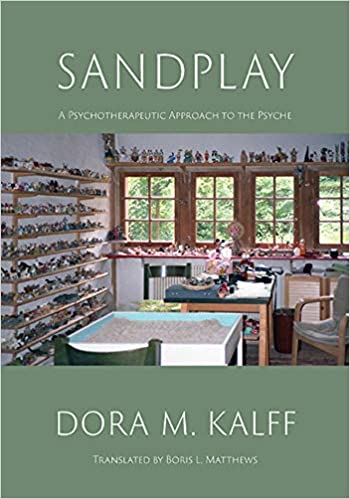
This new release of Dora Kalff’s classic Sandplay: A Psychotherapeutic Approach to the Psyche, is edited by Dyane Sherwood, PhD and translated by Boris Matthews, PhD, LCSW, NCPsyA; both are members of the Chicago Society of Jungian Analysts. It is published by Analytical Psychology Press. From the publisher:

Dora Kalff’s classic, originally published in German in 1966, is the foundational book of the psychotherapeutic modality she called ”Sandspiel” in German, translated ”Sandplay” in English. In sandplay, the therapist quietly witnesses while the patient creates a ”world” in a shallow tray half-filled with sand. Miniatures and natural objects, such as stones and shells, are provided for use in these creations.

Sandplay is now practiced around the world. Contemporary readers will discover that Frau Kalff’s wisdom and way of working with children and young adults feels fresh and engaging. Her deep insight into the development of the human psyche, with reference to Eastern contemplative traditions and the work of C. G. Jung, has found support from contemporary neuroscience.

Sandplay is widely integrated into therapeutic work with both children and adults, allowing body-based emotions and memories to emerge in a ”safe and protected space.” It has found particular application to trauma, including relief work following natural disasters and in zones of conflict.

In 1985, Kalff and her students founded the International Society for Sandplay Therapy, with branches in many countries. It is a collegial society that provides training and certification in sandplay therapy and is affiliated with the International Association of Analytical Psychology.

A review by Rosalind Heiko, PhD reads:

Kalff’s book is wonderfully accessible, and the case histories of the children resonate with spirit and compassion through their sand stories in the trays. It was the first book I read on Sandplay – and it fascinated me over 25 years ago, as it does now. I highly recommend this edition!

Speaking of Jung Podcast | Interview with George Hogenson

Speaking of Jung, a podcast by Laura London, is a wonderful series of interviews with Jungian Analysts. In this episode, recorded on March 14, 2016, she interviews George Hogenson, PhD, LCSW, member of the Chicago Society of Jungian Analysts.

Dr. Hogenson is a diplomate Jungian analyst in private practice in Chicago, where he works primarily with adults dealing with life transitions, dream work, and trauma.  He serves on the editorial board of the Journal of Analytical Psychology, is the author of Jung’s Struggle with Freud as well as numerous articles on archetypal theory, synchronicity and the nature of symbols.  His teaching in the Analyst Training Program of the Institute has concentrated on the works of Jung, and he offers supervision and small reading groups for clinicians interested in Jung’s psychological system. Prior to becoming an analyst, Dr. Hogenson was on the faculty of the Yale School of Management, and a consultant to many organizations on leadership and strategy.  He continues to work with individual executives and organizations on management issues using the principles of Jungian psychology.

Listen to the interview on

Speaking of Jung is available through a variety of podcasting platforms and apps, including Apple Podcasts, Stitcher, Google Play, TuneIn, Spotify, and iHeartRadio. Just search for “Speaking of Jung” in your favorite podcasts app to subscribe on your mobile device. You can also listen to select episodes on YouTube.


Links: The Speaking of Jung Podcast Website | This Episode of Speaking of Jung | The Speaking of Jung YouTube Channel | George Hogenson’s Recorded Lectures on the C. G. Jung Institute of Chicago Website

The Salomé Institute of Jungian Studies | The Astrology of Jung’s Red Book

The Salomé Institute of Jungian Studies is hosting a series of free weekly online salons on Jung’s Red Book from and astrological perspective. Below is the first of video in that series, by Satya Doyle Byock, MA, LPC, which currently spans 15 episodes. You can join the live salons every Sunday at 10am PDT (6pm GMT) on Zoom and watch past episodes to catch up. If you don’t have one, you may want to purchase a copy of The Red Book to follow along.

Links: The Salomé Institute of Jungian Studies | The Next Episode in the Series | Past Episodes in the Series and Other Videos | The Red Book on Amazon

Psychology Today | Soulwork: Interview with Ken James

Ken James, PhD, member of the Chicago Society of Jungian Analysts, was interviewed by Dale M. Kushner for Psychology Today. The interview is split into three parts:

Part 1: What Makes Jungian Analysis Different

Part 2: Why Dreams Are So Important in Jungian Analysis

Part 3: The Role Archetypes Play in Jungian Analysis

Dr. Kenneth James maintains a private practice in Chicago, Illinois at The Soulwork Center.  His areas of expertise include dream work and psychoanalysis, archetypal dimensions of analytic practice, divination and synchronicity, and ways to sustain the vital relationship between body, mind and spirit.  He has done post-doctoral work in music therapy, the Kabbalah, spirituality and theology, and uses these disciplines to inform his work as a Jungian analyst.


Links: Ken James’s Website | Ken James’s Recorded Lectures on the C. G. Jung Institute of Chicago Website

Dennis Merritt | Presentation: Inflection Point in the Anthropocene Era and the Paradigm Shift of Jung’s New Age

The following video is an online presentation by Dennis Merritt, based on his article “Covid-19: Inflection Point in the Anthropocene Era and the Paradigm Shift of Jung’s New Age”., with the First Unitarian Society of Milwaukee, May 10th, 2020.

Dennis L. Merritt, Ph.D., is a Jungian psychoanalyst and ecopsychologist in private practice in Madison and Milwaukee, Wisconsin. Dr. Merritt is a diplomate of the C.G. Jung Institute, Zurich and also holds the following degrees: M.A. Humanistic Psychology-Clinical, Sonoma State University, California, Ph.D. Insect Pathology, University of California-Berkeley, M.S. and B.S. Entomology, University of Wisconsin-Madison. Over twenty-five years of participation in Lakota Sioux ceremonies have strongly influenced his worldview.

Dr. Merritt is the author of Jung, Hermes, and Ecopsychology: The Dairy Farmer’s Guide to the Universe Volumes 1 – 4.

Links: Dennis Merritt’s Website | Dennis Merritt’s Page on the C. G. Jung Institute of Chicago Website | EcoJung YouTube Channel

Filter Posts

  • About Jung Chicago Radio & Blog

    Jung Chicago Radio is home to a variety of podcasts that range from archival seminar recordings (Institute Archives), to interviews (Jung in the World) to discussion on film (Healing Cinema), fairy tales (Jungian Ever After), and our programs.

    Our Blog shares essays, articles, video, audio, and other resources by members of the Chicago Society of Jungian Analysts and other groups that support the education and development of our community.

    The views and opinions expressed in the podcasts and blog posts are those of the respected speakers or authors and do not necessarily represent the views of the C. G. Jung Institute of Chicago.

    Login

    This search engine will search our public programs, the Jung Chicago Radio and Blog, and our store.

    To search only the store, visit our Store page.

    If you’re looking for a Jungian Analyst, use our Find an Analyst search engine or browse the Chicago Society of Jungian Analysts page.