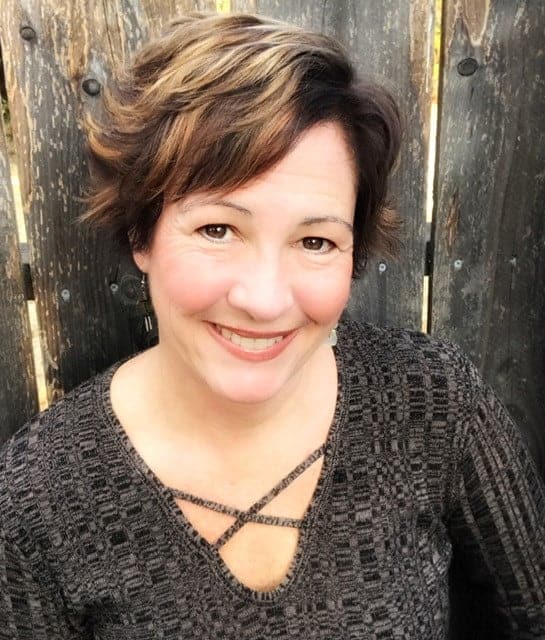
Ken James, PhD, member of the Chicago Society of Jungian Analysts, was interviewed by Dale M. Kushner for Psychology Today. The interview is split into three parts:
Dr. Kenneth James maintains a private practice in Chicago, Illinois at The Soulwork Center. His areas of expertise include dream work and psychoanalysis, archetypal dimensions of analytic practice, divination and synchronicity, and ways to sustain the vital relationship between body, mind and spirit. He has done post-doctoral work in music therapy, the Kabbalah, spirituality and theology, and uses these disciplines to inform his work as a Jungian analyst.
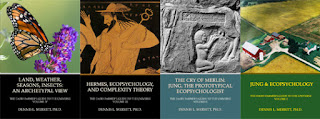
Dennis L. Merritt, Ph.D., is a Jungian psychoanalyst and ecopsychologist in private practice in Madison and Milwaukee, Wisconsin. Dr. Merritt is a diplomate of the C.G. Jung Institute, Zurich and also holds the following degrees: M.A. Humanistic Psychology-Clinical, Sonoma State University, California, Ph.D. Insect Pathology, University of California-Berkeley, M.S. and B.S. Entomology, University of Wisconsin-Madison. Over twenty-five years of participation in Lakota Sioux ceremonies have strongly influenced his worldview.
It seems appropriate at this point in time to share a seminar from our store, “Racism and the Cultural Complex: Welcome to the United States of America”, with Anita Mandley, MS, LCPC and Stephanie Fariss, JD, LCSW, in its entirety. It was recorded in the fall of 2015. From the seminar description:
A recent article in The Huffington Post reads: “A white man guns down nine black people in a church in South Carolina. The state’s Confederate battle flag stays waving in the wind the next day. The white man is arrested. He is given a Kevlar jacket. Welcome to the United States of American in 2015.”
It is impossible to imagine how 350 years of slavery, segregation and racism would not have monumental consequences for both White and Black Americans. And yet, many want to believe that electing an African American President has changed all that. Events during the last year have turned that fantastical belief on its head and now more than ever we must work to understand the insidious nature of racism. Depth psychology has an important role to play in this endeavor, especially as we begin to understand how shared historical and cultural trauma experiences lead to cultural complexes in groups and within the psyche of individuals. This course will explore the presence and power of historical and cultural traumas—how the legacy of these traumas impact the brains, bodies and minds of individuals, and how the shared experience of trauma creates cultural complexes that structure emotional experience.
Learning Objectives By participating in this workshop, attendees will be able to: 1) Describe the relationship between historical and cultural traumas and cultural complexes; 2) Explain Post-Traumatic Slavery Syndrome; 3) Define micro-aggression and describe its component parts.
PowerPoint: A PDF of the slides shown in this seminar are available HERE.
Video: A video shown in the seminar is available on YouTube HERE.
Anita Mandley, MS, LCPC is an Integrative Psychotherapist with over 30 years of experience in the field of Mental Health. Anita’s specific areas of special interest and expertise is in working with adults who struggle to manage their moods and those who have had significant experiences of invalidation, including experiences of trauma, violence, abuse, and neglect. The complexity of such experiences necessitates complexity in treatment. Anita’s integrative perspective and treatment approach is based on her belief that you need to treat clients’ distress in the context of their whole self: i.e. body, brain, mind, and spirit. Anita uses the dynamic Collaborative Stage Model, developed by Mary Jo Barrett to organize treatment in a way that increases efficacy, while avoiding the treatment pitfalls of the extremes of chaos and rigidity. Anita leads the Center’s Adult Integrative Trauma Team and Dialectical Behavior Therapy Team. She also does training and consultation for groups and individual clinicians at the Center. She also presents workshops at agencies and in the community on topics such as: Dialectical Behavior Therapy, Complex Post-traumatic Stress Disorder, Post-traumatic Slavery Syndrome, Dissociative Identity Disorder, and Cultural Diversity, among others.
Stephanie Fariss, JD, LCSW is a member of the Chicago Society of Jungian Analysts and a psychoanalyst in Chicago. She has a private practice in the Chicago loop where she sees individuals and couples and runs psychotherapy groups. She has a special interest in the relevance of psychoanalytic thought to social issues such as addictions, race, organizational resilience, politics and animal welfare.
Thank you to our 2019 Supporter level donors: Bill Alexy, Usha and Ashok Bedi, Circle Center Yoga, Arlo and Rena Compaan, Eric Cooper and Judith Cooper, Lorna Crowl, D. Scott Dayton, George J. Didier, the Kuhl Family Foundation, Ramaa Krishnan & Full Bloomed Lotus, Suzanne G. Rosenthal, Deborah Stutsman, Debra Tobin, Alexander Wayne and Lynne Copp, Gerald Weiner.
We at the Jung Institute of Chicago are distraught and deeply saddened by the violence and racism directed at people of color. We join in solidarity with all our sisters and brothers who have been the object of ongoing systemic racial discrimination, violence and hatred. We express our deepest sympathy for the deaths of the most recent victims of racial violence, George Floyd , Ahmaud Arbery, Breonna Taylor, and the untold stories of so many who have suffered from the systemic oppression and injustice in our nation.
We astonishingly watch as the world community from Minneapolis, to DC, to London, to Berlin, to Tehran, to Dublin join in protest together – we witness and join the agony and suffering of the world soul responding to the oppression and ubiquitous racism prevalent in our world. We wish to join all peoples hand-in-hand in bringing greater consciousness and change as the fruit of the lives that have been lost through reckless and violent acts of hatred.
The Jungian community of Chicago acknowledges that it needs to be part of the solution of bringing healing and care and an ongoing response that involves the courage to speak out and address racism in all its disguises. If we are faithful we will transform racism in both ourselves and in our world consciousness!
As sages throughout history have reminded us, Nelson Mandela, Martin Luther King, Jesus, Jung and others, that one of the most difficult things is not to change society – but to change ourselves. We all have a purpose and mission, just like our brother, George.
This is part of a continuing series of posts from conversations with Lisa Maechling Debbeler, JD, MA, LPCC about the nature of being a therapist/analyst in a time of quarantine. We began talking on Saturday March 21, 2020 at the beginning of the shut down and are continuing to talk weekly. We were both continuing to work and trying to see as many of our clients/analysands as possible through Zoom or other virtual methods. We were both finding this both unexpectedly and expectedly difficult and wanted to share our experiences with colleagues and friends that we respect.
For me it is the times when I and my client or analysand experience the flow of healing that is beyond one ego talking to another ego. It seems that the connection or the field between the two of us opens a channel to something larger than either of us could have brought into the room. We experience the presence of the numinous. In Kabbalah or Jewish mystical tradition, this flow is called Shefa which can be translated as divine emanation or flow. Perhaps a analogous term more familiar in mainstream culture might be Grace.
In general, therapists and even analysts don’t talk a lot about this experience perhaps because it is so beyond our control but also because it is beyond language. By definition it is hard to talk about. At the same time, I would argue that without the presence of the numinous/Shefa/Grace there is no deep healing. With it there is sometimes change that seems miraculous or inexplicable.
Several years ago, I arrived at a building, and I thought it was empty. To my surprise, I ran into a man from another country (Mexico). I asked him if he was by himself. He said, “No.” Then, he added, as a clarification, of who else was with him: “My soul and I.”
I was struck by the beauty and the wisdom of his comment, and I found out, later on, that his response was a cultural and popular phrase from his native land. I believe his comment (“My soul and I”) is an archetypal experience that highlights the primary and fundamental direction that Jungian analysis needs to take during and after the time of Coronavirus.
Coronavirus has forced individuals to ‘stay home’; it has compelled people to distance themselves from others; governments from around the world have implemented “social distancing” measures in public places, and the streets of major cities from around the world are somewhat empty. During this pandemic, people are forced to spend more time alone, at home. Solitude has increased world-wide. Individuals are noticing they are forced to be by themselves, at home, unless they distract themselves with electronic gadgets. Silence is more noticeable as well as the absence of other people. Therefore, Coronavirus is leading us to a spatial, temporal, emotional, and spiritual space of “My soul and I.” It is a space of possibilities and terrors.
I believe the archetypal sentence, “My soul and I”, has laid out the path that Jungian analysis needs to primarily pursue during and after the time of Coronavirus: the exploration, cultivation, and the caring for the Ego-Self Axis or “the soul and I.” In a letter to P.W. Martin, Jung (1945) stated, “…the main interest of my work is…the approach to the numinous…[which] is the real therapy…[and] as you attain to the numinous experiences you are released from the curse of pathology.” Furthermore, Jung delineated the relationship between images, soul, and the Divine, and emphasized the centrality of the Divine through working with images from dreams, active imagination, and synchronicities. Therefore, in time of Coronavirus, it is important that both analysts and analysands focus, during analysis, on those images (Soul) for ‘releasing’ the individual from pathology.
Speaking of Jung is available through a variety of podcasting platforms and apps, including Apple Podcasts, Stitcher, Google Play, TuneIn, Spotify, and iHeartRadio. Just search for “Speaking of Jung” in your favorite podcasts app to subscribe on your mobile device. You can also listen to select episodes on YouTube.
This video is part of the series “Psychosocial Wednesdays”, an initiative by: Paul Attinello, Stefano Carpani and Bernhard von Guretzky.
Susan Rowland, PhD is associate Chair of two hybrid programs at Pacifica Graduate Institute: MA Engaged Humanities and the Creative Life MA. Author of seven books on Jung, literary theory, gender and ecology, her latest work is The Ecocritical Psyche (Routledge 2012), which argues for a symbol embodying a reciprocal relationship with non-human nature. Previously Professor of Jungian Studies at the University of Greenwich, London, she was founding Chair of the International Association of Jungian Studies 2003-6.
In this video by the California Institute for Integral Studies, cultural historian Richard Tarnas shared his thoughts about the synchronicity of what is happening in the heavens with what is happening now on our planet with COVID-19. He offered an astrological perspective as to what was happening that seems to be affecting our planet, among such things as climate change and this pandemic. Tarnas offers a wider view of the history of the conjunctions of Pluto-Jupiter and Saturn which also coincided with other records of historical events.
In continuation of our COVID-19 response, we are sharing another full seminar. You can support our ongoing efforts to provide free and low-cost educational resources during this pandemic by making a donation on our website or a purchase in our audio and video store. We have extended our Stay Connected Sale through May 31st, so you can still get 40% everything in our store (use the coupon code CONNECT on the cart page before checkout).
Jung initially rejected the invitation to write Man and His Symbols, whose intention was to make Jungian psychology understandable to a general audience, but a dream convinced him otherwise. In his dream, he speaks to a multitude of enthralled people who understand everything he says. In this presentation on Chapter 1 of Man and His Symbols, “Approaching the Unconscious,” we’ll explore how two years after Jung completed both his chapter and his life, Martin Luther King, Jr. spoke to a multitude of enthralled people and translated many Jungian concepts into everyday language in his “I Have a Dream” speech. Jung’s chapter is concerned with four major areas—the unconscious, dreams, archetypes, and symbols—all four of which we find illustrated and translated to a general audience in King’s dream speech. We’ll dream the dream forward into the 2020 election and see how leading presidential candidates are working with archetypes and symbols as well, on behalf of the psychological health of the body politic.
A PDF of the PowerPoint shown during the seminar, which includes links to the videos on YouTube, is available HERE . It was recorded on October 4, 2019.
Jennifer Leigh Selig, PhD is the founder and former chair of the Jungian and Archetypal Studies doctoral degree at Pacifica Graduate Institute. She has spent almost two decades researching, writing about, and presenting on Martin Luther King, Jr., including her 2005 title, Integration: The Psychology and Mythology of Martin Luther King, Jr. and His (Unfinished) Therapy With the Soul of America. Her latest books include Everyday Reverence: A Hundred Ways to Kneel , Kiss the Ground, and a co-authored volume titled Deep Creativity: Seven Ways to Spark Your Creative Spirit. jenniferleighselig.com
Thank you to our 2019 Supporter level donors: Bill Alexy, Usha and Ashok Bedi, Circle Center Yoga, Arlo and Rena Compaan, Eric Cooper and Judith Cooper, Lorna Crowl, D. Scott Dayton, George J. Didier, the Kuhl Family Foundation, Ramaa Krishnan & Full Bloomed Lotus, Suzanne G. Rosenthal, Deborah Stutsman, Debra Tobin, Alexander Wayne and Lynne Copp, Gerald Weiner.
Our Blog shares essays, articles, video, audio, and other resources by members of the Chicago Society of Jungian Analysts and other groups that support the education and development of our community.
The views and opinions expressed in the podcasts and blog posts are those of the respected speakers or authors and do not necessarily represent the views of the C. G. Jung Institute of Chicago.