
Phantom Narratives: The Unseen Contributions of Culture to Psyche

Video
1 hour 19 minutes

$13.99

This talk is part of the 2018 Founders’ Day Symposium, Chaos, Complexity, Creativity. Purchase the symposium for 30% off individual titles!

Phantom Narratives: The Unseen Contributions of Culture to Psyche

What Toni Morrison has called “unspeakable things unspoken,” such as class hatred, racism, xenophobia, and misogyny, burst forth in our current political life as realities that refuse to die.  Phantom narratives of long past injustices reveal themselves as undead presences capable of destroying social and emotional bonds.  What underground rivers in our cultural life do these emotional currents reveal?

Audio: An audio mp3 of the talk is included in this download.

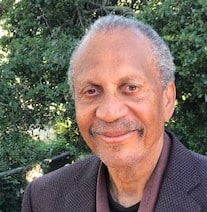
Samuel Kimbles, PhD is a clinical psychologist, training analyst, and member of the faculty of the C. G. Jung Institute of San Francisco, and a clinical professor (VCF) in the Department of Family and Community Medicine, University of California, San Francisco. Between September 1, 2008 and August 31, 2010 he served as president of the C. G. Jung Institute, San Francisco. He has lectured and presented papers on topics related to the theory and practical applications of analytical psychology to professional and lay audiences throughout the United States, Africa, and Europe. He is a clinical consultant and has taught at the San Francisco Jung Institute, colleges, and universities. In addition, he has trained mental health and analytic professionals on working with the unconscious life of groups. His published work on the cultural complex is a significant contribution of the application of analytical psychology to the study of groups and society. His previous book on cultural complexes was with Tom Singer, The Cultural Complex: Contemporary Jungian Perspectives on Psyche and Society (Routledge, 2004). He is author of Phantom Narratives: The Unseen Contributions of Culture to Psyche.
Speaker

Kimbles, Samuel

Samuel Kimbles, PhD is a clinical psychologist, training analyst, and member of the faculty of the C. G. Jung Institute of San Francisco, and a clinical professor (VCF) in the Department of Family and Community Medicine, University of California, San Francisco. Between September 1, 2008 and August 31, 2010 he served as president of the C. G. Jung Institute, San Francisco. He has lectured and presented papers on topics related to the theory and practical applications of analytical psychology to professional and lay audiences throughout the United States, Africa, and Europe. He is a clinical consultant and has taught at the San Francisco Jung Institute, colleges, and universities. In addition, he has trained mental health and analytic professionals on working with the unconscious life of groups. His published work on the cultural complex is a significant contribution of the application of analytical psychology to the study of groups and society. His previous book on cultural complexes was with Tom Singer, The Cultural Complex: Contemporary Jungian Perspectives on Psyche and Society (Routledge, 2004). He is author of Phantom Narratives: The Unseen Contributions of Culture to Psyche.

Login

This search engine will search our public programs, the Jung Chicago Radio and Blog, and our store.

To search only the store, visit our Store page.

If you’re looking for a Jungian Analyst, use our Find an Analyst search engine or browse the Chicago Society of Jungian Analysts page.

Recording Terms & Conditions

This program will be recorded and distributed by the C. G. Jung Institute of Chicago for educational and historical purposes. By registering for this program, you consent to appear as an audience member on a recording that will be distributed by the C. G. Jung Institute of Chicago. Without expectation of compensation or other remuneration, now or in the future, you give your consent to the C. G. Jung Institute of Chicago, its affiliates, and agents to use your image and likeness and/or any interview statements from you in its publications, advertising, or other media activities (including the Internet).