Blog

Vlado Solc | From Illusion to Conscious Suffering: A Jungian View of Politics, Possession, and Redemption

In recent decades, we have observed how high politics and society are being increasingly influenced by low motives and emotional drives such as envy, frustration, manipulation, deception, or revenge. The division of society has intensified, accompanied by aggression and the entrenchment of one-sided positions. In the United States in particular, we are witnessing a rise in irrational attitudes, conspiratorial thinking, and accompanying attacks on pluralism, minorities, those who hold differing opinions and “others.”

The article is an extended and revised version of the one originally published in Vesmír, which was based on an interview that Vlado gave to Psychologie.cz.

Alchemical Nigredo
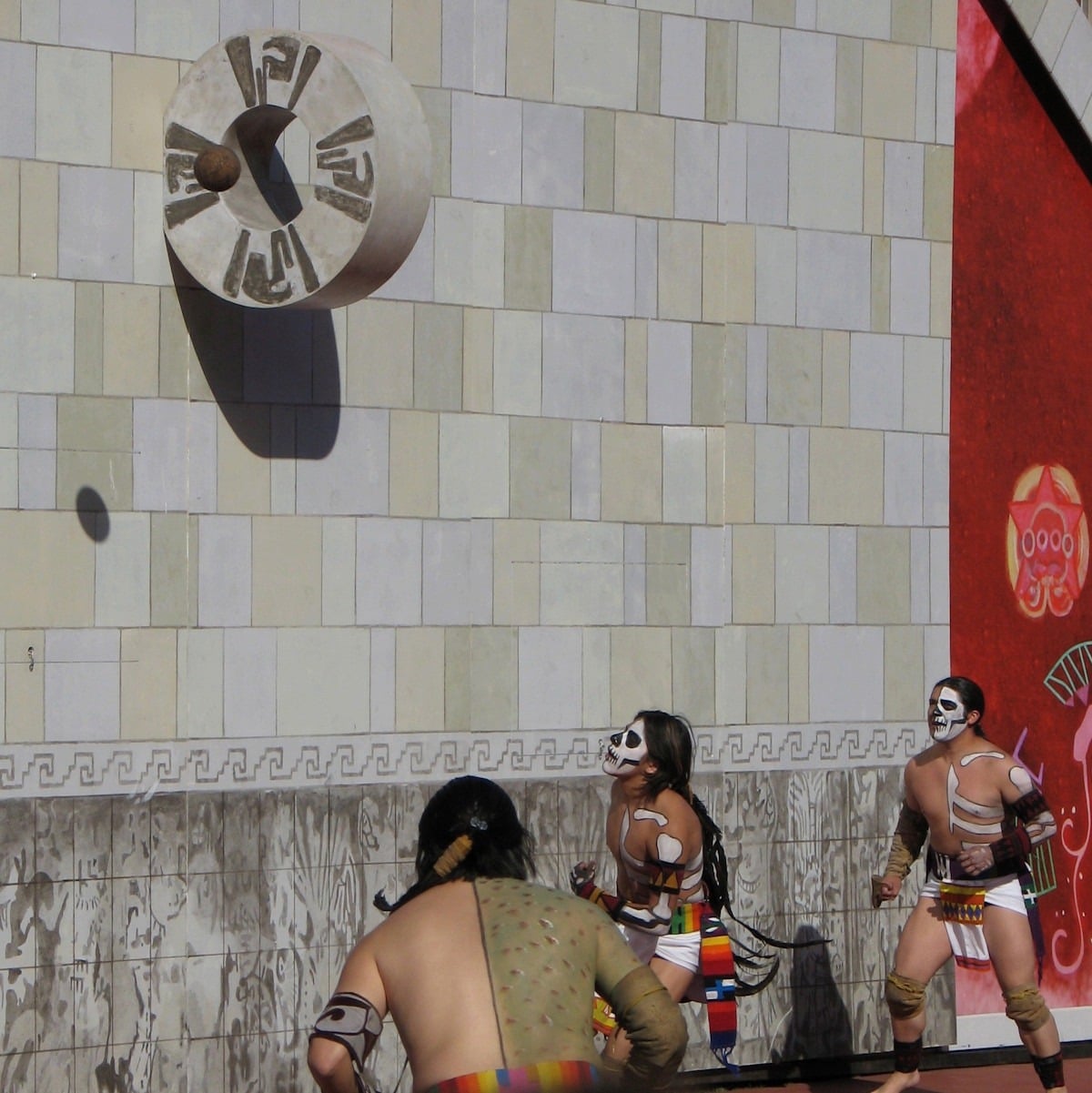
A decade before Donald Trump’s emergence on the political scene, those impulses had begun to be heard in American society. Psychologically, we might view this as an emergence of the “narcissistic archetype.” Possession by this archetype manifests in the ego as self-absorbed, self-centered focus, where “mine” is presented as universal, righteous, correct, and perfect. Thus, a sense of entitlement arises to impose this ideal upon others, even at the cost of one-sidedness, control, or cruelty. Mythical Narcissus rejected Echo’s love and remained enchanted by his own reflection. This indicates an emotional detachment, splitting off the psychic poles of thinking and feeling—that is, a loss of contact with the soul, the heart—typically accompanied by a loss of compassion, intuition, perspective, and understanding of higher motives. Things that were previously subjected to moral scrutiny are now – under the new paradigm – reconsidered as a new value; bold acts are no longer feared—because now it is done in the name of truth. The new truth! But where is the “old” truth? It is now pushed away by the complex that got constellated. And Trump emerged as a major object of the collective projection of this complex within the American psyche. As the chosen Über-Narcissus, he legitimized shadow emotions—rage, entitlement, xenophobia—emotions that had previously been repressed under the weight of collective scrutiny. Thus, he allowed the collective shadow to manifest openly, without burdening shame.

This opened the door to authoritarian dynamics and narcissistic manipulation. When society becomes psychically fragmented—when people lose both internal and external cohesion—they often seek a dominant figure to restore a sense of order: someone emotionally expressive, seemingly confident and strong. As a rule manipulators and narcissists then contain the chaos during turbulent times and offer temporary relief by directing the collective shadow outward—by way of scapegoating towards the state, immigrants, minorities… Anyone perceived as different. The forms of oppression in a family controlled by a narcissist are quite similar to those by which a totalitarian state controls its citizens.

(more…)

Psychologie.cz | The Fisher King Without Clothes: Interview with Vlado Solc

This article originally appeared on psychologie.cz. Vlado Solc, member of the Chicago Society of Jungian Analysts, is interviewed by Jan Majer, Editor-in-Chief of Psychologie.cz.

In his books, Jungian Analyst Vlado Solc has been describing for many years how high politics is increasingly dominated by base motives – envy, frustration, the need for revenge. The turn of events is unexpected and disturbing. And beneath the surface, something deeper is happening. It’s not about politics, it’s about the soul.


Jan Majer – Years ago, you pointed out that high politics and society were increasingly being driven by low motives — envy, frustration, the need for revenge. In recent weeks, a lot has happened. What new insights have these events brought you? What psychological connection have you realized?

~ Vlado Šolc – Even before Donald Trump entered the political scene, low impulses had begun to awaken in American society. I called it an emergence of the Narcissistic archetypal dynamics. This goes beyond individual vanity — Narcissus is a symbol of psychic fragmentation, of the ego being consumed by an image of oneself to the point that deeper, conscious connection becomes impossible. Psychologically, this represents a splitting of psychic opposites, a loss of living contact with the soul, which typically leads to a loss of compassion, perspective, and understanding of higher motives such as art, ethics, and spirituality.

In this fragmented state, what had previously been considered via lenses of moral anxiety suddenly became a new value, no longer viewed with fear, but with fearless excitement. Trump rose up as a great object of collective projection of this American complex; as a chosen Über-Narcissus, he legitimized these shadowy emotions — rage, entitlement, xenophobia — which had previously been suppressed due to social oversight. He thus gave permission for the collective shadow to manifest openly, without shame.

This opened the door to authoritarian dynamics and all narcissistic manipulation that catalyzes it. When society is psychologically fragmented, when people lose inner and outer cohesion, they often seek a dominant figure to restore a sense of order — someone emotionally expressive, certain, and seemingly strong. Manipulators and narcissists channel the chaos of the collective psyche and provide it with temporary relief by directing the collective shadow outward onto scapegoats: the state, immigrants, or anyone slightly different from oneself.

(more…)

Statement (June 4, 2025)

We of the C. G. Jung Institute of Chicago wish to foster concern for the collective well-being and for a just and fair society for all, especially the most vulnerable. As such we support fundamental human rights, the rule of law, and a society governed by democratically elected institutions. This is a moral and ethical statement consistent with our philosophy and teaching. Following Jung, we intend to help others meet the world with generosity, kindness and truthfulness.

Freddie Taborda | Jungian Analysis for the Living and for the Dead: Lessons from the Jaguar-Man in a Tomb

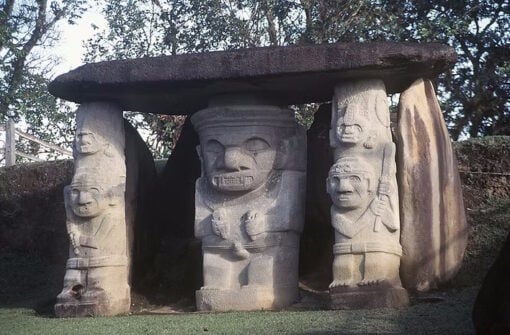
In a previous article that I wrote (“What The Death May Teach The Living About the Individuation Process”), I stated the hypothesis that archetypal images, carved on stone statues by an aboriginal group and located on a necropolis, could provide psychological guidance for the journey of life, death, and rebirth, specifically for the journey of the afterlife. It seems that each person and his/her spirit may have to go through the journey of living, dying, and rebirth. Therefore, the individual spirit of a human being may go through three phases; a) the living (“incarnated spirit”); b) the Death (“spirit”), and c) the Rebirth (“reincarnated spirit”) (Credit for the Image: UNESCO-Sacred Sites-Martin Gray).

You may be skeptical and question the relevance of talking about death and the afterlife when we are still alive and want to fulfill our individuation process. That is a reasonable point of view. However, I would like to invite the reader to consider the following two issues: 1) that there are certain archetypal images, while we are alive, that appear in dreams, visions, paintings, sculptures, etc that will be, also, essential and relevant, after we die, during the journey to the afterlife. If we could determine what similar archetypal images are crucially relevant for both, the cycle of living and for the afterlife, then, each of us will have not only a much larger “vision and mission” about life and death but, also, less karma that would decrease the necessity to reincarnate. Those archetypally relevant (images), if related consciously during living, would contribute, first, towards enlightment, second towards decreasing the individual karma that forces reincarnation and, third, following Jung’s thought about the afterlife, the spirit of a person who has died and who did not fulfilled, on earth, the Destiny (the archetypal endowments) that was given to him/her, will be forced, after death, to continue atempting to relate and integrate those archetypal images that were not realized during the living phase. Unfortunately, and according to Jung, the ‘dead’ or the ‘spirits of the dead’ will not be able to integrate the archetypal messages because the opposite -being humanly alive- is not available to them for consciousness to be realized. This article will attempt to further discuss these ideas within the context of the statue of the Jaguar-Man that is located at the entrance of a tomb in a necropolis in San Agustin, Colombia.

     The journey is not just about life; it is also about death, the afterlife, and possibly about the beyond (i.e., Rebirth). Therefore, the sculpture to be discussed in this article may provide important archetypal information for the living during the phase of living and dying; 2) that the dead, or the world of the spirits, as it is known in indigenous cultures, may provide valuable existential and psychological information to the living.

  Jungian analysis has focused its efforts on the phase of living; however, Jung’s thoughts on the subtle body and the Philosopher’s Stone may enlarge the scope of Jungian analysis that includes, also, the phase of death, and rebirth. Therefore, rather than exclusively focusing and emphasizing the process of individuation during the phase of “living” life, Jungian analysis, with its emphasis on the collective unconscious and God Within, could broaden and facilitate the analytical process for the individual to go not only through the phase of life (the individuation process) but, also, to prepare AND continue for and during the phases of death, the afterlife, and the beyond, which may include resurrection, rebirth, and reincarnation.

(more…)

Patricia Martin | Book Review: The Psychological Effects of Immigrating by Robert Tyminski

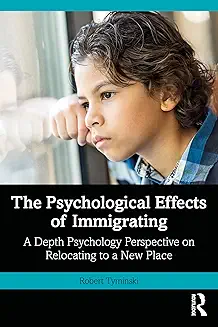
Robert Tyminski’s book, The Psychological Effects of Immigrating, is an exceptionally useful read in these turbulent times. As thoughtful people grapple with the bewildering array of policies from the White House aimed at immigrants, there is a collective anguish over how to respond. The cruel hypocrisy is that our national identity has been forged by immigrant stories. Still, sympathetic citizens also feel the tug of conscience when recent waves of immigrants aren’t easily absorbed into the economic fabric of our towns and cities as in previous generations.

At the core of Tyminski’s book is a focus on the mental health issues that arise for immigrants. A practicing Jungian analyst, Tyminski deftly weaves stories from his casework with myth and history to create an emotional landscape for the immigrant experience.

Join Robert Tyminski on March 8 at our Community Day 2025: Awakening Mythic Wisdom for Individual and Community Renewal

The basis of empathy is context. If we cannot see the human struggle of immigrants, it’s largely because it’s being drowned out by survival memes—it’s us against them. More constructive solutions elude us. This is where Tyminski’s work shines. His writing creates poignant profiles of immigrants working hard to fit in and the psychological costs for failing to do so: isolation, erasure, inadequacy, idealization of a past life, and feelings of doom and dread.

(more…)

Howl in the Wilderness Podcast | Jungian Analysis, Individuation & The Spiritual Life | Kenneth James (Video)

Chicago Society of Jungian Analysts member Ken James appeared on the Howl in the Wilderness Podcast. From the episode description:

Howling about Jung, Hillman, individuation, the shadow & the spiritual life with Ken James. Dr. Kenneth James maintains a private practice in Chicago, Illinois at The Soulwork Center. His areas of expertise include dream work and psychoanalysis, archetypal dimensions of analytic practice, divination and synchronicity, and ways to sustain the vital relationship between body, mind and spirit. He has done post-doctoral work in music therapy, the Kabbalah, spirituality and theology, and uses these disciplines to inform his work as a Jungian analyst.

(more…)

Asheville Jung Center | The Collected Works of Marie-Louise von Franz, Vol 1 – ISAP Talk (Video)

Thank you to the Asheville Jung Center for sharing this video. From the video description:

Introducing The Collected Works of Marie-Louise von Franz Featuring Murray Stein, Steven Buser and Leonard Cruz The Collected Works of Marie-Louise von Franz is a 28 volume Magnum Opus of one of the leading minds in Analytical Psychology. The first volume, Archetypal Symbols in Fairytales: The Profane and Magical Worlds, releases on her 106th birthday, January 4th, 2021 and is to be followed by 27 more volumes over the next 10 years. Steven Buser and Leonard Cruz are the General Editor’s of The Collected Works of Marie-Louise von Franz. During the first hour of this lecture, Dr. Buser and Dr. Cruz will take us through this important first volume including a history of the project as well as an overview of von Franz and her important contributions to Analytical Psychology. Dr. Murray Stein will then lead an online discussion regarding von Franz.

(more…)

In Memoriam: Patricia Greer

Patricia Taylor Greer, poet, author, and psychotherapist, passed away at her home in Wheaton, IL, on August 15, 2024 surrounded by her adoring husband Carl Greer and her three loving children.

Sophisticated, intellectual, loyal, and protective, Patricia was born in Queens, New York City, and grew up in Mt. Vernon, New York, and Mt. Lebanon, Pennsylvania, before attending Chestnut Hill College in Philadelphia, where she received a Bachelor of Arts in English literature. A lifelong student and learner, Patricia also received a Master’s degree in English (Loyola University of Chicago), a Master’s in Marriage, Family and Child Therapy (California Family Study Center), a Ph.D in Clinical Psychology (Pacifica Graduate Institute), and a diploma in Analytical Psychology (C.G. Jung Institute of Chicago).

(more…)

In Memoriam: Tom Lavin

Dr. Thomas Patrick Lavin, 82, of Wilmette, Illinois, passed away on June 3, 2024, at home with his best friend and partner of 55 years, Dr. Mary Ellen O’Hare Lavin at his side.

Tom was challenged by numerous health issues over the past decade, facing them with grace, grit, warmth and Irish humor.  A devoted husband, father and grandfather, Tom’s twinkling eyes, quick smile, adventurous spirit and love of life will leave a void in the lives of his loving family, his dear friends and those he served in his decades in the practice of analytical psychology.

(more…)

Scarif Scuttlebutt Podcast | Fear Anger Hate with Peter Demuth (Audio)

Chicago Society of Jungian Analysts member and current president of the Institute Peter Demuth, PsyD, appeared on the Scarif Scuttlebutt Podcast. From the episode description:

Yoda proclaimed it. Fear, Anger, Hate, Suffering, all elements that lead to the Dark Side. Anakin embodied all that to become transformed into arguably, the greatest villain to ever exist in movies, the dark Lord of the Sith, Darth Vader. We know of his dark trajectory, but how do those things play out in our own lives? Can we be turned to the Dark Side as Anakin was? Are we immune to those feelings? Ro and Brad welcome Dr Peter Demuth to the show and discuss the four pillars of Anakin’s transformation. Dr Demuth is a clinical psychologist and author of Monsters in Life and Literature which gives him unique insight to this discussion.

We explore how these very strong emotions can act in a way that transformed Anakin and pose the question, do we all have darkness in us? Join this deep dive discussion and explore the nature of these emotions and how our movie antagonists are a dark reflection of a possible outcome in real life. Demuth has spent decades studying, evaluating, and treating violent criminals and we bring him on to break down how a simple slave boy from Tatooine becomes the most feared villain in the galaxy.

From Shreya Dave, JSP Graduate and Chair of Development | March 13, 2024

The first time I walked into the classroom at the C. G. Jung Institute of Chicago, I was struck by the Circle of Friends candle holder. Such a wonderful symbol of people coming together to protect the flame! A group standing up, arms around one another, encircling the flame of individuality, the flame of Individuation. This image has stayed alive for me.

In the times of crisis, protecting this flame feels more important than ever. I recently graduated from the two-year Jungian Studies Program, which was challenging to say the least, but was the most rewarding undertaking. It acted as a catalyst to understand myself better by bringing shunned and ignored aspects to the surface and by holding the pain, helping me to discover my strength.

I invite you to join the Circle of Friends by donating to the Institute this Spring. Through my experience, I assure you that your contribution will really make a difference to individuals and help them move closer to wholeness.

Please give whatever you can!

Shreya Dave
Chair of Development
C. G. Jung Institute of Chicago

Filter Posts

  • About Jung Chicago Radio & Blog

    Jung Chicago Radio is home to a variety of podcasts that range from archival seminar recordings (Institute Archives), to interviews (Jung in the World) to discussion on film (Healing Cinema), fairy tales (Jungian Ever After), and our programs.

    Our Blog shares essays, articles, video, audio, and other resources by members of the Chicago Society of Jungian Analysts and other groups that support the education and development of our community.

    The views and opinions expressed in the podcasts and blog posts are those of the respected speakers or authors and do not necessarily represent the views of the C. G. Jung Institute of Chicago.

    Login

    This search engine will search our public programs, the Jung Chicago Radio and Blog, and our store.

    To search only the store, visit our Store page.

    If you’re looking for a Jungian Analyst, use our Find an Analyst search engine or browse the Chicago Society of Jungian Analysts page.