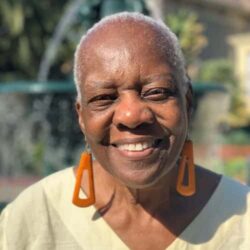
Polly Young-Eisendrath, PhD is a Jungian analyst, psychologist, teacher and author.She is Clinical Associate Professor of Psychiatry at the University of Vermont and in private practice in central Vermont. Polly is the originator of Dialogue Therapy, which is designed to help couples and others (for example, parents and grown children) to transform chronic conflict into greater closeness and development.
This interview originally appeared in Vesmír Magazine. It was translated from Czech to English by Vladislav Šolc.
“I must emphasize, however, that the grand plan on which the unconscious life of the psyche is constructed is so inaccessible to our understanding that we can never know what evil may not be necessary in order to produce good by enantiodromia, and what good may very possibly lead to evil. Sometimes the probate spiritus recommended by John cannot, with the best will in the world, be anything other than a cautious and patient waiting to see how things will finally turn out.”
C. G. Jung, CW9, Part 1
The COVID-19 pandemic has swept the world. And it has caught humanity unprepared despite all past experiences. What is happening to society, to everyone at this special time? “Big questions come from a small virus,” says Vladislav Šolc, a Jungian Analyst living and practicing in Milwaukee, Wisconsin. Eva Bobůrková Interviewed Vlado Šolc.
What are we experiencing today, can you describe it?
About 100 years have passed since the last major pandemic of the so-called Spanish Flu, which broke out in 1918 and claimed 50 million victims worldwide. Despite its disastrous impact, it took the WHO 30 years after that pandemic to establish a coordinated system of prevention and detection of global epidemics. Early intervention apparently prevented major spread of later respiratory epidemics such as Singapore (1957), Hong Kong Flu (1968) and later H1N1 (2009). Coordinated cooperation between governments and non-government organizations has been able to prevent the spread of Ebola, and to significantly mitigate the effects of classic influenza, malaria, or the Zika virus. However, the COVID-19 epidemic shows that mankind is not prepared for a virus that has a relatively long incubation time (5 days – 2 weeks), is highly infectious and shows a low symptom rate of the infected (95%). Again, nature has shown that even a virus whose mortality is – compared to the Black Death plague (1347-1351) which exterminated more than half of Europe’s then population) – is relatively low, yet it can disrupt even stable economies. Only with a few exceptions in the Pacific (Taiwan, New Zealand, or South Korea) the highly developed countries that boast of their advancement of science and technology have been surprised, or we should say humbled. This crisis has shown the importance of preparing for a possible global pandemic and how dangerous it is when science is not taken seriously! All of a sudden we woke up from big “Hollywood” fantasies of our readiness for biological warfare or alien invasions. Pandemic COVID-19 has brought about an inevitable confrontation with reality.
How do you see this confrontation as a Jungian Analyst?
Dennis Merritt, Ph.D., LCSW has an MA in Humanistic Psychology, a PhD in Insect Pathology from UC-Berkeley, and is a graduate of the Zurich Jung Institute. He practices as a Jungian analyst, sandplay therapist, and ecopsychologist in Madison and Milwaukee, WI. He authored four volumes of The Dairy Farmer’s Guide to the Universe – Jung, Hermes, and Ecopsychology. His influences include D. W. Winnicott, complexity theory, the I Ching, and Native American ceremonies, in which he has participated for over 30 years.
https://youtu.be/Q4iV_CgAS88
Speaking of Jung is available through a variety of podcasting platforms and apps, including Apple Podcasts, Stitcher, Google Play, TuneIn, Spotify, and iHeartRadio. Just search for “Speaking of Jung” in your favorite podcasts app to subscribe on your mobile device. You can also listen on YouTube.
In this interview, Susan Rowland and Stefano Carpani look at Susan’s peculiar approach to C.G. Jung, at her attitude toward “translation” and “meaning”, as well as at her latest research interests (art-based research) and at Covid-19.
Susan Rowland, PhD is associate Chair of two hybrid programs at Pacifica Graduate Institute: MA Engaged Humanities and the Creative Life MA. Author of seven books on Jung, literary theory, gender and ecology, her latest work is The Ecocritical Psyche (Routledge 2012), which argues for a symbol embodying a reciprocal relationship with non-human nature. Previously Professor of Jungian Studies at the University of Greenwich, London, she was founding Chair of the International Association of Jungian Studies 2003-6.
Making no claim for psychology as a solution to anything, Prof. Andrew Samuels and Stefano Carpani discussed a wide range of psychosocial (and more personal) questions. They spoke about the struggle that is to come when some of us refuse to countenance a return to normality. The grim possibility was raised that many people are attracted to apocalypse – and that there can be little hope without acceptance and embrace of risk.
Andrew Samuels is a Jungian analyst, university professor, author, activist and political consultant. He is well known for his work at the interface of psychotherapy and politics. His work on sexuality, relationships, spirituality, men and fathers has been widely appreciated. He is a former Chair of the UK Council for Psychotherapy, co-founder of Psychotherapists and Counselors for Social Responsibility and of the Alliance for Counselling and Psychotherapy. His many books have been translated into 19 languages.
John Beebe and Stefano Carpani reflect upon the traumatic experience of the Covid-19 pandemic in the context of Jung’s conception of compensation as a psychologically disruptive process that is nonetheless a force of nature itself.
John Beebe, MD a physician specializing in psychotherapy, is a Distinguished Life Fellow of the American Psychiatric Association and a past president of the C. G. Jung Institute of San Francisco. He is the author of Integrity in Depth, editor of C. G. Jung’s Aspects of the Masculine, and co-author of The Presence of the Feminine in Film. He is the founding editor of The San Francisco Jung Institute Library Journal (now titled Jung Journal: Culture and Psyche), and a was the first American co-editor of the London-based Journal of Analytical Psychology. An international lecturer is widely known for his work on psychological types, the psychology of moral process, and the Jungian understanding of film.
Paul Attinello, PhD, is a senior lecturer in music at Newcastle University. He has published in the Journal of Musicological Research, Musik-Konzepte, Musica/Realtá, the revised New Grove and a number of essay collections. Current projects include a book on music about AIDS, a book on Meredith Monk and performance art, and an edited volumes on contemporary composer Gerhard Stäbler. An edited volume on music in Buffy the Vampire Slayer has been published by Ashgate, and has received critical awards.
Stefano Carpani, Jungian Psychoanalyst CGJI-Z, interviews Murray Stein, PhD, about how the COVID-19 pandemic is influencing our personal, professional, and political lives. Stein is a training analyst at the International School for Analytical Psychology in Zurich, Switzerland. His most recent publications include The Principle of Individuation, Jung’s Map of the Souland Jungian Psychoanalysis (editor).
Fanny Brewster, PhD, MFA, LP , was scheduled to be the keynote speaker at this year’s Founders’ Day Symposium on March 21st. The event has since been cancelled due to the COVID-19 pandemic.
She is interviewed by Adina Davidson, PhD. Dr. Davidson is a Jungian Analyst in Cleveland, Ohio, member of the Chicago Society of Jungian Analysts, and recent graduate of our Analyst Training Program.
Thank you to our 2019 Supporter level donors: Bill Alexy, Usha and Ashok Bedi, Circle Center Yoga, Arlo and Rena Compaan, Eric Cooper and Judith Cooper, Lorna Crowl, D. Scott Dayton, George J. Didier, The Kuhl Family Foundation, Ramaa Krishnan & Full Bloomed Lotus, Suzanne G. Rosenthal, Deborah Stutsman, Debra Tobin, Alexander Wayne and Lynne Copp, Gerald Weiner. If you would like to support this podcast, click here to donate.
The Analyst Training Program prepares experienced, licensed clinicians to become certified as Jungian psychoanalysts through an in-depth understanding of the theory and practice of analytical psychology grounded in personal analysis and clinical consultation.
The Process of Analytic Training is both educational and transformational, and frequently leads to significant personal development and psychological deepening. The program fosters mutual development and psychological awareness within an intimate learning community of candidates and analysts. Upon graduation, candidates have an appreciation of the symbolic attitude within the interactive field of analysis and a working understanding of transference dynamics within the analytic relationship.
The Curriculum is organized thematically around the reading of Jung’s seminal writings as well as subsequent developments in analytical psychology and psychoanalysis. Courses in theory and practice are likewise organized around major themes that include the structure and complexity of the psyche, the mythic patterns of archetypal potentials and dynamics, the capacity to work with the symbolic meaning of dreams, and a practical grasp of the mutual transformation of analyst and client within the interactive transferential field of analysis. Case seminars, case colloquia, dream practica, and group process ground the thematic and course materials in personal and clinical experience. The curriculum extends over a four-year course of study taught on nine three-day weekends each year.
The Program is designed to make analytic training available to all qualified applicants. The one-weekend-a-month structure allows training to fit into one’s professional life, whether or not you live in the Chicago area. Our location in “the loop” has convenient access to public transportation, both O’Hare and Midway airports, and Union Metra/Amtrak train station. We have discount rates at Club Quarters Hotel and tuition assistance is available to those in financial need. All classes and events are accessible.
Applications to the Analyst Training Program are currently being accepted for the 2020-2021 training year. The deadline to apply is January 15th, 2020. To learn more about the program, the institute, and to download an application, visit our website.
Arwind Vasavada (1912-1998) was born and raised in India. In the 1950’s, he traveled to Zurich to study at the Jung Institute and to work in analysis with C.G. Jung. Although he had only a few sessions with Jung, he considered him his guru, a title which Jung himself did not accept in the Indian sense but gave Vasavada nevertheless some important “transmissions,” to put it in the terminology of Hindu tradition. After finishing his training in Zurich, Vasavada returned to India to open an analytic practice. June Singer visited him in India in the early 1970’s and invited him to come to Chicago, an invitation that he gladly accepted. Vasavada lived and worked as a Jungian analyst in Chicago through the 1970’s and 1980’s, and he was a founding member of the Inter-Regional Society of Jungian Analysts and the Chicago Society of Jungian Analysts. He had a strong and dedicated following of students in Chicago until he retired in the early 1990’s and moved to his son’s home in the state of Washington. After that he visited Chicago intermittently until his death (in India) in 1998.
In the 1980’s, analysts Josip Pasic and Murray Stein held a series of discussions with Vasavada in Pasic’s home, where they were filmed for posterity. The dialogues revolved in general around analytical psychology and its similarities with and differences from the traditions of the East (i.e., India). The following is an excerpt from one of these conversations.
Our Blog shares essays, articles, video, audio, and other resources by members of the Chicago Society of Jungian Analysts and other groups that support the education and development of our community.
The views and opinions expressed in the podcasts and blog posts are those of the respected speakers or authors and do not necessarily represent the views of the C. G. Jung Institute of Chicago.