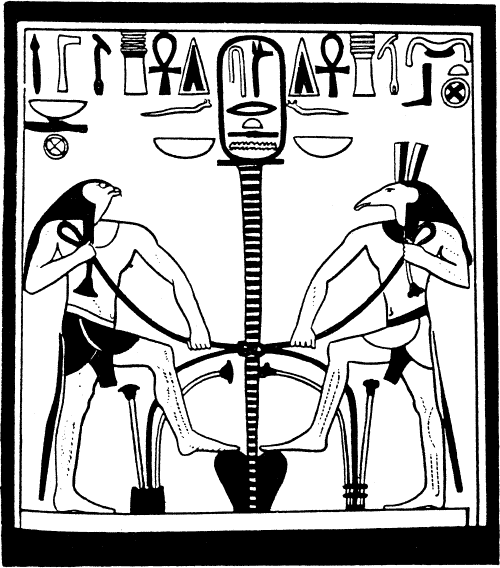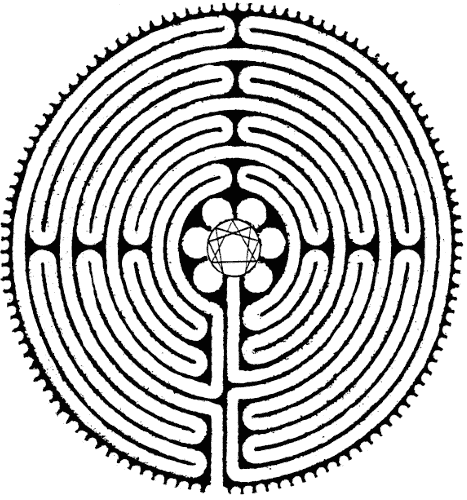
The four archetypal couples inherent in the Self—the King and Queen, the Warriors, the Magicians, the Lovers—create four distinct psychosocial environments within a relationship. The archetypal dynamics underlying both fulfillment and frustration in human relationships are examined in this seminar recording, with particular focus on marital dynamics and sexual dysfunction.
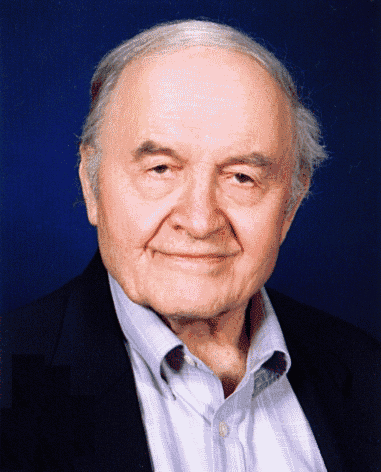
Robert Moore, PhD was Distinguished Service Professor of Psychology, Psychoanalysis and Spirituality in the Graduate Center of the Chicago Theological Seminary where he was the Founding Director of the new Institute for Advanced Studies in Spirituality and Wellness. An internationally recognized psychoanalyst and consultant in private practice in Chicago, he served as a Training Analyst at the C.G. Jung Institute of Chicago and was Director of Research for the Institute for Integrative Psychoanalysis and Psychotherapy and the Chicago Center for Integrative Psychotherapy. Author and editor of numerous books in psychology and spirituality, he lectured internationally on his formulation of a neo-Jungian psychoanalysis and integrative psychotherapy. His publications include THE ARCHETYPE OF INITIATION: Sacred Space, Ritual Process and Personal Transformation; THE MAGICIAN AND THE ANALYST: The Archetype of the Magus in Occult Spirituality and Jungian Psychology; and FACING THE DRAGON: Confronting Personal and Spiritual Grandiosity.
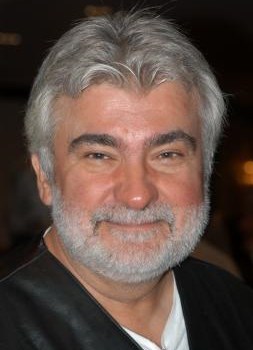
Dr. Cwik is a clinical psychologist, hypnotherapist and senior diplomate Jungian Analyst in private practice in the Chicago area. After studying Chemistry as an undergraduate, he entered military service and then changed his career path to psychology. After studying with Rosiland Cartwright in the Dream and Sleep Lab at the University of Illinois, Chicago Circle, he was in the first class at the Illinois School of Professional Psychology. He interned at the University of Maryland, School of Medicine, Department of Psychiatry where he trained in hypnotherapy and psychoanalytic psychotherapy and returned to Chicago to begin private practice. He is on the teaching faculty of the Chicago Institute and the Florida and Minnesota Seminars for the Interregional Society of Jungian Analysts. He is an Assistant Editor for the Journal of Analytical Psychology. He is former: Co-Director of Training of the Analyst Training Program in Clinical Supervision and Curriculum and Co-Director of Clinical Training Program in Analytical Psychotherapy at the C.G. Jung Institute of Chicago, and Senior Adjunct Faculty at the Illinois School of Professional Psychology. He provides videoconferencing supervision and analysis. He has published on analytic structure, supervision, alchemical imagery, active imagination, dreams, and numerous reviews.
This course offers a Jungian understanding and healing of addictions by considering the correspondence between Bill Wilson, co-founder of Alcoholics Anonymous, and Carl Jung, whom Wilson praises for being one of the key influences leading to the formation of AA and its 12 Steps. The meaning of addiction within our culture is also examined by utilizing the psychology of narcissism as a key to understanding.
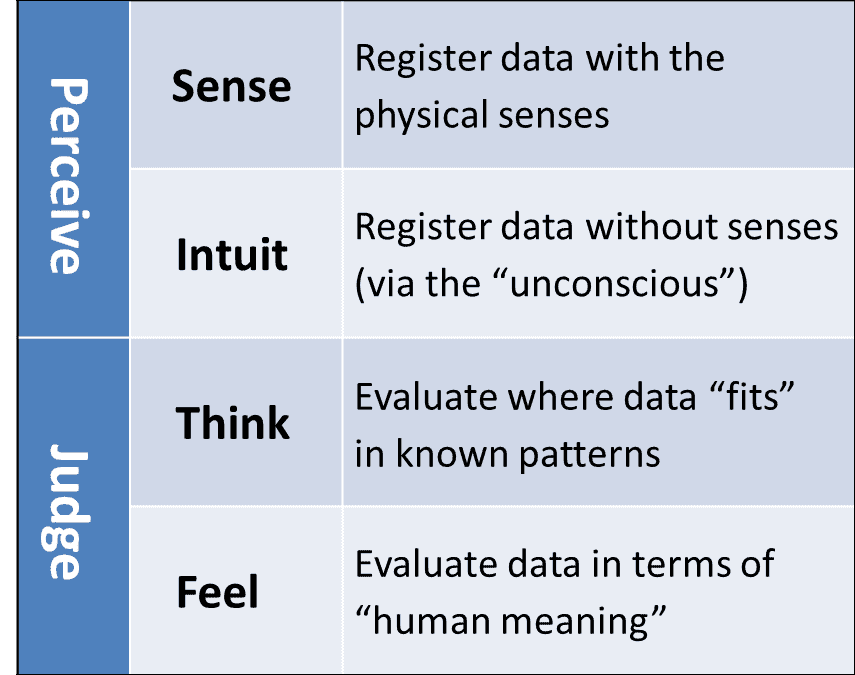
Diagrams used in this talk are not available, but in-depth descriptions of John’s work can be found in his book, Compass of the Soul.
John Giannini, MDiv, LCPC, NCPsyA was a Jungian analyst in private practice in Chicago and Evanston. He holds an MDiv in Religion and Psychology from St. Albert’s College, an MA from the University of Chicago Divinity School, an MBA from Stanford University, and LCPC certification with the State of Illinois. John published articles and lectured widely throughout the U.S. and Canada on the wounded child within and narcissistic/addictive behavior. He is the author of Compass of the Soul, an updated understanding of typology.
According to Jung, myth-making is a natural and impersonal potential present in the collective unconscious of all peoples throughout all times. Drawing on the contributions of Jung, Campbell, and Eliade, this course explores the role of myth in human life. Five of the major mythological themes prominent in world mythology are examined in terms of their contemporary psychological and cultural significance:
Mythology of Creation
Mythology of The Divine Child
Mythology of The Hero
Mythology of The Shaman
Mythology of The Apocalypse
This episode is the introductory session for the series, titled “Mythology and Psychology: A Jungian Perspective”.
Robert Moore, PhD was Distinguished Service Professor of Psychology, Psychoanalysis and Spirituality in the Graduate Center of the Chicago Theological Seminary where he was the Founding Director of the new Institute for Advanced Studies in Spirituality and Wellness. An internationally recognized psychoanalyst and consultant in private practice in Chicago, he served as a Training Analyst at the C.G. Jung Institute of Chicago and was Director of Research for the Institute for Integrative Psychoanalysis and Psychotherapy and the Chicago Center for Integrative Psychotherapy. Author and editor of numerous books in psychology and spirituality, he lectured internationally on his formulation of a neo-Jungian psychoanalysis and integrative psychotherapy. His publications include THE ARCHETYPE OF INITIATION: Sacred Space, Ritual Process and Personal Transformation; THE MAGICIAN AND THE ANALYST: The Archetype of the Magus in Occult Spirituality and Jungian Psychology; and FACING THE DRAGON: Confronting Personal and Spiritual Grandiosity.
Most depth psychological theories look backward into the personal history of the individual in order to find the causes for neurotic symptoms, gain insight into their persistence in the present, and diminish their effects in the future. A key feature of Jungian psychology is the addition of a forward focus, a constructive, teleological emphasis on the meaning of symptoms, and the need to discover what the symptom is calling the sufferer to notice and change. This places Jung in a category of psychological practitioners who seek to promote the possible evolution of the person from present status to future transcendence.
Russian spiritual teacher G.I. Gurdjieff sought to bring his students to a place of consciousness that went far beyond what was generally thought of as “being awake”. The core of his teaching, that humankind was unfinished and did not possess a soul but was capable of creating one through intense inner work, created discomfort in his followers and stimulated them to find ways to break through to new levels of awareness – a method he called “the way of the sly one”. P.D. Ouspensky, Gurdjieff’s foremost disciple, also taught about the possible evolution of human consciousness and provided a more systematized interpretation of Gurdjieff’s teachings.
Ken James, PhD maintains a private practice in Chicago, Illinois. His areas of expertise include dream work and psychoanalysis, archetypal dimensions of analytic practice, divination and synchronicity, and ways to sustain the vital relationship between body, mind and spirit. He has done post-doctoral work in music therapy, the Kabbalah, spirituality and theology, and uses these disciplines to inform his work as a Jungian analyst. For more information visit soulworkcenter.org
As we enter a new year, it seems right to share the recording of the program “The Fate of Depth Psychology in the New Millenium”, held in 1998. It includes introductory remarks by June Singer and a lengthy discussion with panel and audience members. We hope this event will facilitate reflection as we enter 2018. From the original CD jacket:
“As we approach the year 2000 humanity finds itself, as it always will, wrestling with the eternal questions of the meaning of existence and their relationship to spirit and matter. Given the direction of contemporary brain research and science, the growing psychopharmacological approach to mental and emotional disorders, the emergence of managed care, and the economics of psychotherapy and psychoanalysis, we have to wonder what challenges depth psychology will face in the years ahead.
This program takes up this critical question as seven Jungian analysts share their individual visions of the fate that awaits depth psychology in the new millennium. The panel members each present a brief synopsis of his/her vision and then engage with the audience in a lively discussion of their ideas, reactions, and intuitions.”
Jungian analyst and author Jean Shinoda Bolen leads a workshop for women “who seek to nurture their own creative and spiritual yearnings and find ways of expressing, articulating, and valuing what grows out of their inner life and the life they have lived so far. In the company of other women who know that suffering and joy and life are linked, personas drop away and soul comes forth.” Bolen weaves stories of psyche and goddess that have the power to touch themes and sacred places in the soul, and she leads listeners through a guided meditation, allowing the opportunity for personal symbols and myths to emerge. This tape set is also intended to serve as a model for women interested in forming their own spiritual groups. It was recorded in 1994.
Jungian analyst Murray Stein leads a study of the Bible for its insight into psychological questions about the ego’s proper relation to the self, the ultimate aim of individuation in coniunctio, and encounters with the shadow. The set includes the following lectures:
Origins: The Ego Once- and Twice-Born
Bondage vs. Freedom: Ego in Complex, Ego in Self
Good and Evil: The Problem of Shadow
Individuation: The Journey of Faith
Murray Stein, PhD is a training analyst at the International School for Analytical Psychology in Zurich, Switzerland. His most recent publications include The Principle of Individuation, Jung’s Map of the Soul, and The Edinburgh International Encyclopaedia of Psychoanalysis (Editor of the Jungian sections, with Ross Skelton as General Editor). He lectures internationally on topics related to Analytical Psychology and its applications in the contemporary world. Dr. Stein is a graduate of Yale University (B.A. and M.Div.), the University of Chicago (Ph.D., in Religion and Psychological Studies), and the C.G. Jung Institut-Zurich. He is a founding member of the Inter-Regional Society of Jungian Analysts and Chicago Society of Jungian Analysts. He has been the president of the International Association for Analytical Psychology (2001-4), and is presently a member of the Swiss Society for Analytical Psychology and President of the International School of Analytical Psychology, Zurich.
The psychoanalytic methods of self psychology as developed by Heinz Kohut examine the development and the developmental disturbances of self-esteem and confidence, the formation and malformation of guiding ideals, empathy for the thoughts and feelings of others, initiative and creativity, and even sense of humor and wisdom. Lionel Corbett and Cathy Rives compare and contrast Jung’s theory of the Self, as well as general aspects of Jungian psychology, with Kohut’s self psychology, which is rapidly becoming a mainstream alternative to both classical psychoanalytic drive theory and ego psychology. They also utilize case studies, as well as fairytale and myth analysis, to help illustrate these theories. It was recorded in 1989.
Cathy Rives, MD is a psychiatrist, Jungian Analyst, and Chair of the Clinical Psychology Program at Pacifica Graduate Institute. She is particularly interested in Jungian developmental theory, a way of working analytically that integrates Jungian theory, Object Relations, and Self Psychology. She is also pursuing a new field of study, the law, motivated by a desire to participate more effectively in the field of non-human animal rights.
We are rebroadcasting this episode because it inexplicably disappeared from our iTunes feed.
The work of C.G. Jung offers thoughtful clinicians useful, practical insights into the emotional lives of clients. Yet much of his work remains unknown to many clinicians. The “Jung 101” series, which began with this lecture on September 18, 2015, introduces Jung’s key concepts. In this lecture, Boris Matthews will present Jung’s concept of individuation, explaining why it was so important to Jung and how it applies in today’s clinical setting.
Boris Matthews, PhD graduated from the C.G. Jung Institute of Chicago, and maintains a practice of analytical psychology in the Milwaukee and Madison, WI, areas. He is particularly interested in working with persons who recognize need to develop a balanced adaptation to the “outside” and to the “inside” worlds, work that involves awareness of the individual’s psychological typology. Dreams, active imagination, and spiritual concerns are integral elements in the analytic work, the ultimate goal of which is to develop a functioning dialog with the non-ego center, the Self. He serves on the faculty and various committees of the Institute, regularly teaches classes for analytic candidates, and conducts study groups in Madison as well as by video conference.
PowerPoint: The slides for this talk are available HERE
A shaman is a person who has been forced by fate to take an inner, awe-filled journey which ultimately gives a new form to the person and to the culture. This journey demands sacrifice, isolation from the collective’s expectations, and a particular form of courage which is able to accept new forms of awareness and new forms of the divine.
Every religious tradition has stories of persons who have walked the “shamanic path.” Some religious traditions have called shamans by different names: sage, saint, and Bodhisattva are but a few of these names. There is also the little-discussed Christian shamanic tradition in which C.G. Jung stands, both as a visionary and as a healer of souls. This course uses the writings of C.G. Jung and Marie-Louise von Franz as a basis for discussing the role of the shaman in general and the Christian shaman in particular. It was recorded in 1994.
Thomas Patrick Lavin, PhD is a Zürich-trained Jungian analyst who holds a PhD in clinical psychology and a PhD in theology. He was formerly chief clinical psychologist for the U.S. Army in Europe and is a founding member of the CG Jung Institute of Chicago. He is in private practice in Wilmette, Illinois, and consults internationally on typology, spirituality and addictions.
In this seminar, Dr. Moore stresses that “although it is important that people find and affirm their common human spiritual roots, it is time to realize that tribalism in human culture, politics, and religion must be transcended. Jungian thought may be a vehicle to assist in facilitating that process.”
Robert Moore, PhD was Distinguished Service Professor of Psychology, Psychoanalysis and Spirituality in the Graduate Center of the Chicago Theological Seminary where he was the Founding Director of the new Institute for Advanced Studies in Spirituality and Wellness. An internationally recognized psychoanalyst and consultant in private practice in Chicago, he served as a Training Analyst at the C.G. Jung Institute of Chicago and was Director of Research for the Institute for Integrative Psychoanalysis and Psychotherapy and the Chicago Center for Integrative Psychotherapy. Author and editor of numerous books in psychology and spirituality, he lectured internationally on his formulation of a neo-Jungian psychoanalysis and integrative psychotherapy. His publications include THE ARCHETYPE OF INITIATION: Sacred Space, Ritual Process and Personal Transformation; THE MAGICIAN AND THE ANALYST: The Archetype of the Magus in Occult Spirituality and Jungian Psychology; and FACING THE DRAGON: Confronting Personal and Spiritual Grandiosity.
Our Blog shares essays, articles, video, audio, and other resources by members of the Chicago Society of Jungian Analysts and other groups that support the education and development of our community.
The views and opinions expressed in the podcasts and blog posts are those of the respected speakers or authors and do not necessarily represent the views of the C. G. Jung Institute of Chicago.