We’ve just launched our Spring Fundraising Drive! You can support this podcast and the Institute by making a donation of any amount. Due to a generous grant from the Chicago Society of Jungian Analysts, the first $5,000 donated will be matched!
Dear Friends of the C. G. Jung Institute of Chicago,
The Institute’s 2nd Annual Spring Fundraising Drive is here and I am inviting you to join with others in financially supporting the Institute. Your donation will help ensure that our educational mission of training future analysts and educating psychology professionals and the general public continues.
I’d like to share a personal story about why what the Institute does matters. While attending psychological gatherings over the years, I have invariably heard in response to my saying that I am a Jungian psychoanalyst, “Really, does anyone do that anymore?” Imagine my surprise. Yes, I do, the analyst-members of the Chicago Society of Jungian Analysts do, and Jungian analysts worldwide do.
This anecdote highlights the misperception that exists within the psychological field in this country about analytical psychology. Your donation in support of our educational mission is tangible proof that the symbolic-depth approach of analytical psychology is relevant and is valued in today’s world.
Analytical psychology was birthed out of the cataclysm of the Great War as Carl Jung sought to understand the promptings of psyche and make meaning of how such carnage and inhumanity could happen in the modern age.
Jung embarked on a journey within himself and the discoveries he made about psyche and psychic processes took him on outer world travels to gather the myths and symbol systems of other cultures. These collective materials helped give shape to his psychology of the unconscious, one rooted in an archetypal collective unconscious.
“One does not become enlightened by imagining figures of light,” Jung writes, “but by making the darkness conscious…a disagreeable and unpopular process.” Addressing the darkness of the outer world requires that we each do our own inner shadow work so that our darkness is not projected onto others. Analytical psychology provides a way to understand and work with this reality of psyche and make meaning of what is discovered to more consciously navigate the inner and outer worlds. Now more than ever, as the existential crises of the 21st century mount, there is a need for the education that the Institute provides.
As a small non-profit, we do a lot with limited resources. Your tax-deductible financial contribution adds needed income to revenue from tuition, the sale of our audio-lectures, and grants. Equity donations are welcome. The Institute has a Gold rating for financial transparency from GuideStar and is listed on Charity Navigator. The Analytical Psychology Foundation of Chicago is a supporting organization.
The C. G. Jung Institute of Chicago acknowledges this country’s history of systemic racism and inequality and is committed to understanding and remediating these injustices through study and open discussion at all levels of our organization. We are dedicated to applying the Jungian concepts of the collective shadow and the cultural complex to better understand how the toxic legacies of slavery, bigotry, and oppression of structural racism permeate our society, our institutions, and our collective and personal psyches. As practitioners of Jungian theory we strive to name and apply concepts of collective and personal shadow, cultural complex, manifested through the dynamics of projection, leading to “othering” and the denial of our shared humanity. We endeavor to foster an atmosphere that respects, encourages, values and sincerely engages with diversity and difference in all its expressions and forms. Our member analysts, public members and administrative staff actively support policies of inclusiveness and equity by raising these issues, concerns, and dynamics in classes and meetings. As a community we also recognize and are mindful of Jung’s writings which contain harmful stereotypic descriptions of groups of people that are racially and culturally biased and prejudiced. We pledge to initiate, welcome, and maintain ongoing conversations and discussions within our analyst community, with our trainees, and with our broader community of interested participants in all our programming regarding these depictions in Jung’s collective works.
In this episode, Patricia Martin interviews Ryan Maher, MA, LMHC, LCPC, and graduate of the C. G. Jung Institute of Chicago’s Jungian Psychotherapy Program. In this discussion, they touch on:
Symbolism of the Forest in ancient and modern contexts
We are continuing remote learning for all programs for the remainder of this academic year. We anticipate resuming in-person programs in September 2022. Join our mailing list for updates.
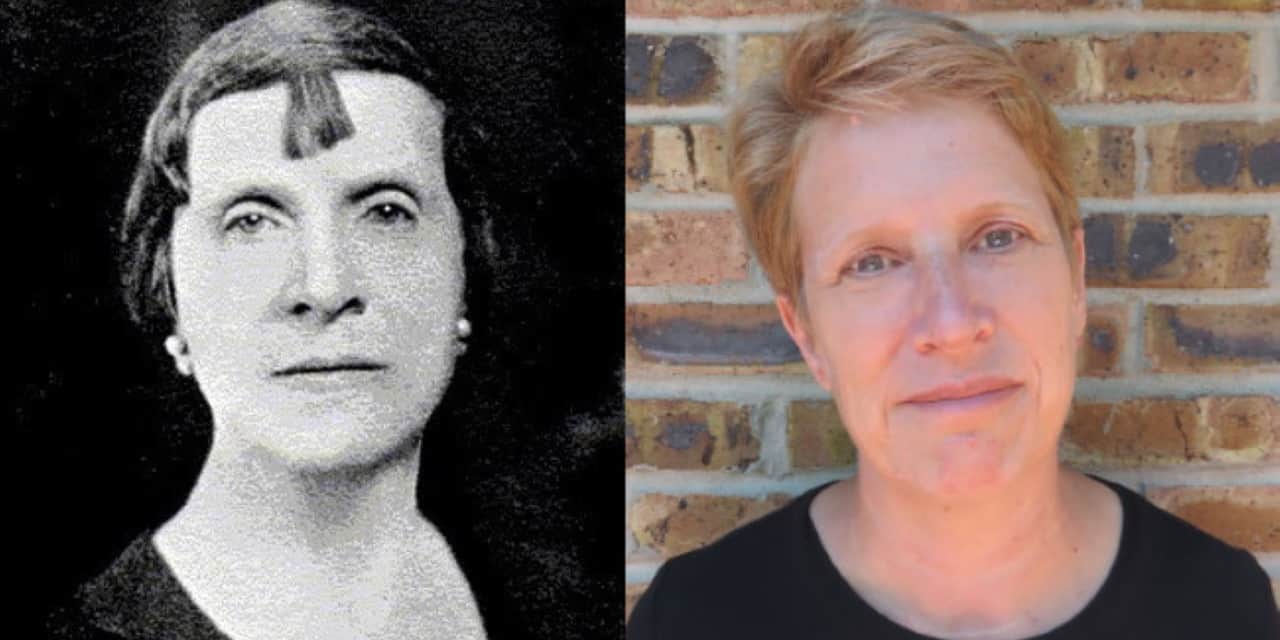
To celebrate International Women’s Day, we are sharing the seminar and panel discussion “Edith Rockefeller McCormick: Philanthropist, Intellectual, Analyst” in its entirety. The first hour is a presentation by Andrea Friederici Ross, author of Edith: The Rogue Rockefeller McCormick, followed by reflections by Kennon McKee, PhD, Jungian analyst and Victoria Drake, PhD, that opens up for general discussion.
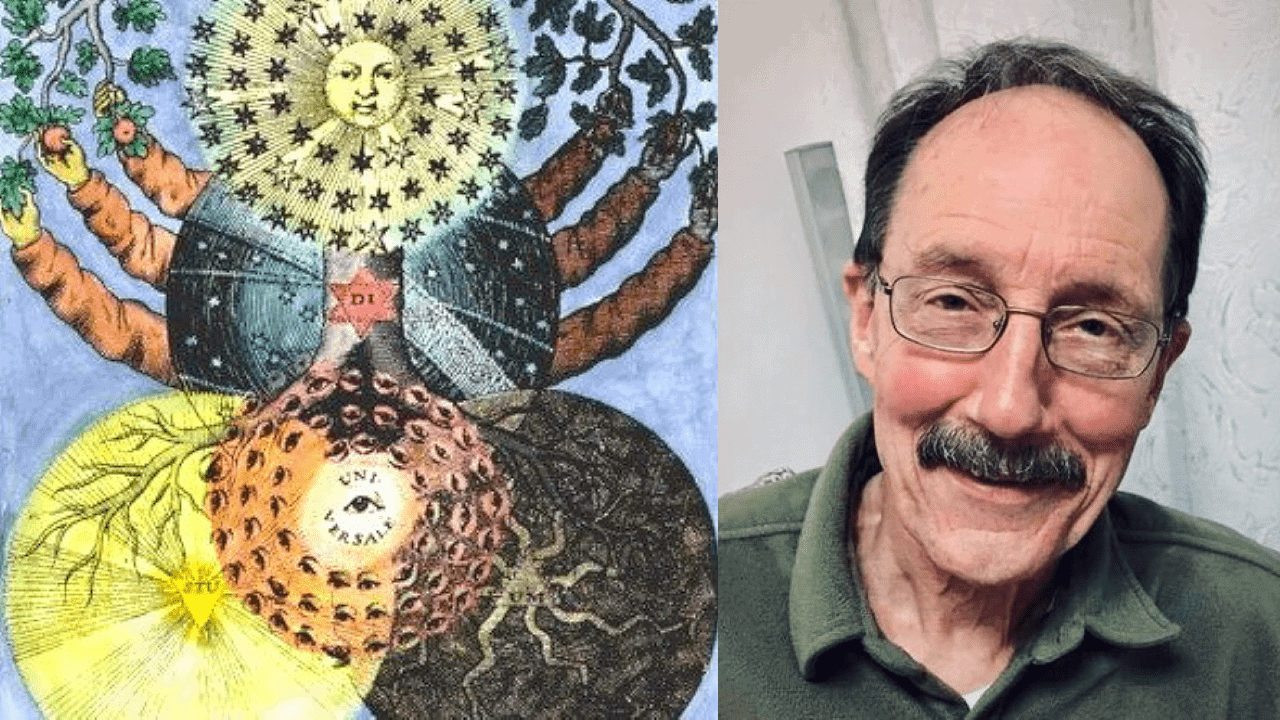
Dr. John Ryan Haule (1942, USA), is a Jungian Analyst, writer, & lecturer. He graduated from the C. G. Jung Institute Zurich in 1980 and is a NCPsyA, Certified Psychoanalyst as well as a Training Analyst at the C. G. Jung Institute-Boston. He works in his private practice in Massachusetts and is the author of books on Romantic Love, Therapy as Relationship, New Age Phenomena, and many articles on these topics, as well as shamanism, history of psychoanalysis, mysticism, and popular culture.
Stefano Carpani M.A., M.Phil. (1978) is an Italian psychoanalyst-in-training (diploma candidate) at the C.G. Jung Institute Zurich and a Ph.D. candidate at the Centre for Psychoanalytical Studies, University of Essex (UK). He works in private practice in Berlin (DE).
Many believe we are in the Anthropocene Era, an era marked by the planet-wide influence of our species. The field of ecopsychology emerged in the early 1990s as a belated response from the psychological community to address the cascading effects of human-created environmental damage. Jungian ecopsychology offers one of the best frameworks for analyzing our dysfunctional relationship with the environment—and with each other—through an archetypal analysis of the layers of the collective unconscious. Jung was deeply connected with his native Swiss soil that was reflected in the ecological aspects of his conceptual system and his interest in alchemy as his main symbol system. Ecology begins with our relationship with “the little people” in our dreams and dreams can be used to help us connect deeply to the land using Hillman’s concept of Aphrodite as the Soul of the World. In 1940 Jung foretold a paradigm shift that he labeled a “new age” and “Aquarian Age”. The new paradigm will be based on ecological concepts and reflected in the economic system being developed by the sustainable economists. We must think in these terms as a species if there is any hope of averting a planetary nightmare.
During our Holiday Giving Drive we are presenting a series of interviews called Jung in the World. In this episode, Patricia Martin interviews Roula-Maria Dib, creative writer and literary scholar, who views Carl Jung as a modernist and has written about the power of the modernist moment in history to give rise to the discipline of psychology. Her book, Jungian Metaphor in Modernist Literature, creates a new context for understanding Carl Jung’s work and his most important theories: the context of the collective in which he lived. In this discussion, they touch on:
Mark Saban joins us to talk about the complexity of C. G. Jung’s own personality, and how that has shaped the way Analysts are trained today. They discuss:
Our Blog shares essays, articles, video, audio, and other resources by members of the Chicago Society of Jungian Analysts and other groups that support the education and development of our community.
The views and opinions expressed in the podcasts and blog posts are those of the respected speakers or authors and do not necessarily represent the views of the C. G. Jung Institute of Chicago.