Murray Stein | On the Importance of Numinous Experience in the Alchemy of Individuation

In a letter to P.W. Martin (20 August 1945), the founder of the International Study Center of Applied Psychology in Oxted, England, C.G. Jung confirmed the centrality of numinous experience in his life and work: “It always seemed to me as if the real milestones were certain symbolic events characterized by a strong emotional tone. You are quite right, the main interest of my work is not concerned with the treatment of neuroses but rather with the approach to the numinous. But the fact is that the approach to the numinous is the real therapy and inasmuch as you attain to the numinous experiences you are released from the curse of pathology. Even the very disease takes on a numinous character” (Jung 1973, 1: 377). If one holds the classical Jungian view that the only genuine cure for neurosis is to grow out of it through pursuing individuation, then treatment based on this model would seem necessarily to include “the approach to the numinous,” as Jung states so firmly in this letter. The individuation process, as proposed by Jung and his followers, typically includes experiences of a numinous nature.

The question is: How are such momentous experiences related to and used within the context of analysis and the individuation journey, and how do they contribute to the overall process of individuation? On the answer to this complex question rests the difference between psychological individuation and the development of spirituality. While the psychological hero(ine) of the individuation journey is by no means identical to the spiritual hero(ine) of the journey to God (however this term may be defined), it is not always easy to tell where their paths diverge, precisely because Jung placed such central importance on numinous experience for individuation. And yet they do diverge, and decisively.

On Healing and Numinous Experience

We can begin by investigating how attaining to numinous experiences releases a person from the curse of pathology, as Jung claims in his letter to P.W. Martin. Generally speaking, an “approach to the numinous” is considered a religious undertaking, a pilgrimage. The “attainment to the numinous experiences” that Jung speaks of refers to religious experiences of a quasi-mystical nature. By itself, this attainment might well persuade a person that life is meaningful. Numinous experience creates a convincing link to the transcendent, and this may well lead to the feeling that character flaws like addictions or behavioral disorders are trivial by comparison with the grand visions imparted in the mystical state. The pathological symptom can be interpreted as an incitement to go on the spiritual quest, or even as a paradoxical doorway into transcendence, and this can donate meaning to the malady itself. Perhaps some degree of pathology is needed, in fact, in order for a person to feel strongly enough motivated to set out on a spiritual quest to begin with. In this case, attainment to numinous experiences would bring about a change in the feeling that pathology is a curse, even if it did not result in curing the pathology itself, although it might lead to this as well.

(more…)

Vladislav Šolc | “Dark Religion & Conspiracy Theories” in Jung Journal: Culture & Psyche

Chicago Society of Jungian Analysts member Vlado Solc has published a new article in Jung Journal: Culture & Psyche, Volume 13, 2019 – Issue 4. Subscribers can read the article now. To subscribe to Jung Journal: Culture & Psyche, visit Taylor & Francis Online.

You can also purchase his book, Dark Religion: Fundamentalism from The Perspective of Jungian Psychology from Amazon or directly from the publisher, Chiron Publications. We have two related lectures in our online store: Dark Religion: Fundamentalism from a Jungian Perspective and Depth-Psychological Roots of Conspiracy Theories.

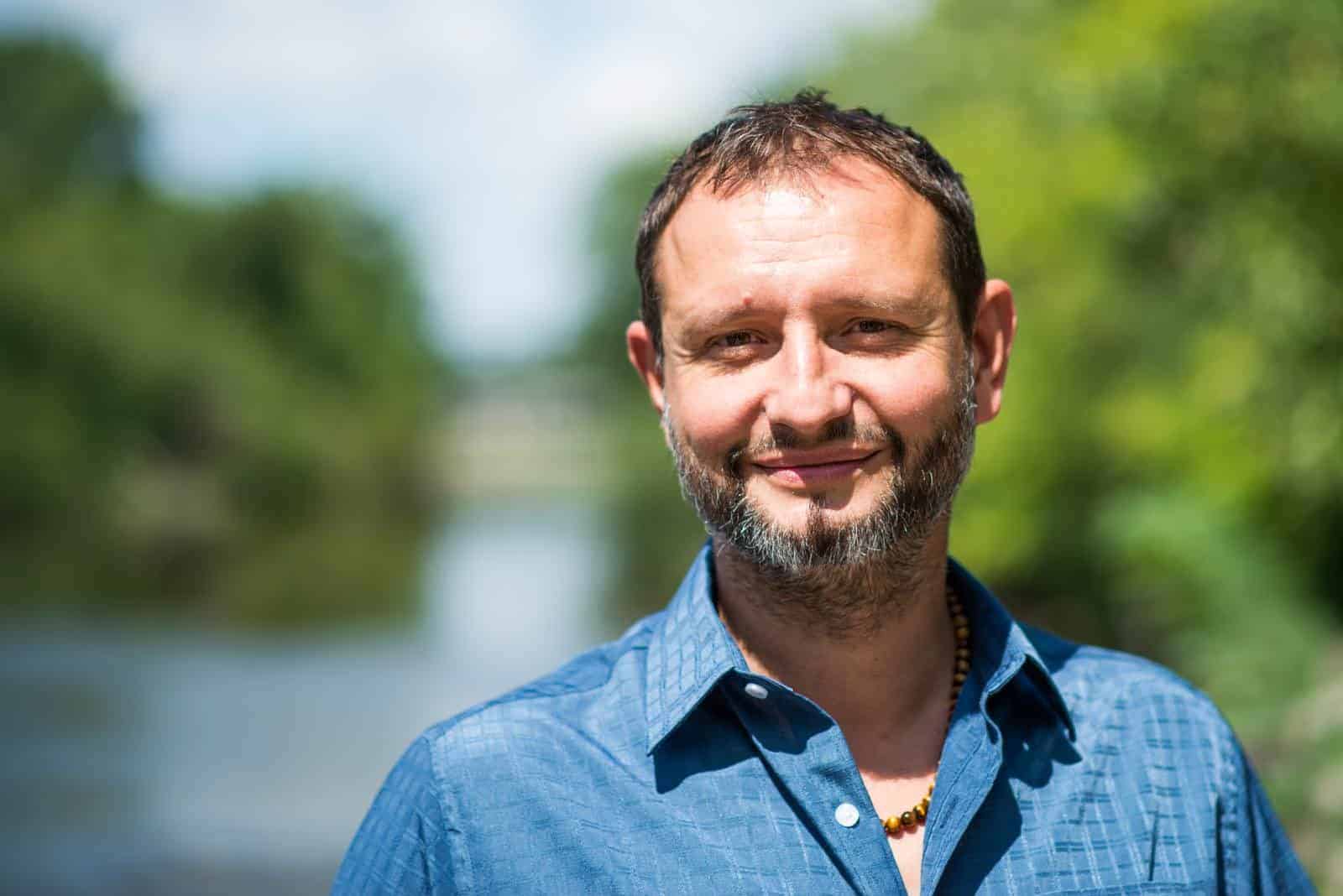
Vladislav (Vlado) Šolc (pronounced “Schultz”) is a professional psychotherapist and Jungian analyst practicing in Milwaukee, Wisconsin. Vlado received training from the C. G. Jung Institute of Chicago and Charles University in Prague. He is the author of five depth-psychology-oriented books: Psyche, Matrix, Reality; The Father Archetype; In the Name of God—Fanaticism from the Perspective of Depth Psychology; Dark Religion: Fundamentalism from the Perspective of Jungian Psychology and most recently Democracy and Individuation in the Times of Conspiracy Theories. 


Links: Vlado Solc’s Website | Vlado Solc’s Lectures Available on the C. G. Jung Institute of Chicago Website

Book Release | The Spiritual Paradox of Addiction: The Call for the Transcendent (Video)

Though we are somewhat past the publish date, we would like to share this video of Dr. Ashok Bedi, member of the Chicago Society of Jungian Analysts, speaking about his recent book, The Spiritual Paradox of Addiction: The Call for the Transcendent, written with co-author Joseph Pereira.

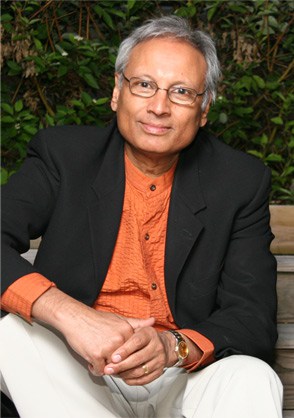
Ashok Bedi, M.D. is a Jungian psychoanalyst and a board-certified psychiatrist. He is a member of the Royal College of psychiatrists of Great Britain, a diplomat in Psychological Medicine at the Royal College of Physicians and Surgeons of England, a Distinguished Life Fellow of the American Psychiatric Association. He is a Clinical Professor in Psychiatry at the Medical College of Wisconsin in Milwaukee and a training analyst at the Carl G. Jung Institute of Chicago. His books include The Spiritual Paradox of Addiction, Crossing the Healing Zone , Awaken the Slumbering Goddess: The Latent Code of the Hindu Goddess Archetypes, Retire Your Family Karma: Decode Your Family Pattern and Find Your Soul Path and Path to the Soul. He is the liaison for the IAAP for developing Jungian training programs in India and travels annually to India to teach, train the consult with the Jungian Developing groups at several centers in India including Ahmedabad and Mumbai. He leads the annual “A Jungian Encounter with the Soul of India” study group to several centers in India under the auspices of the New York Jung Foundation. His publications and upcoming programs may be previewed at pathtotheosul.com


Links: Dr. Bedi’s Website | Dr. Bedi’s Analytical Practice Website | Dr. Bedi’s Recorded Lectures on the C. G. Jung Institute of Chicago Website | Dr. Bedi’s books on Amazon

Book Release | My Journey to Ironman: Endurance Sports as a Means of Individuation by Warren Sibilla, Jr

In his early forties, Warren Sibilla is a successful professional with a close and loving family life. After setting challenging professional goals for himself, things start to go awry. His hard work and sincere efforts are met with criticisms that leave him feeling misunderstood and that threaten his sense of belonging. His dreams suggest that he make the difficult decision to postpone a path to professional advancement and focus on his physical health. Warren takes us with him as he begins to exercise, then to train for marathons, eventually participating successfully in an Ironman event. We accompany him as he learns to trust his dream life and his instincts–and to learn from others who guide him. Warren Sibilla tells his story with simplicity and immediacy, not as a triumph only but as a deep and humbling experience. This book is different from other stories of courage and athletic accomplishment because he does not present himself as a hero but as a man without special talent in sports who grows into being himself through facing a daunting physical challenge. This book is deeply moving, as the reader can so easily identify with his situation and perhaps feel inspired to face exactly the challenges one never imagined possible.

Warren W. Sibilla Jr., Ph.D. is a Clinical Psychologist and Diplomate Jungian Psychoanalyst who practices in South Bend, Indiana, USA. In addition to his private practice, Dr. Sibilla has served in various leadership roles at the C. G. Jung Institute in Chicago, including serving as the Co-Director for the Jungian Psychotherapy Program for eight years and now as the Director-Elect of the Analyst Training Program. He is currently writing a book on the relationship between Zen Buddhism and Analytical Psychology using the Ox Herding Pictures from 10th century China. Finally, he is most proud to say that he is a foster parent for rescued dogs in the community.

(more…)

Anita Greene | Archetypal Affects: Shame & Contempt

Thank you to the Jung Association of Western Massachusetts and Marlow Shami for sharing this video of Anita Greene, PhD, discussing shame and contempt. From the video description:

Of all the archetypal affects in us, shame is the most toxic and the most human of all the emotions. Lewis Stewart, who reassessed Jung’s thoughts about affects, believes that contempt and shame are two sides of the same bipolar emotional dynamic whether one is on the giving or receiving end. Both are the response to alienation and rejection. Extreme contempt exudes a deprecating superiority. Extreme shame obliterates a sense of self-worth and authenticity. Clinical examples will illustrate how this bipolar dynamic operates in all of us.

Anita Greene, PhD, Jungian Analyst (IAAP) and Rubenfeld Synergist, is a graduate of the C.G. Jung Institute of New York and teaches at the C.G. Jung Institute of Boston. She has a private practice in Amherst.

The video was recorded by Marlow Shami.

Links: Jung Association of Western Mass Website | Marlow Shami’s YouTube Channel | Marlow Shami’s Website

Freddie Taborda | Psychological Wisdom of the “Lord’s Prayer” (English/Español)

I would like to take some time to write about the psychological wisdom of a prayer -“The Lord’s Prayer”- that has guided the lives of millions of Catholic people around the world. My objective is to offer (like Edward Edinger did; see his book, “Transformation of the God-Image”) a brief psychological distillation (intra-psychic perspective) of that prayer.

First, here is the prayer:

“Our Father who art in Heaven,
hallowed be thy name.
Thy kingdom come.
Thy will be done on earth, as it is in heaven.
Give us this day our daily bread
and forgive us our trespasses,
as we forgive those who trespass against us,
and lead us not into temptation,
but deliver us from evil.”

From a psychological point of view, the relationship between our ego and the unconscious is important for our psychological well-being, especially the relationship between our consciousness and the center of the unconscious, which Analytical Psychology (Jung) calls the Self or the God Image in us. According to Jung, God is in each of us and that He/She is the center of the unconscious, which contains not only all the undiscovered and unknown potentials, talents, and abilities in each human life but, also, the dark aspects of human nature.

“Our Father who are in Heaven”

Then, what does the first sentence – “Our Father who are in Heaven” – mean psychologically?

It may mean that, inside of each of us, there is a place (Heaven) where all the undiscovered and unknown potentials, skills, talents, abilities as well as the dark aspects are located, and that the Creator of Life -God (Father)- as well as the fundamental impulse to create is there, too.

“Hallowed be Thy name”

What does this sentence mean psychologically?

The Self -God in us- is sacred. The prayer is asking people to declare the Self sacred and to view the inner center of our lives -the Self- as holy and whole. Given that the Self or God in us is dynamic center from where all psychological life begins -wishes, desires, thoughts, unknown potentials, undiscovered talents, and untapped skills- the second sentence of prayer is asking us to view and hold our psychological lives as sacred and divine. In a world where, unfortunately, outer reality seems to be the most important aspect of a human life, redeeming the “inner life and its center” as sacred seeks to restore the great psychological value of inner life.

(more…)

Lionel Corbett | Psyche & the Sacred

Thank you to the Pacifica Graduate Institute for sharing this video. From the video description:

“You can’t define the sacred,” insists Pacifica professor and author, Dr. Lionel Corbett. “We can only talk about how we experience it. When C. G . Jung contemplated the sacred, he used the criteria of German theologian, Rudolf Otto, who described the experience of the sacred or the holy as “numinous”—that is, something that is mysterious, tremendous, or fascinating, having a powerful emotional quality beyond the ordinary or the everyday ego.” Pacifica alumna Bonnie Bright interviews Pacifica faculty member Dr. Lionel Corbett on Psyche and the Sacred. Dr. Corbett teaches in the Integrative Therapies and Healing Practices Specialization, the Jungian and Archetypal Studies Specialization and both doctoral programs in Clinical Psychology.

Lionel Corbett, MD is a professor of depth psychology at Pacifica Graduate Institute. His primary interests are: the religious function of the psyche, especially the way in which personal religious experience is relevant to individual psychology; the development of psychotherapy as a spiritual practice; and the interface of Jungian psychology and contemporary psychoanalytic thought. He is the author of numerous professional papers and four books: Psyche and the Sacred: Spirituality Beyond ReligionThe Religious Function of the PsycheThe Sacred Cauldron: Psychotherapy as a spiritual practice, and most recently The Soul in Anguish: Psychotherapeutic approaches to suffering.


Links: Lionel Corbett on the Jungianthology Podcast & Blog | Lionel Corbett’s lectures on the C. G. Jung Institite of Chicago Website | The Pacifica Graduate Institute YouTube Channel | The Pacifica Graduate Institute

In Memoriam: Tom Kapacinskas

SOUTH BEND, IN – Thomas John Kapacinskas was born on October 31, 1941. He died on Friday, August 14, 2020.

Tom was educated at St. Bede Academy in Peru, IL and the University of Notre Dame, BA ‘63, JD ‘68. Tom completed a post-doctoral diploma in Analytical Psychology (Jungian Psychoanalysis) in 1972 at the C.G. Jung Institut-Zuerich. He taught the great books seminar from an archetypal perspective and courses in Jung’s psychology of religion at the University of Notre Dame from 1972 to 1979. He maintained a private practice in Jungian Analysis in South Bend. In 1975, together with the late June Singer of Chicago, Tom was a founding member of the Inter Regional Society of Jungian Analysts and their Training Institute, and in 1980 of the Chicago Society of Jungian Analysts and the C.G. Jung Institute of Chicago. Tom lectured and presented seminars in the psychology of religion nationally and internationally, encouraging the development of the Lithuanian Jung Society in 1990. During his Notre Dame teaching years, Tom was chairperson of annual conferences in Jungian Psychology and its cross-disciplinary relevance.

(more…)

Mythology of the Great Self Within

with Robert Moore, PhD

Fall online programs are open for registration, including Dreaming in Times of Turmoil, Becoming Marcel Proust: Claiming Self in a Conflicted World, and a reading & consultation group for clinicians: Attachment, Affect Regulation and the Reflective Function in Analytical (Depth) Psychotherapy.

In light of the financial difficulties imposed by the pandemic, we are offering our online courses at 40% off our regular fee. You can support our efforts to make education accessible during this time by making a donation.

This episode is the first 90 minutes of the course Mythology of the Great Self Within. From the course description:

World mythological traditions present many images of a Great Self that dwells within each human individual. This course examines a number of these images from mythological and spiritual traditions and then turns to a discussion of the psychological basis for this phenomenon. Special attention is given to the implications for our experience of both pathological grandiosity and creative visioning.

It was recorded in 1993.

Robert Moore, PhD was Distinguished Service Professor of Psychology, Psychoanalysis and Spirituality in the Graduate Center of the Chicago Theological Seminary where he was the Founding Director of the new Institute for Advanced Studies in Spirituality and Wellness. An internationally recognized psychoanalyst and consultant in private practice in Chicago, he served as a Training Analyst at the C.G. Jung Institute of Chicago and was Director of Research for the Institute for Integrative Psychoanalysis and Psychotherapy and the Chicago Center for Integrative Psychotherapy. Author and editor of numerous books in psychology and spirituality, he lectured internationally on his formulation of a neo-Jungian  psychoanalysis and integrative psychotherapy.  His publications include THE ARCHETYPE OF INITIATION: Sacred Space, Ritual Process and Personal TransformationTHE MAGICIAN AND THE ANALYST: The Archetype of the Magus in Occult Spirituality and Jungian Psychology; and FACING THE DRAGON: Confronting Personal and Spiritual Grandiosity.

For the complete series, CLICK HERE.
For all of Dr. Moore’s lectures, CLICK HERE.

Support Us:   Shop on Amazon  Make a Donation


© 1993 Robert Moore. This podcast is licensed under a Creative Commons Attribution-NonCommercial-NoDerivatives 4.0 International License. You may share it, but please do not change it, sell it, or transcribe it.
Music by Michael Chapman
Edited and produced by Benjamin Law
Illustration: Wood carving from Amazon Indian Peoples


Thank you to our 2019 Supporter level donors: Bill Alexy, Usha and Ashok Bedi, Circle Center Yoga, Arlo and Rena Compaan, Eric Cooper and Judith Cooper, Lorna Crowl, D. Scott Dayton, George J. Didier, Ramaa Krishnan/Full Bloomed Lotus, Suzanne G. Rosenthal, Deborah Stutsman, Debra Tobin, Alexander Wayne and Lynne Copp, Gerald Weiner. If you would like to support this podcast, click here to donate.

Donald Kalsched | Glimpses Through the Veil: Encounters with the Numen of Clinical Work

Thank you to the Pacifica Graduate Institute for sharing this video. From the video description:

In depth psychology, we tend to privilege two avenues or pathways that provide access to the mysteries of the unconscious and its potentially healing energies: transference and dreams. In this presentation, Dr. Kalsched describes specific “moments” where work in the transference opened important dreams that in turn led to a deep sense of shared meaning.

Donald Kalsched, PhD is a Clinical Psychologist and Jungian Psychoanalyst in private practice in Albuquerque, New Mexico. He is a senior training analyst with the Inter-Regional Society of Jungian Analysts where he teaches and supervises. His 1996 book The Inner World of Trauma: Archetypal Defences of the Personal Spirit has found a wide readership in both psychoanalytic and Jungian circles and has been translated into many languages. Dr. Kalsched teaches and lectures nationally and internationally, pursuing his inter-disciplinary interest in early trauma and dissociation theory and its mytho-poetic manifestations in the mythic and religious iconography of many cultures.


Links: Donald Kalsched on Jungianthology | Donald Kalsched’s Lectures in the C. G. Jung Institute of Chicago Store | The Pacifica Graduate Institute YouTube Channel | The Pacifica Graduate Institute

Lionel Corbett | Psychotherapy Based on Depth Psychology is a Superior Approach

Thank you to the Pacifica Graduate Institute for sharing this video in full. From the video description:

Psychotherapists who are interested in Depth Psychology are living in a professional world that is dominated by cognitive behavioral approaches—Lionel Corbett, M.D., explains why psychotherapy based on Depth Psychology is often the superior approach.

Lionel Corbett, MD is a professor of depth psychology at Pacifica Graduate Institute. His primary interests are: the religious function of the psyche, especially the way in which personal religious experience is relevant to individual psychology; the development of psychotherapy as a spiritual practice; and the interface of Jungian psychology and contemporary psychoanalytic thought. He is the author of numerous professional papers and four books: Psyche and the Sacred: Spirituality Beyond ReligionThe Religious Function of the PsycheThe Sacred Cauldron: Psychotherapy as a spiritual practice, and most recently The Soul in Anguish: Psychotherapeutic approaches to suffering.


Links: Lionel Corbett on the Jungianthology Podcast & Blog | Lionel Corbett’s lectures on the C. G. Jung Institite of Chicago Website | The Pacifica Graduate Institute YouTube Channel | The Pacifica Graduate Institute

Freddie Taborda | The Hermit is Knocking at the Door (English/Español)

During this pandemia, the archetype of the hermit is knocking at the door worldwide. Then, quietly, he looks at us in the privacy of our homes, with ancient eyes, offering the gift of contemplation with which we awake to what is around us. We sense ourselves more. Also, the hermit’s abode is silence, which welcomes and embraces the fullness of life within; yet, at our homes, his visit may make us tremble with terror when facing such emptiness of sound and the magnitude of the space within. He carries a lamp to guide the inner traveler to the realm of solitude. Yes! During this pandemia, the hermit has brought, worldwide, the gifts of solitude, silence, and contemplation, which, for some people, may be unbearable to withstand, forcing them to run away from themselves. Thomas Merton wrote: “Not all men are called to be hermits, but all men need enough silence and solitude in their lives to enable the deep inner voice of their own true self to be heard at least occasionally.”

(Español)

Durante esta pandemia, el arquetipo del ermitaño está tocando la puerta en todo el mundo. En silencio, el nos mira en la privacidad de nuestros hogares, con ojos sabios, ofreciendo el regalo de la contemplación con el que nos despertamos a lo que nos rodea. Nos sentimos más nosotros mismos. Además, la morada del ermitaño es el silencio, que acoge y abraza la plenitud de la vida interior; sin embargo, en nuestros hogares, su visita puede hacernos temblar de terror al enfrentar el vacío del sonido y la magnitud del espacio interior. El lleva una lámpara para guiar al viajero interior al reino de la soledad. ¡Si! Durante esta pandemia, el ermitaño ha traído, por todo el mundo, los dones de la soledad, el silencio y la contemplación, que, para algunas personas, esto puede ser insoportable, obligándolos a huir de sí mismos. Thomas Merton escribió: “No todos los hombres están llamados a ser ermitaños, pero todos los hombres necesitan suficiente silencio y soledad en sus vidas para permitir que la profunda voz interna de su verdadero esencia se escuche al menos ocasionalmente”.

This post originally appeared on thehealingpsyche.org.

Freddie Taborda, LCPC, PsyD is a Jungian Analyst with over 30 years of clinical experience. He maintains a private practice in Chicago, Illinois.


Links: Dr. Taborda’s Website | About Dr. Taborda | Dr. Taborda’s Page on the C. G. Jung Institute of Chicago’s Website

Filter Posts

  • About Jung Chicago Radio & Blog

    Jung Chicago Radio is home to a variety of podcasts that range from archival seminar recordings (Institute Archives), to interviews (Jung in the World) to discussion on film (Healing Cinema), fairy tales (Jungian Ever After), and our programs.

    Our Blog shares essays, articles, video, audio, and other resources by members of the Chicago Society of Jungian Analysts and other groups that support the education and development of our community.

    The views and opinions expressed in the podcasts and blog posts are those of the respected speakers or authors and do not necessarily represent the views of the C. G. Jung Institute of Chicago.

    Login

    This search engine will search our public programs, the Jung Chicago Radio and Blog, and our store.

    To search only the store, visit our Store page.

    If you’re looking for a Jungian Analyst, use our Find an Analyst search engine or browse the Chicago Society of Jungian Analysts page.