The Chicago School of Professional Psychology | Free Home-Study CE Webinars: Telehealth 101 and Online Pedagogy

UPDATE: As of 10/14/2020, these courses have been removed and do not appear in Google search results.


In response to the COVID-19 pandemic, The Institute of Professional and Continuing Studies at the Chicago School of Professional Psychology is sharing two free online self-paced home-study courses: Telehealth 101 and Best Practices in Online Pedagogy.

TCSPP is an approved provider of APA CEs and BBS California CEU’s for this training and format. In order to receive credit for these courses, participants must complete the entire training and complete a course evaluation and comprehension quiz. Participants must earn a passing score of 75% or higher on the quiz to receive an APA CE Certificate.


Telehealth 101
Presented by LoriAnn Stretch, PhD, Susan Foster, PhD, Rodney Harris, PhD, Tiffany C. Rush-Wilson, PhD
6.0 APA CEs for Psychologists or 6.0 BBS California CEUs for Social Workers, Marriage and Family Therapists, and Counselors


Best Practices in Online Pedagogy
Presented By LoriAnn Stretch, PhD, and Susan Foster, PhD
2.0 APA CEs for Psychologists or 2.0 BBS California CEUs for Social Workers, Marriage and Family Therapists, and Counselors


Courses are hosted by GoToStage, a free source of over 100,000 professional webinars in a variety of subjects. LEARN MORE

Sean Fitzpatrick | How We Meet a Pandemic (Lecture 2)

The second lecture in the series by Sean Fitzpatrick, PhD, LPC, executive director of the Jung Center, Houston, discussing COVID-19 and Albert Camus’s The Plague. It is separated into five parts/videos. To register for the rest of the series, CLICK HERE.

View all parts of Lecture 2 on YouTube: Part 1 | Part 2 | Part 3 | Part 4 | Part 5

The Jung Center, Houston Links: Website | Online Learning Page | YouTube Channel

Death Panels: Our Cultural Complex Around Death

with Dan Ross, RN, PMHNP

In recognition of the current COVID-19 pandemic and the crisis affecting our healthcare system, we are sharing a recent seminar by Dan Ross, “Death Panels: Our Cultural Complex around Death”, in its entirety. This seminar was part of our public program series this year, and was recorded on February 28th, 2020.

The Spirit of the Times shapes our heroic attitude toward disease and death. Instead of the initiatory experience that fear of death can provide, we are paralyzed in our fear and cling to images of immortality found in modern medical institutions. The Affordable Care Act’s provision of reimbursing medical practitioners for having end-of-life discussions with patients with life-limiting illnesses constellated a collective panic. The cultural complex distorted these simple end-of-life discussions (brilliantly discussed in the best-selling book by Atul Gawande, Being Mortal) into what were called “Death Panels.” The fear was that a group of professionals would sit around and decide whether we should live or die. What was behind this cultural complex?

When we are forced to engage with the healthcare industry through illness, we are carried along a hero’s journey to treat death as the ultimate evil, and, in the process, we miss the transformative opportunities an encounter with death can provide. How did modern medicine come to carry for us the image of immortality? In this program, we will use myth, literature, and film to explore the Spirit of the Depths to better understand the archetypal underpinnings of modern medicine’s relationship to death and immortality.

PowerPoint slides used in the talk are available HERE

Dan Ross, RN, PMHNP, MSN, MBA has been a nurse for 40 years. He has worked extensively as Director of Clinical Services in the field of home health care and hospice. As a Psychiatric Mental Health Nurse Practitioner, he brings both a medical and psychiatric experience to his work. He currently works part time in the field of Palliative Care and Hospice as a Nurse Practitioner, visiting patients in their home or nursing facility helping them in their transition to hospice. He is also a Jungian Analyst in private practice in downtown Chicago.

Support Us: Visit Our StoreMake a Donation

Thank you to our 2019 Supporter level donors: Bill Alexy, Usha and Ashok Bedi, Circle Center Yoga, Arlo and Rena Compaan, Eric Cooper and Judith Cooper, Lorna Crowl, D. Scott Dayton, George J. Didier, the Kuhl Family Foundation, Ramaa Krishnan & Full Bloomed Lotus, Suzanne G. Rosenthal, Deborah Stutsman, Debra Tobin, Alexander Wayne and Lynne Copp, Gerald Weiner.


© 2020 Dan Ross. This podcast is licensed under a Creative Commons Attribution-NonCommercial-NoDerivatives 4.0 International License. You may share it, but please do not change it, sell it, or transcribe it.
Music by Michael Chapman
Edited and produced by Benjamin Law

Stefano Carpani | C.G. Jung, Covid-19 & Illness as Metaphor: Conversation with Paul Attinello

Paul Attinello, PhD, is a senior lecturer in music at Newcastle University. He has published in the Journal of Musicological Research, Musik-Konzepte, Musica/Realtá, the revised New Grove and a number of essay collections. Current projects include a book on music about AIDS, a book on Meredith Monk and performance art, and an edited volumes on contemporary composer Gerhard Stäbler. An edited volume on music in Buffy the Vampire Slayer has been published by Ashgate, and has received critical awards.

Links: Stefano’s YouTube Channel | Stefano’s Website | Paul’s profile at Newcastle University | All COVID-19 related posts

Stefano Carpani | C.G. Jung, Covid-19, Nature and Death: Conversation with Murray Stein

Stefano Carpani, Jungian Psychoanalyst CGJI-Z, interviews Murray Stein, PhD, about how the COVID-19 pandemic is influencing our personal, professional, and political lives. Stein is a training analyst at the International School for Analytical Psychology in Zurich, Switzerland. His most recent publications include The Principle of Individuation, Jung’s Map of the Soul and Jungian Psychoanalysis (editor).

Links: Stefano’s YouTube Channel | Stefano’s Website | Murray’s Website | Murray’s recorded lectures at the C. G. Jung Institute of Chicago | All COVID-19 related posts

Sean Fitzpatrick | How We Meet a Pandemic (Lecture 1)

The Jung Center, Houston, is running a series of free online programs to help us process and meet this pandemic. We’re grateful that they are doing this when it is so needed. Sean Fitzpatrick, PhD, LPC, executive director of the Jung Center, Houston, discusses COVID-19 and Albert Camus’s The Plague. This video is the first lecture in the series, which began on March 23. To register for the others in the series, CLICK HERE.

The Jung Center, Houston Links: Website | Online Learning Page | How We Meet a Pandemic Page | YouTube Channel

Stefano Carpani | C.G. Jung, Covid-19, Spring and Imagination: Conversation with Prof. Verena Kast

A wonderful and interesting conversation about the emotions emerging from the current COVID-19 pandemic. Stefano Carpani, Jungian Psychoanalyst CGJI-Z, interviews Verena Kast, professor of psychology at the University of Zurich in Switzerland. She has written many books, including The Nature of Loving, A Time to Mourn, and The Creative Leap.

Links: Stefano’s YouTube Channel | Stafano’s Website | All COVID-19 related posts

Interview with Fanny Brewster

Fanny Brewster, PhD, MFA, LP , was scheduled to be the keynote speaker at this year’s Founders’ Day Symposium on March 21st. The event has since been cancelled due to the COVID-19 pandemic.

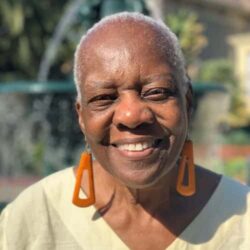
Dr. Fanny Brewster is a Jungian analyst, and a professor at Pacifica Graduate Institute. She is a writer of nonfiction including African Americans and Jungian Psychology: Leaving the Shadows (Routledge, 2017), Archetypal Grief: Slavery’s Legacy of Intergenerational Child Loss (Routledge, 2018) and The Racial Complex: A Jungian Perspective on Culture and Race (Routledge, 2019). Her poems have been published in Psychological Perspectives Journal where she was the Featured Poet. Dr. Brewster is an international lecturer and workshop presenter on Jungian related topics that address Culture, Diversity, and Creativity. She is a faculty member at the New York C. G. Jung Foundation and the Philadelphia Association of Jungian Analysts.  

She is interviewed by Adina Davidson, PhD. Dr. Davidson is a Jungian Analyst in Cleveland, Ohio, member of the Chicago Society of Jungian Analysts, and recent graduate of our Analyst Training Program.


For more information about our Founders’ Day Symposium, click here.


This podcast is licensed under a Creative Commons Attribution-NonCommercial-NoDerivatives 4.0 International License. You may share it, but please do not change it, sell it, or transcribe it.
Music by Michael Chapman
Edited by Ben Law


Thank you to our 2019 Supporter level donors: Bill Alexy, Usha and Ashok Bedi, Circle Center Yoga, Arlo and Rena Compaan, Eric Cooper and Judith Cooper, Lorna Crowl, D. Scott Dayton, George J. Didier, The Kuhl Family Foundation, Ramaa Krishnan & Full Bloomed Lotus, Suzanne G. Rosenthal, Deborah Stutsman, Debra Tobin, Alexander Wayne and Lynne Copp, Gerald Weiner. If you would like to support this podcast, click here to donate.

Rebroadcast: The Fate of Depth Psychology in the New Millenium

with June Singer and other Analysts

The introduction to this episode is an interview with George Hogenson regarding our upcoming event Opera with an Analyst: Wagner’s Götterdämmerung. This day-long event, at the Lyric Opera of Chicago on April 11th, includes Dr. Hogenson’s presentation on the archetypal dimensions of Wagner’s Götterdämmerung , Colin Ure’s presentation on its musical dynamics, followed by the opera itself. A limited number of tickets are available on our website. If you already have a ticket to the opera, you can also register for the talk only.

As we enter a new decade, I want to again share the recording of the program “The Fate of Depth Psychology in the New Millenium”, held in 1998. It includes introductory remarks by June Singer and a lengthy discussion with panel and audience members. From the original CD jacket:

“As we approach the year 2000, humanity finds itself, as it always will, wrestling with the eternal questions of the meaning of existence and their relationship to spirit and matter. Given the direction of contemporary brain research and science, the growing psychopharmacological approach to mental and emotional disorders, the emergence of managed care, and the economics of psychotherapy and psychoanalysis, we have to wonder what challenges depth psychology will face in the years ahead.

This program takes up this critical question as seven Jungian analysts share their individual visions of the fate that awaits depth psychology in the new millennium. The panel members each present a brief synopsis of his/her vision and then engage with the audience in a lively discussion of their ideas, reactions, and intuitions.”

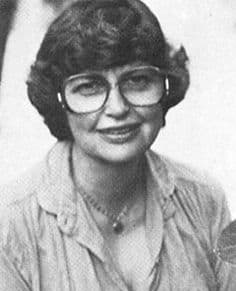
Singer-June1June Singer, PhD was a practicing psychoanalyst in the Chicago area and Tennessee for almost 50 years. She also taught at the University of Chicago, in addition to lecturing as a psychologist throughout the world. She is the author of many books, including Modern Woman in Search of Soul: A Jungian Guide to the Visible and Invisible Worlds, Androgyny: The Opposites Within, The Unholy Bible: Blake, Jung, and the Collective Unconscious, and Boundaries of the Soul: The Practice of Jung’s Psychology.


For more seminars by June Singer, click here
For books by June Singer, click here


© 1998. This podcast is licensed under a Creative Commons Attribution-NonCommercial-NoDerivatives 4.0 International License. You may share it, but please do not change it, sell it, or transcribe it.
Music by Michael Chapman
Edited by Ben Law

Gather Up Your Brokenness: Love, Imperfection, & Human Ideals (Part 2)

In celebration of our Holiday Giving Drive, we are unlocking a full seminar by Polly Young-Eisendrath, “Gather Up Your Brokenness: Love, Imperfection, & Human Ideals”. You can be a part of this campaign by visiting our website and making a donation. Donors at the Supporter level and above will be acknowledged in the credits of this podcast. There are other benefits to donating so please consider visiting our website and making a contribution.

This episode is the second half of “Gather Up Your Brokenness: Love, Imperfection, & Human Ideals”. The first half was published on November 22nd.

In the poetic tradition of Zen monk and bard, Leonard Cohen, this presentation celebrates our brokenness. Often, we hear about grieving our mistakes, failures, losses and imperfections, but rarely do we learn how to mine them for their richness. Because human beings are naturally broken – with personalities that are largely unconscious, reactive and hard to manage – we have countless opportunities in our relationships and work to see our selves in the cracks of the mirror. This presentation will draw on Carl Jung’s psychology of individuation and on the Buddha’s teachings on awakening to offer a new vision of imperfection with its inherent openings to compassion and love. 

PowerPoint slides used in the talk are available HERE

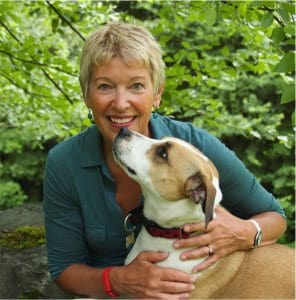
Polly Young-Eisendrath, PhD is Clinical Associate Professor of psychiatry at the University of Vermont Medical College. She is a psychologist and Jungian analyst practicing in the mountains of central Vermont, where she lives and writes. She has published thirteen books, many chapters and articles that have been translated into fourteen languages. Her books include The Self-Esteem Trap: Raising Confident and Compassionate Kids in an Age of Self-ImportanceThe Resilient Spirit: Transforming Suffering Into Insight And RenewalThe Gifts Of Suffering: A Guide To Resilience And RenewalWomen and Desire: Beyond Wanting to Be Wantedand You’re Not What I Expected: Learning to Love the Opposite Sex.

More Seminars by Polly Young-Eisendrath

Support Us: Visit Our StoreMake a Donation


© 2016 Polly Young-Eisendrath. This podcast is licensed under a Creative Commons Attribution-NonCommercial-NoDerivatives 4.0 International License. You may share it, but please do not change it, sell it, or transcribe it.
Music by Michael Chapman
Edited and produced by Benjamin Law

Gather Up Your Brokenness: Love, Imperfection, & Human Ideals (Part 1)

In celebration of our Holiday Giving Drive, we are unlocking a full seminar by Polly Young-Eisendrath, “Gather Up Your Brokenness: Love, Imperfection, & Human Ideals”. You can be a part of this campaign by visiting our website and making a donation. Donors at the Supporter level and above will be acknowledged in the credits of this podcast. There are other benefits to donating so please consider visiting our website and making a contribution.

This episode is the first half of “Gather Up Your Brokenness: Love, Imperfection, & Human Ideals”. The second half will be published later this month. NOW LIVE HERE

In the poetic tradition of Zen monk and bard, Leonard Cohen, this presentation celebrates our brokenness. Often, we hear about grieving our mistakes, failures, losses and imperfections, but rarely do we learn how to mine them for their richness. Because human beings are naturally broken – with personalities that are largely unconscious, reactive and hard to manage – we have countless opportunities in our relationships and work to see our selves in the cracks of the mirror. This presentation will draw on Carl Jung’s psychology of individuation and on the Buddha’s teachings on awakening to offer a new vision of imperfection with its inherent openings to compassion and love. 

PowerPoint slides used in the talk are available HERE

A note about sound: There were microphone issues that were resolved after a few minutes.

Polly Young-Eisendrath, PhD is Clinical Associate Professor of psychiatry at the University of Vermont Medical College. She is a psychologist and Jungian analyst practicing in the mountains of central Vermont, where she lives and writes. She has published thirteen books, many chapters and articles that have been translated into fourteen languages. Her books include The Self-Esteem Trap: Raising Confident and Compassionate Kids in an Age of Self-ImportanceThe Resilient Spirit: Transforming Suffering Into Insight And RenewalThe Gifts Of Suffering: A Guide To Resilience And RenewalWomen and Desire: Beyond Wanting to Be Wantedand You’re Not What I Expected: Learning to Love the Opposite Sex.

More Seminars by Polly Young-Eisendrath

Support Us: Visit Our StoreMake a Donation


© 2016 Polly Young-Eisendrath. This podcast is licensed under a Creative Commons Attribution-NonCommercial-NoDerivatives 4.0 International License. You may share it, but please do not change it, sell it, or transcribe it.
Music by Michael Chapman
Edited and produced by Benjamin Law

Why Become a Jungian Psychoanalyst: An Interview with Adina Davidson & Dan Ross

Boris Matthews, PhD, LCSW, NCPsyA, the Director of Training at the C.G. Jung Institute of Chicago, interviews two Jungian Psychoanalysts and recent graduates of our Analyst Training Program (ATP), Adina Davidson, PhD, and Dan Ross, RN, PMHNP, MSN, MBA, about why they chose to commit to Jungian work and how it has change their practices.

The Analyst Training Program prepares experienced, licensed clinicians to become certified as Jungian psychoanalysts through an in-depth understanding of the theory and practice of analytical psychology grounded in personal analysis and clinical consultation.

The Process of Analytic Training is both educational and transformational, and frequently leads to significant personal development and psychological deepening. The program fosters mutual development and psychological awareness within an intimate learning community of candidates and analysts. Upon graduation, candidates have an appreciation of the symbolic attitude within the interactive field of analysis and a working understanding of transference dynamics within the analytic relationship.

The Curriculum is organized thematically around the reading of Jung’s seminal writings as well as subsequent developments in analytical psychology and psychoanalysis. Courses in theory and practice are likewise organized around major themes that include the structure and complexity of the psyche, the mythic patterns of archetypal potentials and dynamics, the capacity to work with the symbolic meaning of dreams, and a practical grasp of the mutual transformation of analyst and client within the interactive transferential field of analysis.  Case seminars, case colloquia, dream practica, and group process ground the thematic and course materials in personal and clinical experience. The curriculum extends over a four-year course of study taught on nine three-day weekends each year.

The Program is designed to make analytic training available to all qualified applicants. The one-weekend-a-month structure allows training to fit into one’s professional life, whether or not you live in the Chicago area. Our location in “the loop” has convenient access to public transportation, both O’Hare and Midway airports, and Union Metra/Amtrak train station. We have discount rates at Club Quarters Hotel and tuition assistance is available to those in financial need. All classes and events are accessible.

Certification of the C.G. Jung Institute to train analysts is granted by The International Association of Analytical Psychology. The Institute is accredited as a psychoanalytic training institute by the The American Board for Accreditation in Psychoanalysis, Inc.

Applications to the Analyst Training Program are currently being accepted for the 2020-2021 training year. The deadline to apply is January 15th, 2020. To learn more about the program, the institute, and to download an application, visit our website.

Links
Analyst Training Program
Our Training Programs
Virtual Tour of the Institute

Support Us: Visit Our StoreMake a Donation


This podcast is licensed under a Creative Commons Attribution-NonCommercial-NoDerivatives 4.0 International License. You may share it, but please do not change it, sell it, or transcribe it.
Music by Michael Chapman
Edited and produced by Benjamin Law

Filter Posts

  • About Jung Chicago Radio & Blog

    Jung Chicago Radio is home to a variety of podcasts that range from archival seminar recordings (Institute Archives), to interviews (Jung in the World) to discussion on film (Healing Cinema), fairy tales (Jungian Ever After), and our programs.

    Our Blog shares essays, articles, video, audio, and other resources by members of the Chicago Society of Jungian Analysts and other groups that support the education and development of our community.

    The views and opinions expressed in the podcasts and blog posts are those of the respected speakers or authors and do not necessarily represent the views of the C. G. Jung Institute of Chicago.

    Login

    This search engine will search our public programs, the Jung Chicago Radio and Blog, and our store.

    To search only the store, visit our Store page.

    If you’re looking for a Jungian Analyst, use our Find an Analyst search engine or browse the Chicago Society of Jungian Analysts page.