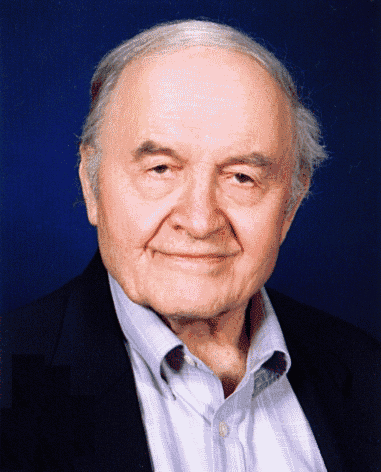
In Memoriam: Louise Carus Mahdi

Mary Louise Carus Mahdi (July 28, 1922-November 3, 2019) was truly a child of Hermes–god of exchanges, liminal spaces, communications, transitional activities, and travel. She was born into a family in Peru-LaSalle, Illinois, made wealthy from producing chemicals like potassium permanganate, widely used in water treatment and for medicinal purposes. Her grandfather, Paul Carus, was instrumental in introducing Buddhism into America in the late 1800’s.

She married Muhsin Madhi, a famous Islamic scholar.

(more…)

Thomas Moore on Aging and the Soul

Thomas Moore will be visiting us in October to lead a two-day seminar (registration is open now). As an introduction to Moore’s perspective and voice, we are sharing the first hour of his previous workshop with us, Cultivating Soul, which included two parts:

Part 1: Ageless Soul
Thomas Moore will speak about the themes of his book, Ageless Soul, and engage in conversation with attendees and analysts. Ageless soul offers positive and inspiring guidance for becoming a full person as time goes by. Since we are all aging, it is for anyone who has ever thought about getting older. It’s especially valuable for people 50 and over. It seems more difficult than ever these days to deal creatively with aging. This book provides a deep and comprehensive plan that sees aging not as losing capacity but as becoming who you are destined to be, a real human being. It covers key matters, such as:

 – the shock of discovering that you’re getting older
  – how to keep your youth in a deep way
  – how to manage your sexuality as you age
  – how spirituality can mature and become more important over time
  – how to value your life by leaving a conscious legacy for your family and your society
  – responding well to loneliness and depression
  – nurturing friendships and community as you get older

Part 2: Care of the Soul in Troubled Times
For all of our problems, our times are in many ways better than the past. Throughout history, much has been achieved creatively in very troubled times. This is a time to resist the culture (contemptus mundi) and live your own life of excellence and beauty. It’s a time to assume leadership for change and returning to eternal values. Study the best of lives in our past and be inspired toward creativity and excellence (aréte).

This seminar was recorded on October 28, 2017.

Thomas Moore, PhD is the author of nearly two dozen books on deepening spirituality and cultivating soul in every aspect of life. His book, Care of the Soul, was a #1 New York Times bestseller. Well-known within the Jungian community, he has been a monk, a musician, a university professor, and a psychotherapist. He lectures frequently in Ireland and has a special love of Irish culture. He has a PhD in religion from Syracuse University and has won several awards for his work, including an honorary doctorate from Lesley University and the Humanitarian Award from Einstein Medical School of Yeshiva University. Three of his books have won the prestigious Books for a Better Life awards. He writes fiction and music and often works with his wife, artist and yoga instructor, Hari Kirin. Much of his recent work has focused on the world of medicine, speaking to nurses and doctors about the soul and spirit of medical practice. thomasmooresoul.com

For the full seminar, CLICK HERE.
To register for Moore’s upcoming workshop, CLICK HERE.

Support Us: Visit Our StoreShop on AmazonMake a Donation


© 2017 Thomas Moore. This podcast is licensed under a Creative Commons Attribution-NonCommercial-NoDerivatives 4.0 International License. You may share it, but please do not change it, sell it, or transcribe it.
Music by Michael Chapman
Edited and produced by Benjamin Law

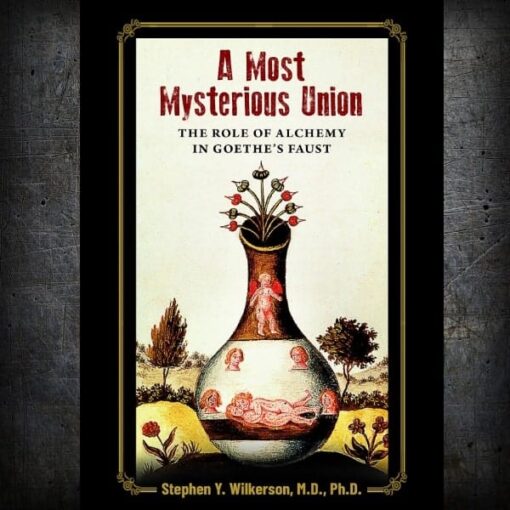
Book Release | A Most Mysterious Union: The Role of Alchemy in Goethe’s Faust

By Stephen Y. Wilkerson, MD, PhD

Readers today are especially thrilled by the prospect of good news. Drought and global warming, civil war and famine, poverty and economic inequity—yes, bad news abounds. This book by Dr. Stephen Wilkerson, on the other hand, is about hope and optimism for the future. The recorded history of our world is largely one of a sometimes worthy patriarchal striving. It has, however, all too often been tarnished, marred, and horribly disfigured by the hatreds, intolerance, and destruction that have accompanied it. And the good news? There is another way, poignantly and persuasively outlined nearly two hundred years ago by Johann Wolfgang von Goethe, involving the Divine Feminine.

Facing the Gods: Archetypal Patterns of Existence

Preparing to Meet the Gods: The Soul Turned Inward with John Van Eenwyk, PhD

Experiencing the archetypes as personified gods and goddesses active in our lives reveals the great powers shaping our moods, choices, and actions. Facing the Gods: Archetypal Patterns of Existence illuminates the Olympian stories that serve as reflecting pools where we, as psychic heirs of Greece, discover ourselves. By recognizing the gods and goddesses at work we can gain release from archetypally determined patterns. It was recorded in 1991. This episode is part one of the series, which includes the following individual lectures:

  1. Preparing to Meet the Gods: The Soul Turned Inward – John Van Eenwyk
  2. Hera – Lois Khan
  3. Hermes – Murray Stein
  4. Demeter and Kore – Lucille Klein
  5. Athena – Anne Avery
  6. Zeus – Lee Roloff
  7. Aphrodite and Eros – James Wyly
  8. Dionysus – Caroline Stevens

Dr. John R. Van Eenwyk received his PhD in religion and psychological studies from the University of Chicago.  A clinical psychologist and Training Analyst with the Pacific Northwest Society of Jungian Analysts, he maintains a private practice in Jungian Analysis in Olympia, Washington.  He is also an ordained priest in the Episcopal Church and a Clinical Instructor at the University of Washington School of Medicine. The author of Archetypes and Strange Attractors: The Chaotic World of Symbols, he publishes widely and lectures internationally on both Jungian psychology and the treatment of torture survivors.

For the full series, CLICK HERE
For more by Dr. Van Eenwyk, CLICK HERE

Support Us:     


© 1991 John Van Eenwyk. This podcast is licensed under a Creative Commons Attribution-NonCommercial-NoDerivatives 4.0 International License. You may share it, but please do not change it, sell it, or transcribe it.
Music by Michael Chapman
Edited and produced by Benjamin Law
Breaking the Code of the Archetypal Self: An Introductory Overview of the Research Discoveries Leading to Neo-Jungian Structural Psychoanalysis

with Robert Moore, PhD

This lecture is the first part of the series Structural Psychoanalysis and Integrative Psychotherapy: Introduction to a Neo-Jungian Paradigm, which contains the following lectures:

  • Lecture 1 – Breaking the Code of the Archetypal Self:  An Introductory Overview of the Research Discoveries Leading to Neo-Jungian Structural Psychoanalysis
  • Lecture 2 – Deep Structures and the War of the Psychological Systems
  • Lecture 3 – Structural Diagnosis: A Neo-Jungian Approach to Understanding Psychopathology
  • Lecture 4 – Toward a “Structural Cure” in Integrative Psychotherapy: Foundations
  • Lecture 5 – The Necessary Partnership between Integrative Psychotherapy and Integrative Spirituality: Fundamentals of a Neo-Jungian Postmodern Vision

Robert Moore, PhD was Distinguished Service Professor of Psychology, Psychoanalysis and Spirituality in the Graduate Center of the Chicago Theological Seminary where he was the Founding Director of the new Institute for Advanced Studies in Spirituality and Wellness. An internationally recognized psychoanalyst and consultant in private practice in Chicago, he served as a Training Analyst at the C.G. Jung Institute of Chicago and was Director of Research for the Institute for Integrative Psychoanalysis and Psychotherapy and the Chicago Center for Integrative Psychotherapy. Author and editor of numerous books in psychology and spirituality, he lectured internationally on his formulation of a neo-Jungian  psychoanalysis and integrative psychotherapy.  His publications include THE ARCHETYPE OF INITIATION: Sacred Space, Ritual Process and Personal TransformationTHE MAGICIAN AND THE ANALYST: The Archetype of the Magus in Occult Spirituality and Jungian Psychology; and FACING THE DRAGON: Confronting Personal and Spiritual Grandiosity.

For the complete series, CLICK HERE.
For all of Dr. Moore’s lectures, CLICK HERE.

Support Us:     


© 2006 Robert Moore. This podcast is licensed under a Creative Commons Attribution-NonCommercial-NoDerivatives 4.0 International License. You may share it, but please do not change it, sell it, or transcribe it.
Music by Michael Chapman
Edited and produced by Benjamin Law

Jung’s Concept of the Animus

with Lucille Klein, MA, NCPsyA

With the current debate over the nature and content of gender, Jung’s concepts of the anima/animus are being re-examined and, in some cases, reformulated or even discarded as a means of conceptualizing psychological life. It was recorded in 1989.

This lecture is part of the set Views of the Animus, which includes the following lectures:

  1. Jung’s Concept of the Animus – Lucille Klein
  2. Animus Images in Dreams, Myths, and Fairytales – Lois Khan
  3. Female Authority: Stages of Animus Development – Florence Wiedemann and Polly Young-Eisendrath
  4. Animus as Servant to the Self – Caroline Stevens
  5. Animus: A Non-Gender Perspective – Cathy Rives

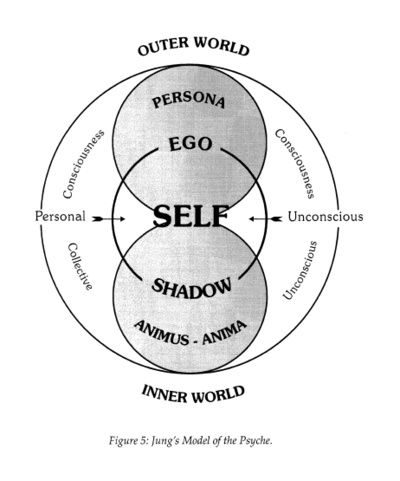
The diagram below is referenced in this talk:

Lucille Klein, MA, NCPsyA is a retired Jungian analyst in Matteson, Illinois. Her essay on “The Goose Girl” appears in Psyche’s Stories, vol 2: Modern Jungian Interpretations of Fairy Tales.

For the full lecture, CLICK HERE
For the complete set, CLICK HERE

Support Us:     


© 1989 Lucille Klein. This podcast is licensed under a Creative Commons Attribution-NonCommercial-NoDerivatives 4.0 International License. You may share it, but please do not change it, sell it, or transcribe it.
Music by Michael Chapman
Edited and produced by Benjamin Law

The Four Couples Within: The Structure of the Self and the Dynamics of Relationship

with Robert Moore, PhD

This episode is part one of the series The Four Couples Within: The Structure of the Self and the Dynamics of Relationship. It was recorded in 1989.

The four archetypal couples inherent in the Self—the King and Queen, the Warriors, the Magicians, the Lovers—create four distinct psychosocial environments within a relationship. The archetypal dynamics underlying both fulfillment and frustration in human relationships are examined in this seminar recording, with particular focus on marital dynamics and sexual dysfunction.

Robert Moore, PhD was Distinguished Service Professor of Psychology, Psychoanalysis and Spirituality in the Graduate Center of the Chicago Theological Seminary where he was the Founding Director of the new Institute for Advanced Studies in Spirituality and Wellness. An internationally recognized psychoanalyst and consultant in private practice in Chicago, he served as a Training Analyst at the C.G. Jung Institute of Chicago and was Director of Research for the Institute for Integrative Psychoanalysis and Psychotherapy and the Chicago Center for Integrative Psychotherapy. Author and editor of numerous books in psychology and spirituality, he lectured internationally on his formulation of a neo-Jungian  psychoanalysis and integrative psychotherapy.  His publications include THE ARCHETYPE OF INITIATION: Sacred Space, Ritual Process and Personal TransformationTHE MAGICIAN AND THE ANALYST: The Archetype of the Magus in Occult Spirituality and Jungian Psychology; and FACING THE DRAGON: Confronting Personal and Spiritual Grandiosity.

For the complete series, CLICK HERE
For all of Dr. Moore’s lectures, CLICK HERE

Support Us:     


© 1989 Robert Moore. This podcast is licensed under a Creative Commons Attribution-NonCommercial-NoDerivatives 4.0 International License. You may share it, but please do not change it, sell it, or transcribe it.
Music by Michael Chapman
Edited and produced by Benjamin Law
In Memoriam: Fred Gustafson

Frederick Raymond Gustafson Jr., 77, of Watertown, passed away on Tuesday, July 17, 2018, at his home surrounded by family.

Fred was born on April 4, 1941, in Rockford, Illinois, the son of Frederick Sr. and Edith (Hall) Gustafson. He was raised by his paternal grandparents, Joseph and Myrtle (Gustafson) Ekstein. He was united in marriage to Karen Kastman in 1963 in Sacramento, California. Fred was a lifelong student: Augustana College in Illinois (B.A. in philosophy), Lutheran School of Theology in Chicago (MDiv), Andover Newton Theological School in Boston (D.Min.). Once ordained he became a mission developer for the Prince of Peace Lutheran Church in Harvey, Michigan, where he served for four years.

(more…)

The Structure and Dynamics of the Psyche

with August Cwik, PsyD

This episode is the first half of Structure and Dynamics of the Psyche: The World According to C.G. Jung. It was recorded in 1992.

Cwik introduces the basic elements of the psyche as described by Jung: persona, ego, shadow, complex, the Self, archetype, and collective unconscious.

This lecture is part of the set An Intensive Overview of Analytical Psychology, which includes the following lectures:

  1. Structure and Dynamics of the Psyche, August Cwik
  2. The Ego and Its Relations with the Unconscious, Robert Moore
  3. Psychological Types, Thomas Patrick Lavin
  4. Persona and Shadow, John Van Eenwyk
  5. Anima and Animus, James Wyly
  6. Self: Center of the Psyche, Diane Martin
  7. Dreams and Active Imagination, Lois Khan
  8. Analysis and Individuation, John Van Eenwyk

Dr. Cwik is a clinical psychologist, hypnotherapist and senior diplomate Jungian Analyst in private practice in the Chicago area. After studying Chemistry as an undergraduate, he entered military service and then changed his career path to psychology. After studying with Rosiland Cartwright in the Dream and Sleep Lab at the University of Illinois, Chicago Circle, he was in the first class at the Illinois School of Professional Psychology. He interned at the University of Maryland, School of Medicine, Department of Psychiatry where he trained in hypnotherapy and psychoanalytic psychotherapy and returned to Chicago to begin private practice. He is on the teaching faculty of the Chicago Institute and the Florida and Minnesota Seminars for the Interregional Society of Jungian Analysts. He is an Assistant Editor for the Journal of Analytical Psychology. He is former: Co-Director of Training of the Analyst Training Program in Clinical Supervision and Curriculum and Co-Director of Clinical Training Program in Analytical Psychotherapy at the C.G. Jung Institute of Chicago, and Senior Adjunct Faculty at the Illinois School of Professional Psychology. He provides videoconferencing supervision and analysis.  He has published on analytic structure, supervision, alchemical imagery, active imagination, dreams, and numerous reviews.

For the complete seminar, CLICK HERE
For the complete series, CLICK HERE
For all of August Cwik’s lectures, CLICK HERE

Support Us:     


© 1992 August Cwik. This podcast is licensed under a Creative Commons Attribution-NonCommercial-NoDerivatives 4.0 International License. You may share it, but please do not change it, sell it, or transcribe it.
Music by Michael Chapman
Edited and produced by Benjamin Law
Understanding and Healing Addictions: A Jungian Contribution

with John Giannini, MDiv, LCPC, NCPsyA

This episode is part one of the series Understanding and Healing Addictions: A Jungian Contribution. It was recorded in 1990.

This course offers a Jungian understanding and healing of addictions by considering the correspondence between Bill Wilson, co-founder of Alcoholics Anonymous, and Carl Jung, whom Wilson praises for being one of the key influences leading to the formation of AA and its 12 Steps. The meaning of addiction within our culture is also examined by utilizing the psychology of narcissism as a key to understanding.

Diagrams used in this talk are not available, but in-depth descriptions of John’s work can be found in his book, Compass of the Soul.

John Giannini, MDiv, LCPC, NCPsyA was a Jungian analyst in private practice in Chicago and Evanston. He holds an MDiv in Religion and Psychology from St. Albert’s College, an MA from the University of Chicago Divinity School, an MBA from Stanford University, and LCPC certification with the State of Illinois. John published articles and lectured widely throughout the U.S. and Canada on the wounded child within and narcissistic/addictive behavior. He is the author of Compass of the Soul, an updated understanding of typology.

For the complete series, CLICK HERE
For all of John Giannini’s lectures, CLICK HERE

Support Us:     


© 1990 John Giannini. This podcast is licensed under a Creative Commons Attribution-NonCommercial-NoDerivatives 4.0 International License. You may share it, but please do not change it, sell it, or transcribe it.
Music by Michael Chapman
Edited and produced by Benjamin Law
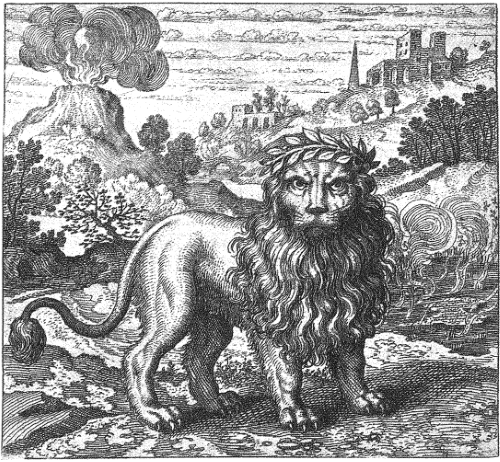
Mythology and Psychology: A Jungian Perspective

with Robert Moore, PhD

This episode is part one of the series Myth and Psyche: An Introduction to Jungian Perspectives on Human Mythology. It was recorded in 1992.

According to Jung, myth-making is a natural and impersonal potential present in the collective unconscious of all peoples throughout all times. Drawing on the contributions of Jung, Campbell, and Eliade, this course explores the role of myth in human life. Five of the major mythological themes prominent in world mythology are examined in terms of their contemporary psychological and cultural significance:

  1. Mythology of Creation
  2. Mythology of The Divine Child
  3. Mythology of The Hero
  4. Mythology of The Shaman
  5. Mythology of The Apocalypse

This episode is the introductory session for the series, titled “Mythology and Psychology: A Jungian Perspective”.

Robert Moore, PhD was Distinguished Service Professor of Psychology, Psychoanalysis and Spirituality in the Graduate Center of the Chicago Theological Seminary where he was the Founding Director of the new Institute for Advanced Studies in Spirituality and Wellness. An internationally recognized psychoanalyst and consultant in private practice in Chicago, he served as a Training Analyst at the C.G. Jung Institute of Chicago and was Director of Research for the Institute for Integrative Psychoanalysis and Psychotherapy and the Chicago Center for Integrative Psychotherapy. Author and editor of numerous books in psychology and spirituality, he lectured internationally on his formulation of a neo-Jungian  psychoanalysis and integrative psychotherapy.  His publications include THE ARCHETYPE OF INITIATION: Sacred Space, Ritual Process and Personal TransformationTHE MAGICIAN AND THE ANALYST: The Archetype of the Magus in Occult Spirituality and Jungian Psychology; and FACING THE DRAGON: Confronting Personal and Spiritual Grandiosity.

For the complete series, CLICK HERE
For all of Dr. Moore’s lectures, CLICK HERE

Support Us:     


© 1992 Robert Moore. This podcast is licensed under a Creative Commons Attribution-NonCommercial-NoDerivatives 4.0 International License. You may share it, but please do not change it, sell it, or transcribe it.
Music by Michael Chapman
Edited and produced by Benjamin Law
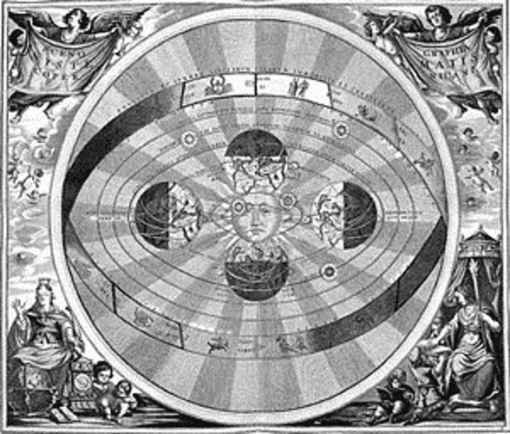
The Way of the Sly One: Gurdjieff, Ouspensky, & Jung

with Ken James, PhD

This episode is the first part of the series The Way of the Sly One: The Psychology of Our Possible Evolution in the Writings of Gurdjieff, Ouspensky, & Jung.

Most depth psychological theories look backward into the personal history of the individual in order to find the causes for neurotic symptoms, gain insight into their persistence in the present, and diminish their effects in the future. A key feature of Jungian psychology is the addition of a forward focus, a constructive, teleological emphasis on the meaning of symptoms, and the need to discover what the symptom is calling the sufferer to notice and change. This places Jung in a category of psychological practitioners who seek to promote the possible evolution of the person from present status to future transcendence.

Russian spiritual teacher G.I. Gurdjieff sought to bring his students to a place of consciousness that went far beyond what was generally thought of as “being awake”. The core of his teaching, that humankind was unfinished and did not possess a soul but was capable of creating one through intense inner work, created discomfort in his followers and stimulated them to find ways to break through to new levels of awareness – a method he called “the way of the sly one”. P.D. Ouspensky, Gurdjieff’s foremost disciple, also taught about the possible evolution of human consciousness and provided a more systematized interpretation of Gurdjieff’s teachings.

Ken James, PhD maintains a private practice in Chicago, Illinois.  His areas of expertise include dream work and psychoanalysis, archetypal dimensions of analytic practice, divination and synchronicity, and ways to sustain the vital relationship between body, mind and spirit.  He has done post-doctoral work in music therapy, the Kabbalah, spirituality and theology, and uses these disciplines to inform his work as a Jungian analyst. For more information visit soulworkcenter.org

For the complete series, click here
For all seminars by Ken James, click here


© 1997 Ken James. This podcast is licensed under a Creative Commons Attribution-NonCommercial-NoDerivatives 4.0 International License. You may share it, but please do not change it, sell it, or transcribe it.
Music by Michael Chapman
Edited and produced by Benjamin Law

Filter Posts

  • About Jung Chicago Radio & Blog

    Jung Chicago Radio is home to a variety of podcasts that range from archival seminar recordings (Institute Archives), to interviews (Jung in the World) to discussion on film (Healing Cinema), fairy tales (Jungian Ever After), and our programs.

    Our Blog shares essays, articles, video, audio, and other resources by members of the Chicago Society of Jungian Analysts and other groups that support the education and development of our community.

    The views and opinions expressed in the podcasts and blog posts are those of the respected speakers or authors and do not necessarily represent the views of the C. G. Jung Institute of Chicago.

    Login

    This search engine will search our public programs, the Jung Chicago Radio and Blog, and our store.

    To search only the store, visit our Store page.

    If you’re looking for a Jungian Analyst, use our Find an Analyst search engine or browse the Chicago Society of Jungian Analysts page.