The author of the acclaimed introduction to the practice of Jungian psychology, Boundaries of the Soul, June Singer draws from personal and professional experience to discuss the importance of dreams, those gifts from the unconscious which profoundly imbue our conscious lives. This program provides an excellent introduction not only to Jung’s dream theory, but also its application in psychoanalysis—from one of the masters of the art. It was recorded on September 21, 1975.
We begin our coverage of Orpheus and Euridice. This episode is primarily focused on the archetypal power of creativity as demonstrated in Edith Hamilton’s telling of the story. We will read Ovid’s version and dig into other elements of the story in the following episode.
In his books, Jungian Analyst Vlado Solc has been describing for many years how high politics is increasingly dominated by base motives – envy, frustration, the need for revenge. The turn of events is unexpected and disturbing. And beneath the surface, something deeper is happening. It’s not about politics, it’s about the soul.
Jan Majer – Years ago, you pointed out that high politics and society were increasingly being driven by low motives — envy, frustration, the need for revenge. In recent weeks, a lot has happened. What new insights have these events brought you? What psychological connection have you realized?
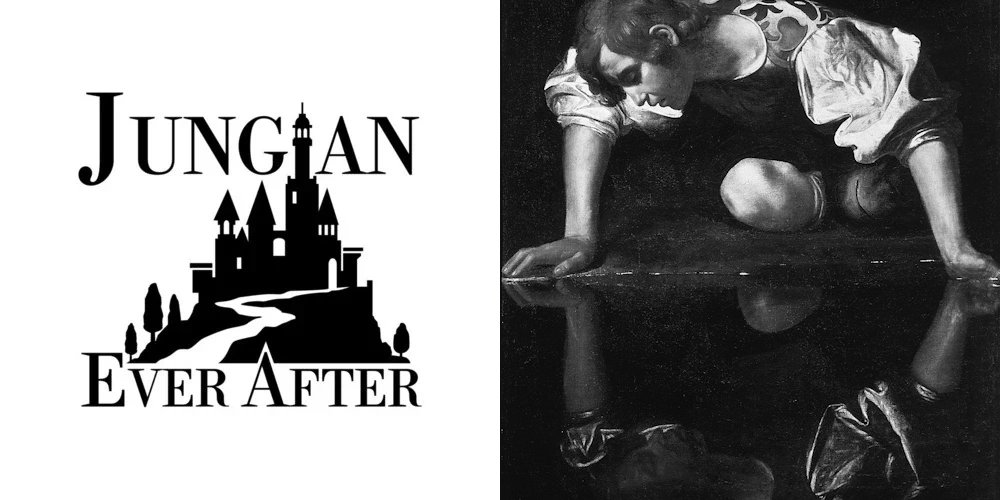
~ Vlado Šolc – Even before Donald Trump entered the political scene, low impulses had begun to awaken in American society. I called it an emergence of the Narcissistic archetypal dynamics. This goes beyond individual vanity — Narcissus is a symbol of psychic fragmentation, of the ego being consumed by an image of oneself to the point that deeper, conscious connection becomes impossible. Psychologically, this represents a splitting of psychic opposites, a loss of living contact with the soul, which typically leads to a loss of compassion, perspective, and understanding of higher motives such as art, ethics, and spirituality.
In this fragmented state, what had previously been considered via lenses of moral anxiety suddenly became a new value, no longer viewed with fear, but with fearless excitement. Trump rose up as a great object of collective projection of this American complex; as a chosen Über-Narcissus, he legitimized these shadowy emotions — rage, entitlement, xenophobia — which had previously been suppressed due to social oversight. He thus gave permission for the collective shadow to manifest openly, without shame.
This opened the door to authoritarian dynamics and all narcissistic manipulation that catalyzes it. When society is psychologically fragmented, when people lose inner and outer cohesion, they often seek a dominant figure to restore a sense of order — someone emotionally expressive, certain, and seemingly strong. Manipulators and narcissists channel the chaos of the collective psyche and provide it with temporary relief by directing the collective shadow outward onto scapegoats: the state, immigrants, or anyone slightly different from oneself.
We of the C. G. Jung Institute of Chicago wish to foster concern for the collective well-being and for a just and fair society for all, especially the most vulnerable. As such we support fundamental human rights, the rule of law, and a society governed by democratically elected institutions. This is a moral and ethical statement consistent with our philosophy and teaching. Following Jung, we intend to help others meet the world with generosity, kindness and truthfulness.
Jungian Psychoanalysts Laura Tuley and John White discuss Jungian Analysis in a World on Fire: At the Nexus of Individual and Collective Trauma, a volume of essays, all authored by practicing Jungian psychoanalysts, of which they were the editors. It examines and illuminates ways of working with individual analytic and therapeutic clients in the context of powerful and current collective forces, in the United States and beyond.
The theme of individuation sounds through Jung’s writings, like a leitmotiv, from the time of his break with Freud and psychoanalysis onward without pause to his death. All things considered, it is perhaps his major psychological idea, a sort of backbone for the rest of the corpus. Introducing the term in his esoteric, anonymously published little book Septem Sermones ad Mortuos (Seven Sermons to the Dead) in 1915, Jung deepened and expanded the idea in the much revised work, also begun in the same period, Two Essays in Analytical Psychology (Coll. Wks., Vol. 7) and in the summary work of the early period, Psychological Types (Coll. Wks., Vol. 6). Later he added further substance to the notion in his studies of archetypes and especially in his researches on alchemy. He detailed individuation clinically in his seminars (Dream Analysis, The Visions Seminar, and Nietzsche’s Zarathustra) as well as in several case studies. It also played an important role in his many writings on religion and culture. Individuation was taken up as a central theme by nearly all of Jung’s important students. Major contributions were made to the theory by Fordham, who studied individuation in children, and by Neumann, who saw individuation as unfolding in three major stages, each containing several sub-phases. Hillman, a Jungian deconstructionist, has vigorously attacked the notion of psychological development in general and individuation in particular, holding a view that such ideas are nothing but fantasies used to construct modern psychological myths. More recently, Jacoby has added refinement and differentiation to the theory of individuation by introducing data from modern infant research. Samuels has introduced the feature of political consciousness and involvement. The debate goes on. In the following pages, I present a distillation and synthesis of the Jungian tradition on the central theme of individuation, situating this particular discussion in the clinical setting of psychotherapy and showing how the working Jungian psychotherapist may use this developmental idea in practice.
Our Spring Fundraising Drive is live! Support this podcast by making a donation today. The first $7,000 in donations will be matched!
Jung and the Post-Human Age, with Pacifica professor and author Glen Slater is a deep dive into what digital culture is doing to the human psyche as we internalize the fractiousness of the outer world.
We recorded this shortly after the 2024 US election results but, as it took some time to edit, we decided to post on inauguration day (reposted here from the original feed). In a time when self-absorbed billionaires have taken control of government, this episode’s topic feels particularly relevant.
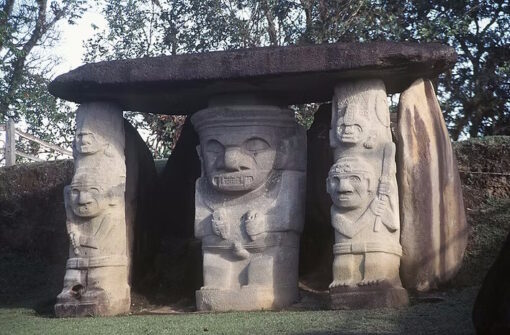
In a previous article that I wrote (“What The Death May Teach The Living About the Individuation Process”), I stated the hypothesis that archetypal images, carved on stone statues by an aboriginal group and located on a necropolis, could provide psychological guidance for the journey of life, death, and rebirth, specifically for the journey of the afterlife. It seems that each person and his/her spirit may have to go through the journey of living, dying, and rebirth. Therefore, the individual spirit of a human being may go through three phases; a) the living (“incarnated spirit”); b) the Death (“spirit”), and c) the Rebirth (“reincarnated spirit”) (Credit for the Image: UNESCO-Sacred Sites-Martin Gray).
You may be skeptical and question the relevance of talking about death and the afterlife when we are still alive and want to fulfill our individuation process. That is a reasonable point of view. However, I would like to invite the reader to consider the following two issues: 1) that there are certain archetypal images, while we are alive, that appear in dreams, visions, paintings, sculptures, etc that will be, also, essential and relevant, after we die, during the journey to the afterlife. If we could determine what similar archetypal images are crucially relevant for both, the cycle of living and for the afterlife, then, each of us will have not only a much larger “vision and mission” about life and death but, also, less karma that would decrease the necessity to reincarnate. Those archetypally relevant (images), if related consciously during living, would contribute, first, towards enlightment, second towards decreasing the individual karma that forces reincarnation and, third, following Jung’s thought about the afterlife, the spirit of a person who has died and who did not fulfilled, on earth, the Destiny (the archetypal endowments) that was given to him/her, will be forced, after death, to continue atempting to relate and integrate those archetypal images that were not realized during the living phase. Unfortunately, and according to Jung, the ‘dead’ or the ‘spirits of the dead’ will not be able to integrate the archetypal messages because the opposite -being humanly alive- is not available to them for consciousness to be realized. This article will attempt to further discuss these ideas within the context of the statue of the Jaguar-Man that is located at the entrance of a tomb in a necropolis in San Agustin, Colombia.
The journey is not just about life; it is also about death, the afterlife, and possibly about the beyond (i.e., Rebirth). Therefore, the sculpture to be discussed in this article may provide important archetypal information for the living during the phase of living and dying; 2) that the dead, or the world of the spirits, as it is known in indigenous cultures, may provide valuable existential and psychological information to the living.
Jungian analysis has focused its efforts on the phase of living; however, Jung’s thoughts on the subtle body and the Philosopher’s Stone may enlarge the scope of Jungian analysis that includes, also, the phase of death, and rebirth. Therefore, rather than exclusively focusing and emphasizing the process of individuation during the phase of “living” life, Jungian analysis, with its emphasis on the collective unconscious and God Within, could broaden and facilitate the analytical process for the individual to go not only through the phase of life (the individuation process) but, also, to prepare AND continue for and during the phases of death, the afterlife, and the beyond, which may include resurrection, rebirth, and reincarnation.
Our Spring Fundraising Drive is live! Support this podcast by making a donation today. The first $7,000 in donations will be matched!
Patricia Martin and Paul Bishop, author and professor at the University of Glasgow, discuss the mystery of the holy grail, what it meant to Carl Jung, and what it offers us.
Robert Tyminski’s book, The Psychological Effects of Immigrating, is an exceptionally useful read in these turbulent times. As thoughtful people grapple with the bewildering array of policies from the White House aimed at immigrants, there is a collective anguish over how to respond. The cruel hypocrisy is that our national identity has been forged by immigrant stories. Still, sympathetic citizens also feel the tug of conscience when recent waves of immigrants aren’t easily absorbed into the economic fabric of our towns and cities as in previous generations.
At the core of Tyminski’s book is a focus on the mental health issues that arise for immigrants. A practicing Jungian analyst, Tyminski deftly weaves stories from his casework with myth and history to create an emotional landscape for the immigrant experience.
The basis of empathy is context. If we cannot see the human struggle of immigrants, it’s largely because it’s being drowned out by survival memes—it’s us against them. More constructive solutions elude us. This is where Tyminski’s work shines. His writing creates poignant profiles of immigrants working hard to fit in and the psychological costs for failing to do so: isolation, erasure, inadequacy, idealization of a past life, and feelings of doom and dread.
This episode departs from the physicality of Hercules’ deeds to discuss a more spiritual tale of love. Eros and Psyche is in many ways a story in opposition to Hercules. For while he remains emotionally unchanged by the end of his tale, the very core of this love story is emotional development.
Our Blog shares essays, articles, video, audio, and other resources by members of the Chicago Society of Jungian Analysts and other groups that support the education and development of our community.
The views and opinions expressed in the podcasts and blog posts are those of the respected speakers or authors and do not necessarily represent the views of the C. G. Jung Institute of Chicago.